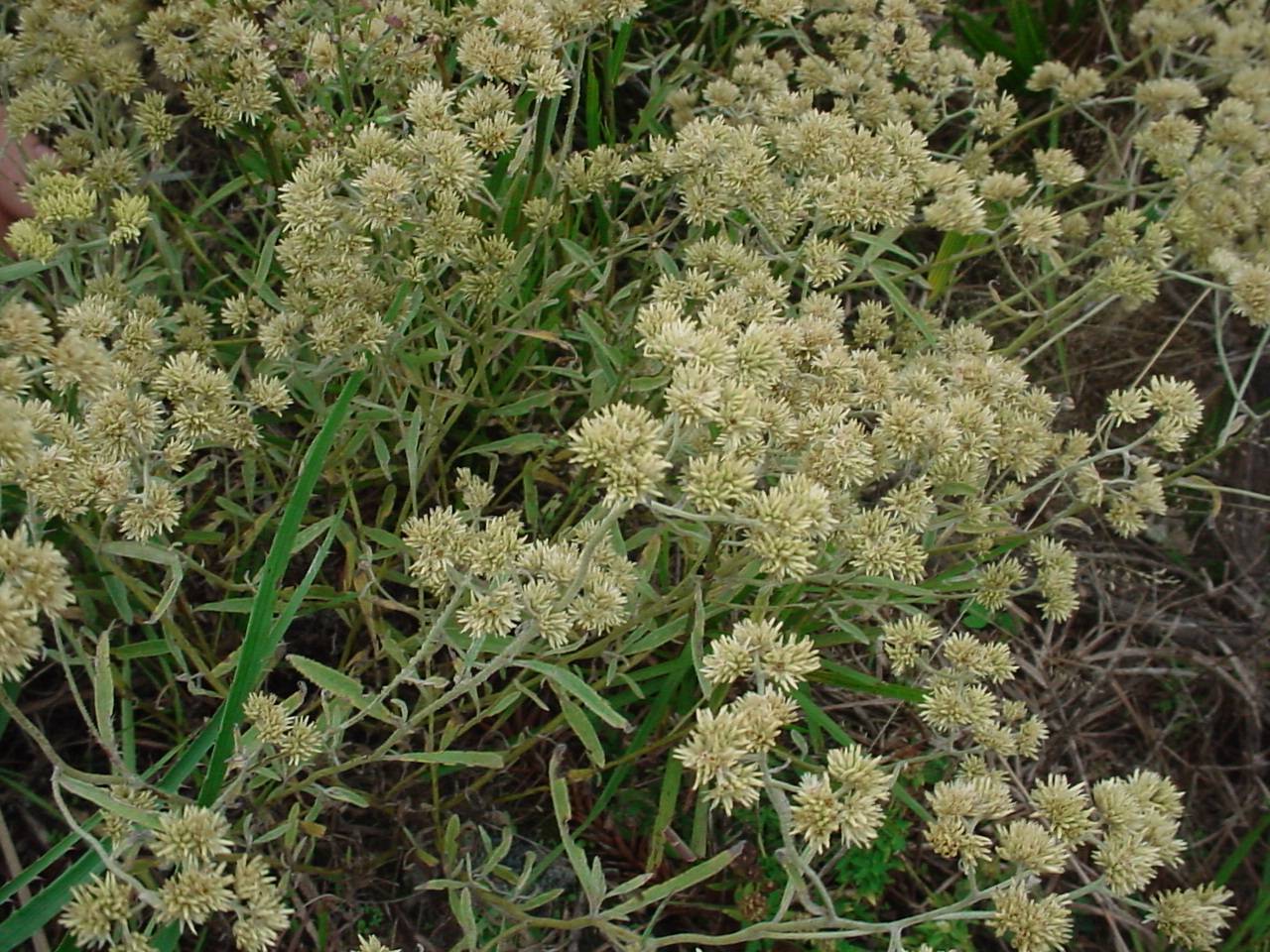
Achyrocline is a genus of flowering plants in the daisy family Asteraceae, placed in subfamily Asteroideae and tribe Gnaphalieae. The genus was described in 1838 by Augustin Pyramus de Candolle, based on Lessing's earlier Gnaphalium subgenus Achyrocline, in Prodromus Systematis Naturalis Regni Vegetabilis (volume 6, pages 219–221). It comprises herbaceous and semi-woody species native to Latin America and Africa, with the greatest diversity in South America.
The most well-known species is Achyrocline satureioides, commonly called macela or marcela, a semi-annual herb reaching about one meter in height. It bears simple, narrow green leaves with serrated edges and produces yellow flowers in racemes, typically blooming around Easter. This species holds significant cultural and medicinal importance across southern South America, particularly in Brazil, Paraguay, Uruguay, and Argentina, where it is used in traditional medicine for digestive and respiratory ailments. The genus includes approximately 45 accepted species, many of them occurring in the Andes, the Brazilian Cerrado, and southern South America. Morphologically, members of Achyrocline are characterized by their chaffy receptacles and heads of small, often yellowish florets typical of the Gnaphalieae tribe.
Distribution
Achyrocline is native to Latin America and Africa. The most widespread and well-known species, Achyrocline satureioides, occurs across South America from Argentina north to Colombia and Guyana. Other species in the genus are distributed predominantly in South America, including the Andean region, the Brazilian Cerrado, and southern cone countries.
Cultural Uses
Achyrocline satureioides (macela/marcela) is the medicinal plant symbol of Rio Grande do Sul state in Brazil. It is widely used in regions sharing Guarani cultural heritage — Paraguay, Uruguay, and northern Argentina — where it is traditionally employed to treat stomach, digestive, and gastrointestinal disorders, including during pregnancy. The plant's extract, rich in flavonoids including isorhamnetin, luteolin, and quercetin, has demonstrated antiviral activity against herpes viruses and may possess immunomodulatory properties relevant to managing viral respiratory infections. In southern Portugal, marcela is used in bonfires during popular celebrations for its aromatic smoke. The flowers are brewed as tea, infused into medicinal wines and bitters, and placed into pillows to aid sleep.
Taxonomy
Achyrocline was originally described as Gnaphalium subgenus Achyrocline by Christian Friedrich Lessing, and later raised to genus rank by Augustin Pyramus de Candolle in 1838 (Prodromus, 6:219–221). The accepted authorship is (Less.) DC. The genus is placed in the Asteraceae family, subfamily Asteroideae, tribe Gnaphalieae.
History
The genus Achyrocline was established in 1838 by the Swiss botanist Augustin Pyramus de Candolle in the sixth volume of his Prodromus Systematis Naturalis Regni Vegetabilis. De Candolle elevated Lessing's earlier subgenus Achyrocline (within Gnaphalium) to full generic status, publishing the description in Latin on pages 219–221.










