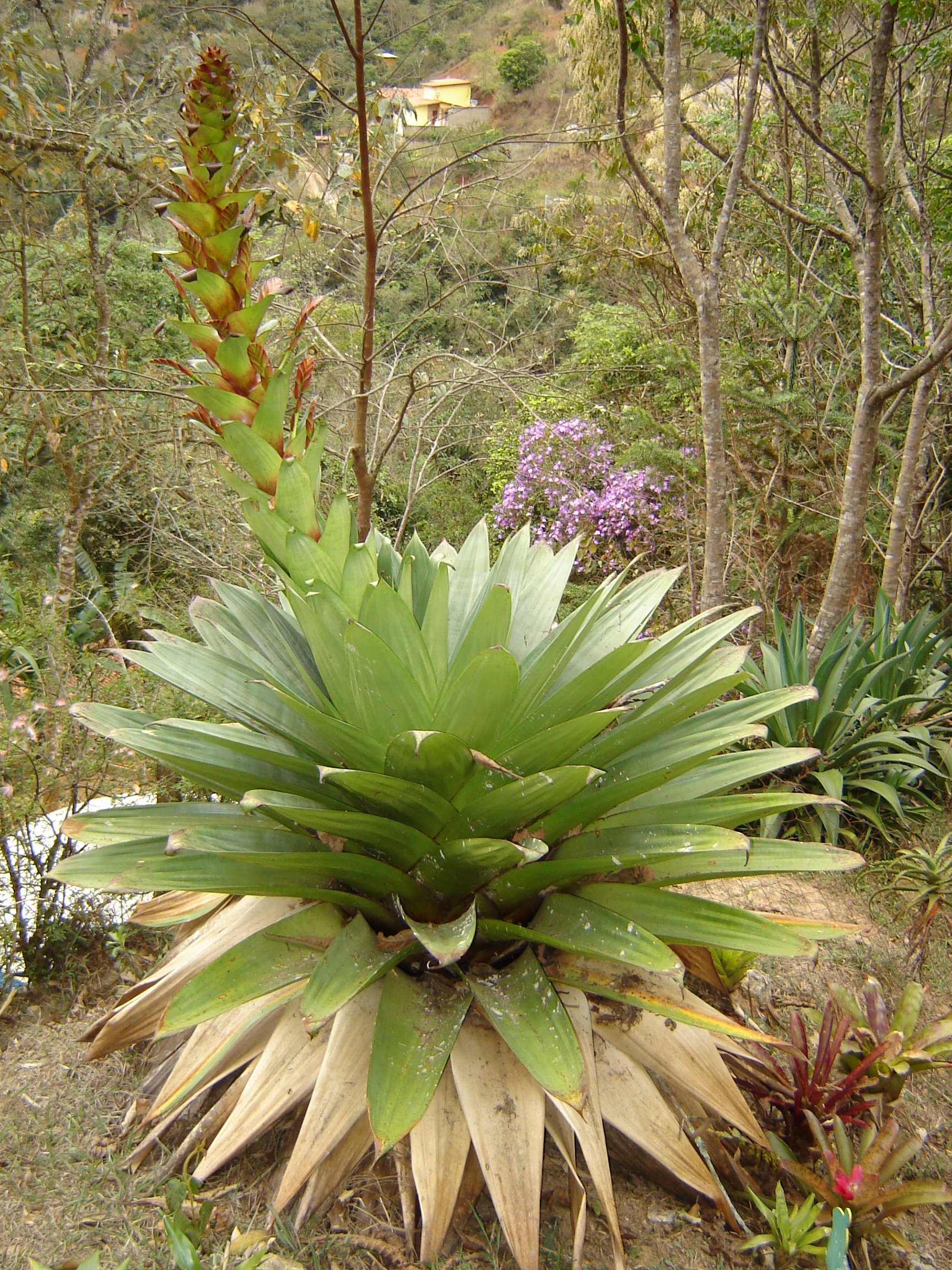
Alcantarea is a genus of large, often epilithic bromeliads in the family Bromeliaceae (order Poales), endemic to Brazil. First described as a subgenus of Vriesea by Édouard Morren and later raised to genus rank by Hermann Harms, the group was resurrected as a distinct genus by Jason R. Grant in 1995 based on morphological and molecular evidence. It belongs to the subfamily Tillandsioideae and is closely related to Vriesea.
The genus comprises approximately 20–40 species (21 listed on Wikipedia, 41 in GBIF), all native to Brazil. They are commonly known as giant bromeliads (bromélias-gigantes) due to their impressive size — some species produce rosettes spanning over 1.5 metres in diameter with flower spikes reaching 2–3 metres tall. The plants are predominantly lithophytic, growing on granitic and gneissic rock outcrops (inselbergs) in the Atlantic Rainforest, Cerrado, Caatinga, and high-altitude campos rupestres of eastern and southeastern Brazil.
The type species is Alcantarea regina. Notable members include A. imperialis (the most widely cultivated), A. geniculata, A. brasiliana, and A. extensa. The inflorescences are typically tall, erect spikes bearing tubular flowers, and the foliage ranges from green to silvery-grey. Molecular phylogenetic work by Versieux et al. (2012) confirmed the genus as monophyletic and identified biogeographic patterns associated with the historical separation of Brazilian highland formations.
Etymology
The genus is named in honour of Dom Pedro d'Alcântara (1825–1891), the second and last Emperor of Brazil, who ruled from 1831 to 1889. The name "Alcantarea" derives directly from his given name "d'Alcântara."
Distribution
All species of Alcantarea are endemic to Brazil, occurring predominantly in the eastern and southeastern regions. They inhabit a range of phytogeographic domains including the Atlantic Rainforest (Mata Atlântica), Cerrado, Caatinga, and high-altitude rocky outcrops (campos rupestres), with most species growing as lithophytes on exposed granite and gneiss inselbergs.
Ecology
Species of Alcantarea are predominantly lithophytic, growing on exposed rock surfaces (granite and gneiss inselbergs) where they form large, water-impounding tank rosettes. These tanks create microhabitats for diverse invertebrate and vertebrate communities. The plants inhabit a range of Brazilian ecosystems from sea-level Atlantic Rainforest to high-altitude campos rupestres above 900 m. Their large, long-lived rosettes and tall inflorescences are pollinated primarily by bats and hummingbirds.
Cultivation
Alcantarea species, particularly A. imperialis and its cultivars, are widely grown as ornamental plants in tropical and subtropical gardens worldwide. They prefer bright light to full sun and well-drained substrates, reflecting their natural lithophytic habit. In cultivation they are often grown in large containers or planted directly into rock gardens. Their dramatic size and architectural form make them prized specimen plants in botanical gardens and private collections.
Taxonomy
Alcantarea was originally described as a subgenus within Vriesea by É. Morren ex Mez. It was elevated to genus rank by Hermann Harms in 1929, but later treatments often submerged it back into Vriesea. Jason R. Grant resurrected Alcantarea as a distinct genus in 1995 based on morphological and molecular evidence. Molecular phylogenetics by Versieux et al. (2012) confirmed the genus as monophyletic and distinct from Vriesea, supporting its recognition. GBIF currently lists 41 accepted species.










