Allagoptera is a monoecious genus of palms in the family Arecaceae, comprising five accepted species native to South America. Within the tribe Cocoseae, the genus is considered particularly specialized in its morphology and growth habit.
Plants in this genus typically grow with very short or subterranean (acaulescent) trunks, and in cases where a trunk does develop erectly, it often makes a downward turn leaving the crown below the base. Notably, the trunks of Allagoptera are among the very few in the entire palm family that have a tendency to bifurcate, allowing a single plant to produce multiple heads. The pinnate leaves gently arch to around 2 m in length and are carried on long, slender petioles that are channeled on the upper (adaxial) surface. The single-fold leaflets are arranged regularly or irregularly along the rachis and each protrudes into a different plane, collectively creating a distinctively plumose, feathery leaf.
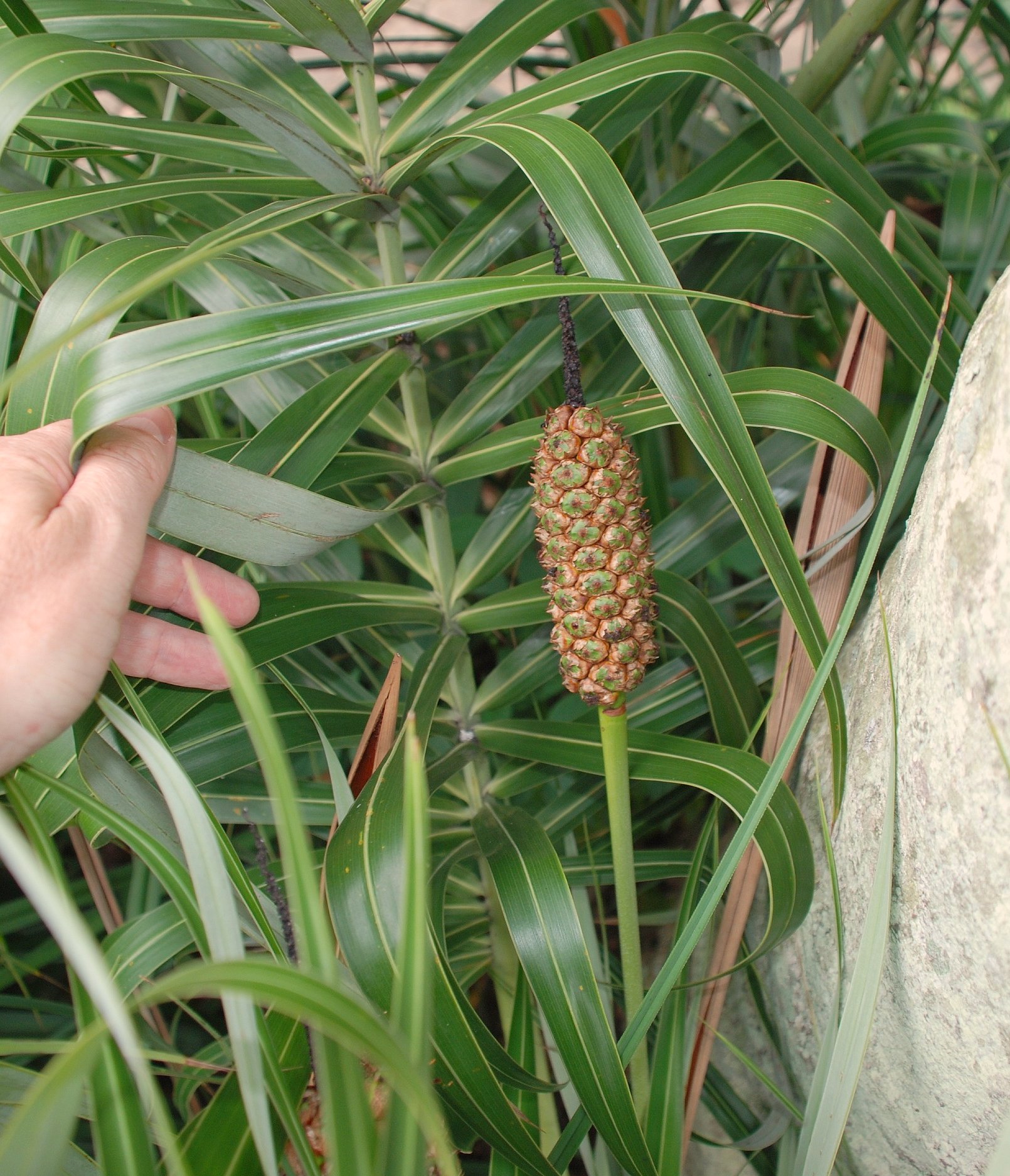
The inflorescence is an unusual spike that emerges from within the leaf crown, bearing pistillate (female) flowers at the base and staminate (male) flowers toward the tip. The fruit is single-seeded, yellow to brown in color, and forms in dense, crowded clusters.
The genus was formerly known as Diplothemium before being renamed Allagoptera, from the Greek words for "change" and "feather", a reference to the characteristic plumose leaf.
Etymology
The name Allagoptera derives from the Greek words for "change" (allag-) and "feather" (pteron), describing the distinctive plumose appearance of the leaf created by leaflets that each protrude into a different plane. The genus was formerly named Diplothemium before being reclassified under the current name.
Distribution
Allagoptera is native to South America, occurring in Brazil, Paraguay, Bolivia, and Argentina. Species in this genus occupy a range of habitats, including sandy beaches and coastal dunes, woodlands, sandstone hills, and the Cerrado savanna vegetation of central Brazil.










