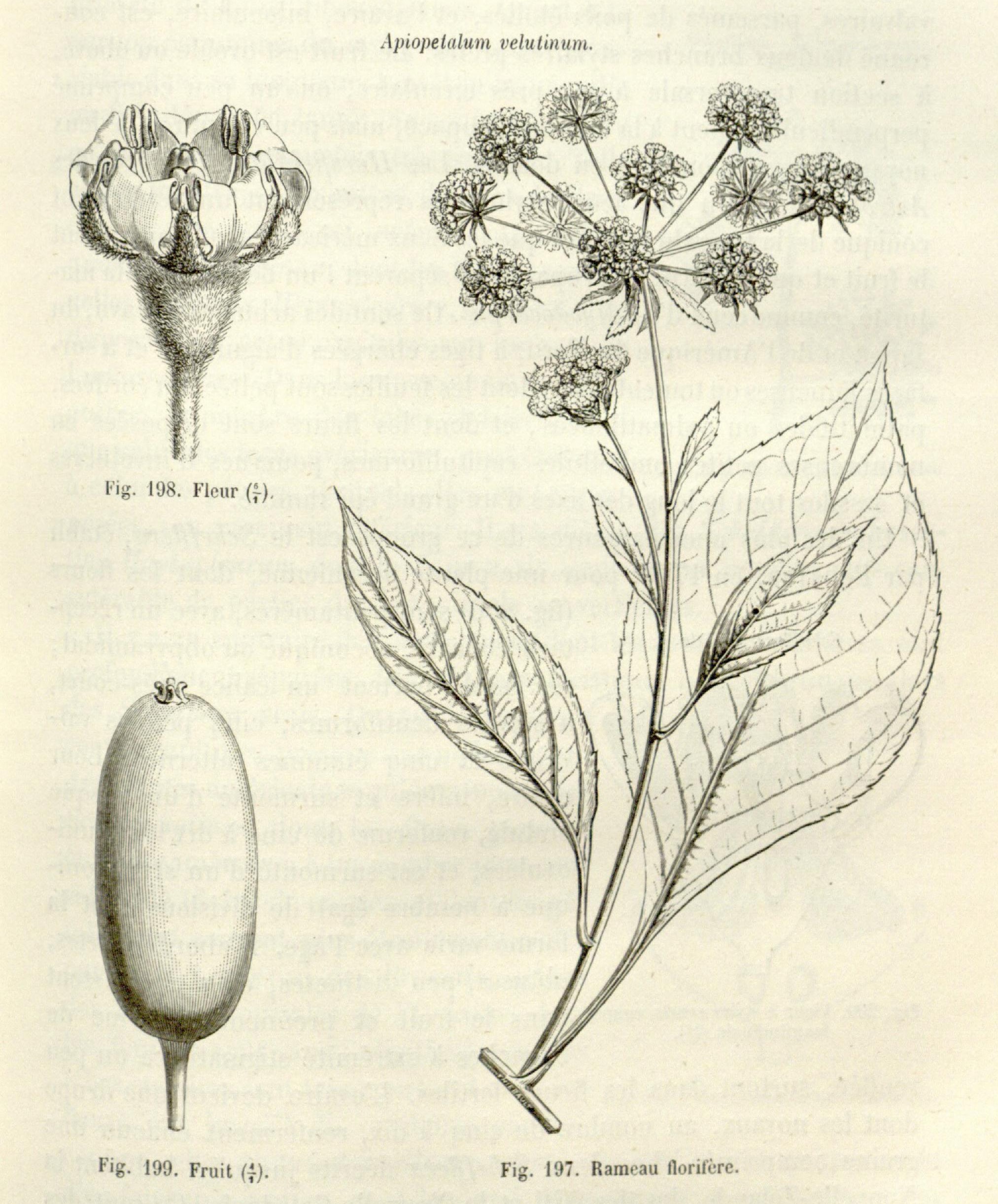
Apiopetalum is a small genus of flowering plants in the family Apiaceae (order Apiales), comprising two species of small trees endemic to New Caledonia in the southwestern Pacific. The trees reach up to 6 metres in height and are characterised by their simple leaves — an unusual trait within the largely herbaceous Apiaceae family. The genus was described by the French botanist Henri Ernest Baillon and published in Adansonia in 1878. The two accepted species are Apiopetalum velutinum Baill. and Apiopetalum glabratum. Its closest known relative is the Australian genus Actinotus, another woody member of the family.
Distribution
Apiopetalum is endemic to New Caledonia, an archipelago in the southwestern Pacific Ocean. Both species in the genus — Apiopetalum velutinum and Apiopetalum glabratum — are restricted to the main island of Grande Terre. No introduced or naturalised populations are recorded elsewhere.
Taxonomy
Apiopetalum was described by Henri Ernest Baillon in 1878 in Adansonia (vol. 12, p. 133). It is placed in the family Apiaceae (order Apiales) in the current GBIF backbone taxonomy. The genus is noted for its woody habit and simple leaves — traits unusual among the predominantly herbaceous Apiaceae. Its closest known relative is the Australian genus Actinotus, also a woody member of the family.










