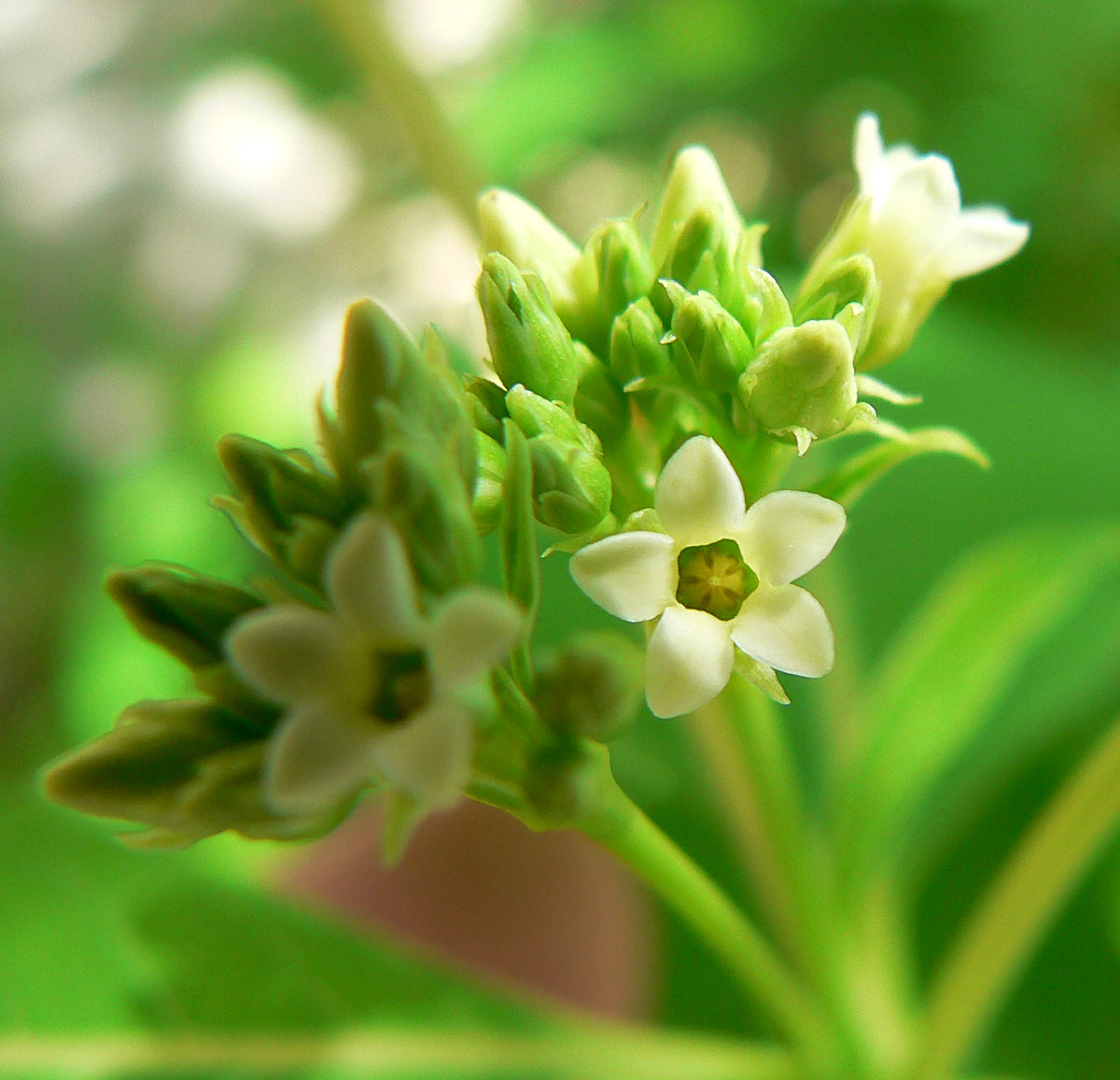
Apocynaceae, commonly called the dogbane family, is one of the largest families of flowering plants, encompassing approximately 5,100 species distributed across 376 accepted genera. It belongs to the order Gentianales within the class Magnoliopsida. The family includes a remarkably diverse range of growth forms: towering tropical trees reaching up to 80 m in Indomalaya, climbing vines, shrubs, herbs, and distinctive stem succulents such as Adenium and Pachypodium.
A defining characteristic of most Apocynaceae is the presence of milky latex in their tissues. The family is notably rich in alkaloids and cardiac glycosides, making many of its members highly toxic if ingested. Genera such as Nerium, Cerbera, Asclepias, Thevetia, and Strophanthus contain cardiac glycosides with narrow therapeutic ranges and a long history of use as arrow poisons. At the same time, this chemical richness has made the family a major source of pharmaceutical compounds: Catharanthus roseus yields alkaloids used in cancer chemotherapy, Rauvolfia serpentina supplies reserpine (once widely used as an antihypertensive), and Tabernanthe iboga contains ibogaine, a psychoactive compound under research for treating drug addiction.
The family's circumscription was significantly expanded when the Angiosperm Phylogeny Group (APG III) incorporated the former family Asclepiadaceae as the subfamily Asclepiadoideae. In total, five subfamilies are recognized: Apocynoideae, Asclepiadoideae, Periplocoideae, Rauvolfioideae, and Secamonoideae, comprising 25 tribes and 49 subtribes in the 2014 classification.
Many Apocynaceae genera are valued as ornamental plants in gardens and as houseplants worldwide, including Nerium (oleander), Vinca (periwinkle), Plumeria (frangipani), Adenium (desert-rose), Mandevilla, Allamanda (golden trumpet), and Amsonia (bluestar).
Etymology
The family name Apocynaceae is derived from the type genus Apocynum, which comes from the Greek meaning "dog-away." The name reflects the historical use of certain plants in the family as dog poisons.
Distribution
Apocynaceae is predominantly a tropical and subtropical family, distributed across Africa, Asia, Australia, the Americas, and parts of Europe. The greatest diversity occurs in tropical forests, where species range from large emergent trees to lianas and shrubs. In temperate Europe, only Vinca (periwinkle) and Vincetoxicum extend beyond the Mediterranean zone. In North America, Apocynum (dogbane) and Amsonia (bluestar) are prominent representatives; in Central America, Plumeria (frangipani); in the Mediterranean, Nerium (oleander). Australia hosts approximately 46 native genera and around 200 species across all habitat types.
Ecology
Several genera within Apocynaceae—most notably Asclepias (milkweeds)—serve as obligate or preferred larval host plants for the Queen Butterfly (Danaus gilippus) and related Danainae butterflies. Many species are adapted to tropical dry environments, and the family spans habitats from tropical rainforest to xeric scrubland and temperate grassland.
Cultural Uses
Apocynaceae has been a source of economically and medically significant compounds for centuries. Pharmaceutical alkaloids derived from the family include reserpine (Rauvolfia serpentina, antihypertensive), vincristine and vinblastine (Catharanthus roseus, cancer chemotherapy), and ibogaine (Tabernanthe iboga, psychoactive/addiction research). Cardiac glycosides from Strophanthus, Nerium, and Acokanthera species have historically served as arrow poisons and have been investigated as cardioactive drugs. The genera Landolphia and Carpodinus were commercial rubber sources in the Congo basin. Apocynum cannabinum provided fiber to Native Americans. Several genera yield edible products: Carissa (Natal plum) produces edible fruit, and the juice of Saba comorensis is consumed as a beverage. Beyond food and medicine, genera such as Nerium, Vinca, Plumeria, Adenium, Mandevilla, and Allamanda are among the most widely cultivated ornamental plants globally.
Taxonomy Notes
Apocynaceae's modern circumscription reflects a major reclassification under the Angiosperm Phylogeny Group: the formerly separate family Asclepiadaceae (milkweeds and relatives) is now included as the subfamily Asclepiadoideae, recognized as the largest subfamily with 348 genera. Five subfamilies are accepted: Apocynoideae (Burnett, 1835), Asclepiadoideae (Burnett, 1835), Periplocoideae (Endl., 1838), Rauvolfioideae (Kostel., 1834), and Secamonoideae (Endl., 1838). A 2014 revision recognized 366 genera, 25 tribes, and 49 subtribes; the currently accepted count stands at 376 genera and approximately 5,100 species.










