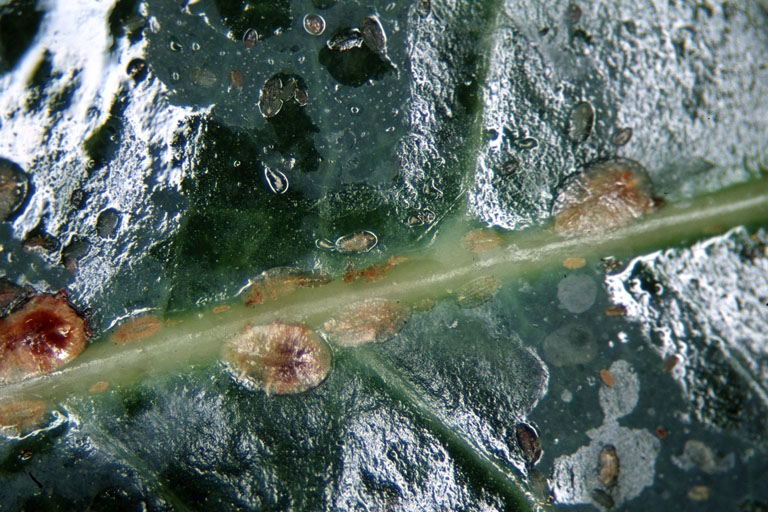
Coccus is a genus of soft scale insects in the family Coccidae, order Hemiptera. These small, sap-feeding insects are parasitic on a wide range of host plants and are distributed globally across tropical and subtropical regions. Scale insects in this genus lack wings as adults; females are typically flat to convex, waxy, and immobile, clinging to stems and leaves and feeding on plant phloem.
The genus is perhaps best known for several species of significant agricultural importance. Coccus viridis (the green soft scale) is a serious pest of coffee, citrus, and other cultivated crops in tropical regions worldwide. Coccus hesperidum (the brown soft scale) attacks a broad range of ornamental and fruit plants and is one of the most cosmopolitan scale insect pests. Like other soft scales, species of Coccus excrete honeydew, a sugary waste product that promotes the growth of sooty mould fungi on host plants, compounding the damage to crops.
The type species is Coccus hesperidum Linnaeus, described in 1758. The genus was named by Linnaeus; its name derives from the Ancient Greek κόκκος (kókkos), meaning "sphere," a reference to the rounded body form of these insects.
Etymology
The genus name Coccus derives from the Ancient Greek κόκκος (kókkos), meaning "sphere," a reference to the rounded, globose body shape characteristic of these scale insects.
Taxonomy Notes
Coccus belongs to the family Coccidae (soft scales) within the order Hemiptera (true bugs), class Insecta. Many historical species once placed in Coccus have since been moved to other genera; for example, Coccus cacti is now Dactylopius coccus, and Coccus lacca is now Kerria lacca. The type species is Coccus hesperidum Linnaeus, 1758.










