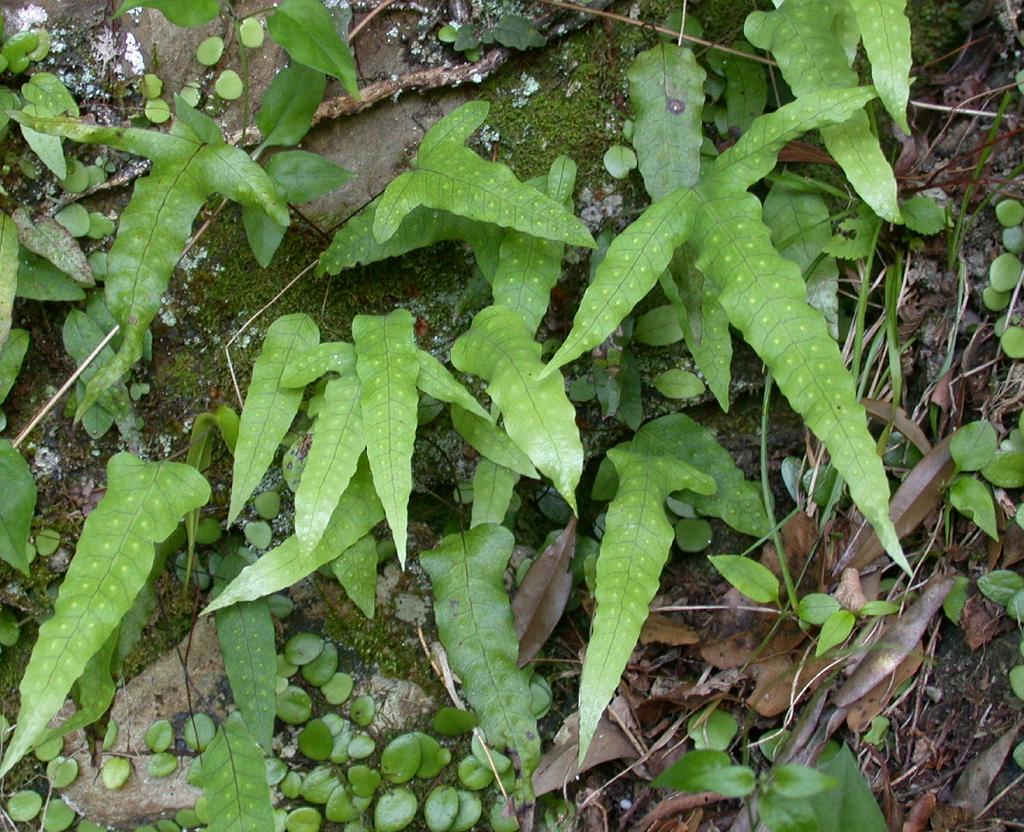
Selliguea is a genus of ferns in the family Polypodiaceae, order Polypodiales. These are vascular plants belonging to the class Polypodiopsida, one of the most diverse lineages of ferns. The type species of the genus is Selliguea feei Bory, described in 1824.
The genus encompasses a large number of species distributed primarily across tropical and subtropical Asia and the Malesian archipelago, extending from South Asia through China, Japan, and Southeast Asia into the Pacific. Species were historically scattered across several other genera — including Crypsinus, Phymatodes, and Phymatopteris — before being consolidated into Selliguea following revisions most notably by Hovenkamp (1998, in Blumea) and subsequent treatments in the Flora of China. Many species remain with uncertain combinations (marked comb. ined.) pending formal publication.
Members of Selliguea are epiphytic or terrestrial ferns typically found in humid montane forests. GBIF records 8 accepted species in the genus under its current circumscription.
Distribution
Selliguea is distributed primarily across tropical and subtropical Asia and the Malesian region, with species recorded from South Asia, China, Japan, Taiwan, and island Southeast Asia through to the Pacific islands. The type species, Selliguea feei, was described from this range.
Taxonomy Notes
Selliguea has undergone substantial reclassification. Many species now placed here were formerly assigned to Crypsinus, Phymatodes, or Phymatopteris, and were transferred to Selliguea in revisions by Hovenkamp (1998) and in the Flora of China treatment (2013). Numerous species-level combinations remain unpublished (comb. ined.) as of the Hassler & Swale (2002) checklist cited by Wikipedia.










