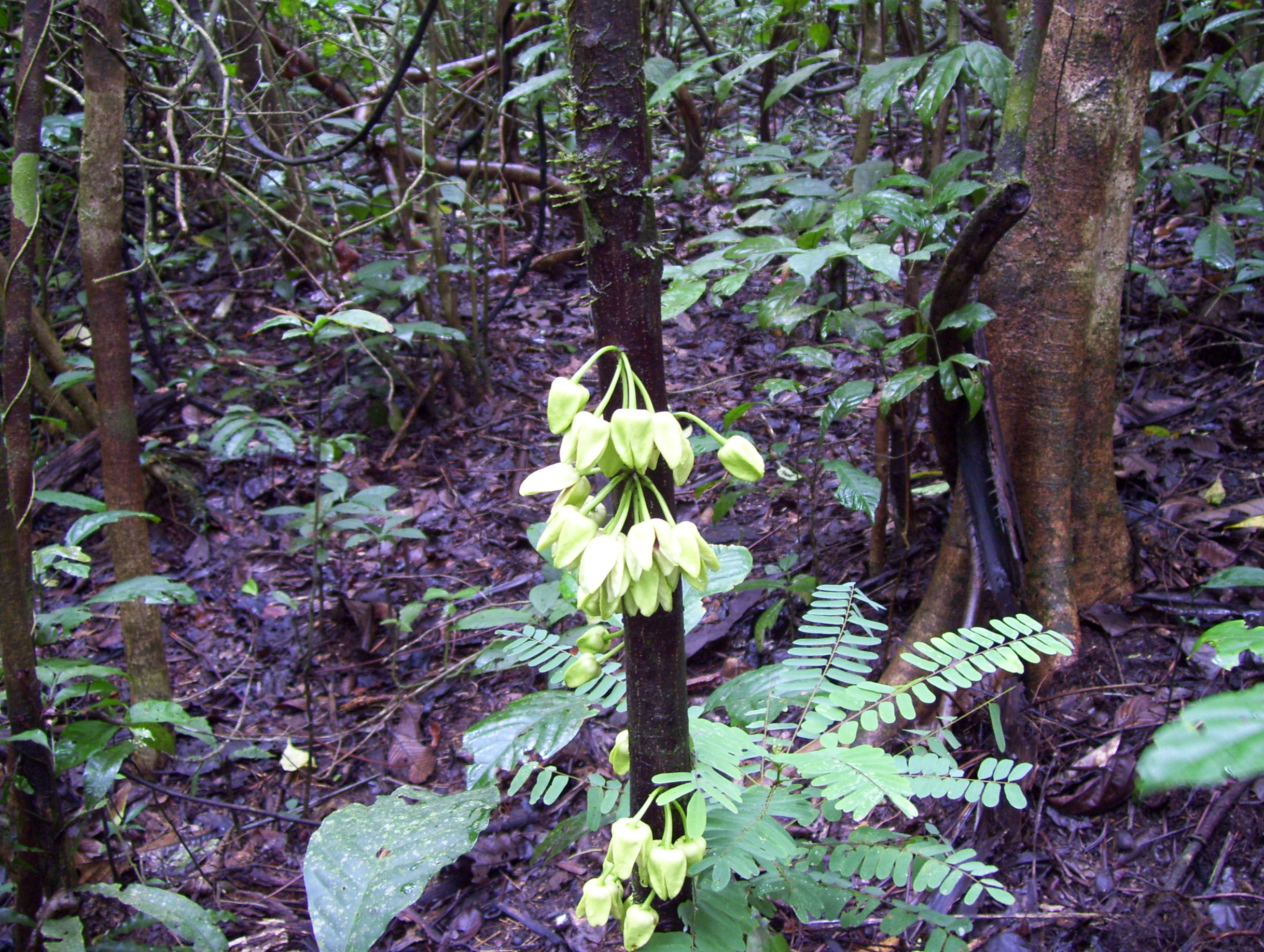
Uvariopsis is a genus of tropical flowering plants in the family Annonaceae, order Magnoliales — the same ancient lineage that includes magnolias, custard apples, and ylang-ylang. The genus is entirely African in distribution, making it one of the continent's endemic genera within this predominantly pantropical family. It comprises approximately 18 described species, all of which are trees or shrubs of African tropical forest.
A defining characteristic of the genus is its flowering habit: all Uvariopsis species are either ramiflorous (bearing flowers on branches), cauliflorous (bearing flowers directly on the trunk), or both. This adaptation, common in rainforest understory plants, positions flowers where pollinators — often beetles or flies that frequent shaded forest floors and bark surfaces — can reach them without navigating the canopy.
The type species is Uvariopsis zenkeri Engl., named by Adolf Engler, who first formally described the genus in 1899. Species are concentrated in the rainforests of Central and West Africa, with notable occurrences in Cameroon, the Democratic Republic of Congo, and neighbouring countries. One species, Uvariopsis dicaprio, gained wider attention when named in honour of the actor Leonardo DiCaprio in recognition of his conservation advocacy.
Taxonomy Notes
Uvariopsis was first described by Engler in 1899, with Uvariopsis zenkeri Engl. as the type species. It belongs to the family Annonaceae (order Magnoliales), a basal angiosperm family of mostly tropical trees and shrubs. GBIF recognises the genus as accepted under kingdom Plantae, phylum Tracheophyta, class Magnoliopsida.
Distribution
Uvariopsis is endemic to Africa, with species distributed across the tropical rainforests of Central and West Africa, including Cameroon, the Democratic Republic of Congo, and neighbouring countries. No species are recorded outside the African continent.
Ecology
All Uvariopsis species are ramiflorous, cauliflorous, or both — meaning they produce flowers on woody branches or directly on the trunk rather than at branch tips. This trait is characteristic of shade-adapted understorey plants in closed-canopy tropical rainforests, where trunk and branch flowering may improve access for bark-visiting pollinators such as beetles.










