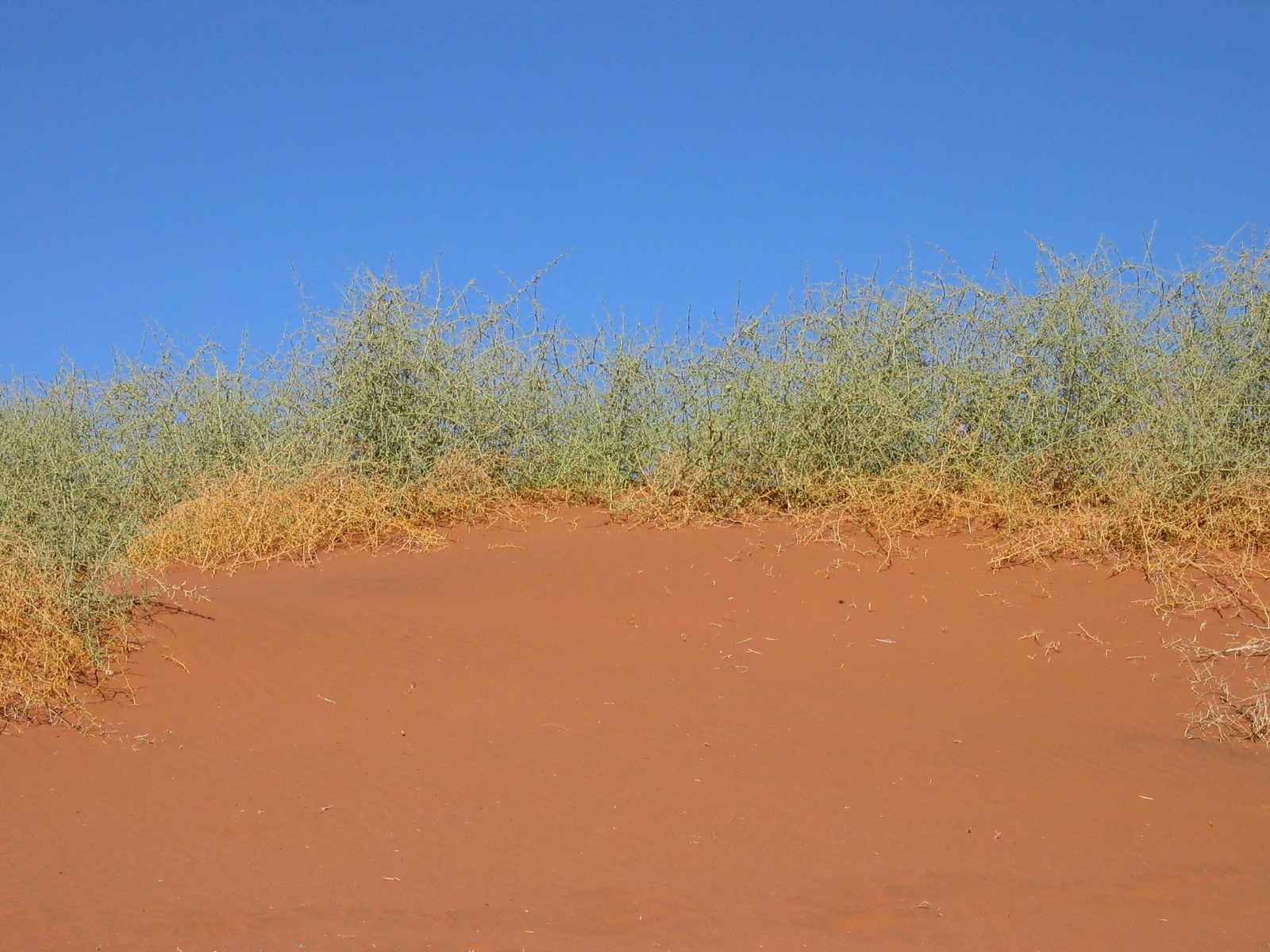
Acanthosicyos is a small genus of thorny, dioecious shrubs in the family Cucurbitaceae (order Cucurbitales), endemic to the Namib Desert of southern Africa. The genus comprises just one widely recognised species — Acanthosicyos horridus, commonly called the nara melon — along with one additional species, the Gemsbok Cucumber.
Plants in this genus are remarkable survivors of one of Earth's driest environments. Acanthosicyos horridus is leafless; instead, its modified green stems and sharp spines 2–3 centimetres long carry out photosynthesis. As a phreatophyte, it drives roots as deep as 50 metres to reach groundwater near the water table, allowing it to persist for many years without surface rainfall. Where plants establish in sandy desert near ephemeral rivers or paleochannels, wind-blown sand accumulates against the spiny stems, forming hummocks that can reach 1,000–1,500 m² in area and up to 4 metres in height.
Acanthosicyos horridus is a keystone species in its desert ecosystem. Its pale green, spiny fruits — averaging 1 kg each — together with its seeds, shoots, and flowers, sustain beetles, gemsbok, and ostrich. Small rodents shelter within the dense spiny tangle, and black-backed jackals act as the plant's primary long-distance seed dispersers, carrying seeds 7–15.9 km in their digestive tracts. The plant's sand-binding habit also creates localised microclimates that support broader soil biodiversity.
Both species in the genus bear edible fruits, though unripe fruit contains irritant compounds that burn the throat and esophagus. Ripe nara fruits have a sweet, aromatic, yellow-orange pulp and large seeds known as butter-nuts or butterpips, which have been exported for use in baked goods. The fruit has long been a seasonal food source for Nama people of the region.
Etymology
The genus name Acanthosicyos derives from the Ancient Greek ἄκανθα (ákantha), meaning "thorn", and σικύος (sikúos), meaning "gourd" — a direct reference to the plant's spiny stems and its membership in the gourd family Cucurbitaceae.
Distribution
Acanthosicyos is endemic to the Namib Desert in southern Africa. Species occur specifically in sandy desert terrain with access to groundwater, such as near ephemeral rivers and paleochannels, but are absent from stony plains.
Ecology
Acanthosicyos horridus functions as a keystone species in the Namib Desert. Its presence supports a web of wildlife: fruits, seeds, shoots, and flowers feed gemsbok, ostrich, and beetles; small rodents including Rhabdomys pumilio and Desmodillus auricularis shelter in its spiny stems; and black-backed jackals are the primary seed dispersers, carrying seeds 7–15.9 km. The plant's sand-binding habit creates hummocks and desert microclimates that enhance local soil microbial diversity.
Cultural Uses
The nara melon (Acanthosicyos horridus) has been a vital food for desert peoples. Ripe fruits — pale green, spiny, with sweet yellow-orange pulp — are eaten by Nama people during fruiting seasons (February–April and August–September). The large seeds, known as butter-nuts or butterpips, are nutritious and have been exported for use in baked goods. The Gemsbok Cucumber (the second species) is consumed by Kalahari Bushmen after roasting in fire for several hours, which neutralises the irritant compounds present in unripe or raw fruit.










