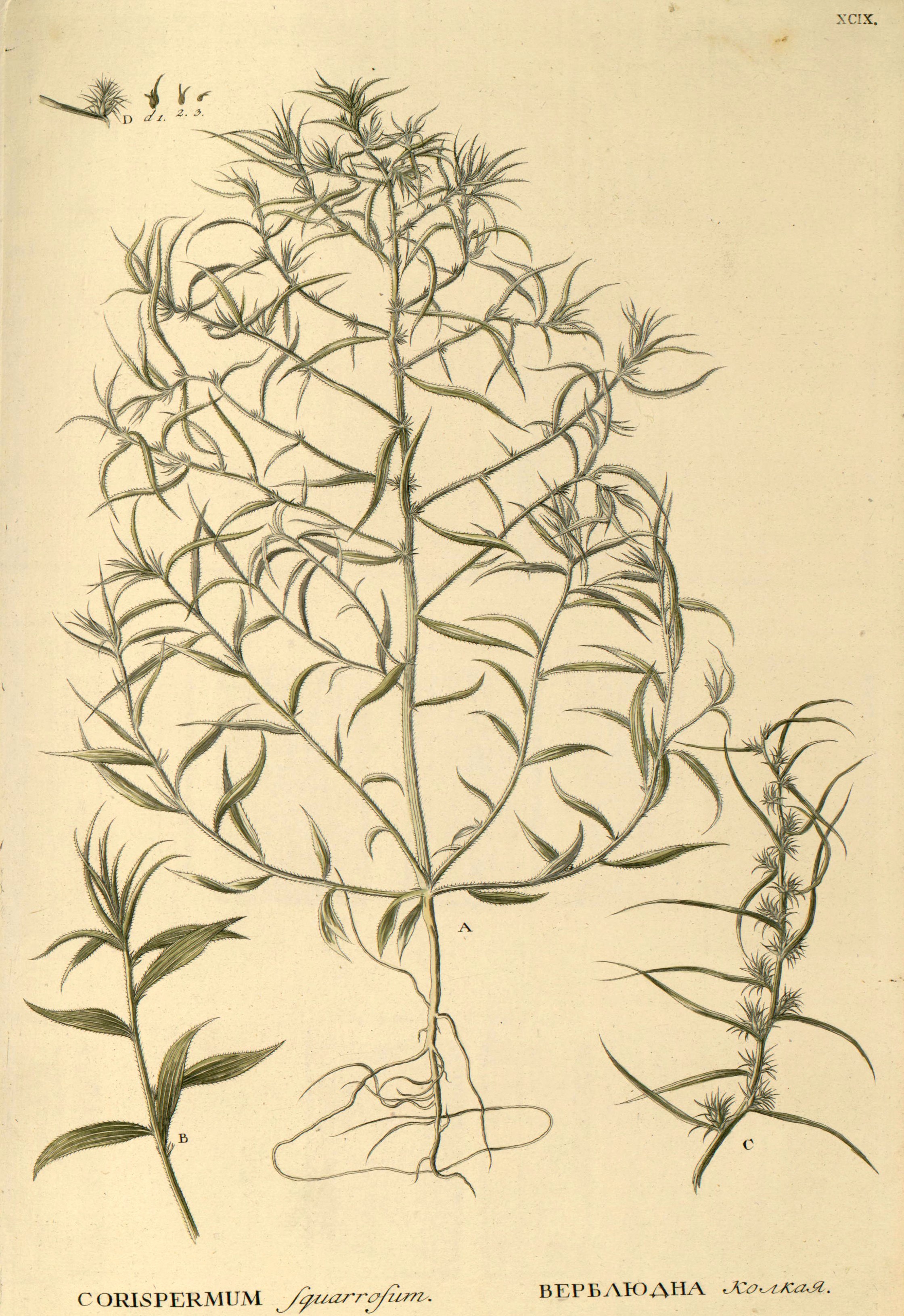
Agriophyllum is a small genus of annual flowering plants in the family Amaranthaceae (order Caryophyllales), native to the arid and semi-arid regions of central and eastern Asia, with scattered occurrences in Eastern Europe. Plants are typically low-growing to moderately tall herbs, reaching at most around 1 metre in height, and are well adapted to harsh, sandy, wind-blown environments where they play a role in stabilizing drifting soils.
The genus belongs to the subfamily Salsoloideae within Amaranthaceae and encompasses species that thrive on sandy desert margins, dunes, and steppe habitats. The most widely studied member, Agriophyllum squarrosum, has attracted attention both ecologically — as a sand-binding pioneer plant — and economically for its edible seeds. Seeds of Agriophyllum species resemble small grains and can be roasted, milled, baked, or prepared as porridge, giving the genus nutritional and food-security significance in Central Asian communities.
In Kazakhstan, the genus is traditionally known as kumarshyk and has deep cultural roots as a famine food and survival staple. A patented preparation combines kumarshyk seeds with fermented camel's milk, illustrating the continued relevance of the genus in traditional food systems of the Kazakh steppe.
Distribution
Agriophyllum is native to arid and semi-arid regions of central and eastern Asia, extending into Eastern Europe. Its range includes the sandy deserts and steppes of Kazakhstan (including the Ryn Desert and Atyrau Region), with species such as A. squarrosum widespread across the sandy habitats of the Asian interior.
Ecology
Species of Agriophyllum are pioneer plants of sandy desert and dune environments, adapted to wind-blown soils with low moisture and nutrient availability. They contribute to sand stabilization in the arid steppes and deserts of central Asia.
Cultural Uses
In Kazakhstan, Agriophyllum is known as kumarshyk and has a long history as a famine and sustenance food. The seeds can be roasted, milled, baked, or cooked into porridge, comparable in use to wheat. A fermented beverage combining kumarshyk seeds with camel's milk has been developed and patented by scientists from the Atyrau Region. The plant's cultural significance was highlighted in a 2021 book by author Murat Bektenov documenting its role in Kazakh survival traditions during times of war and famine.

