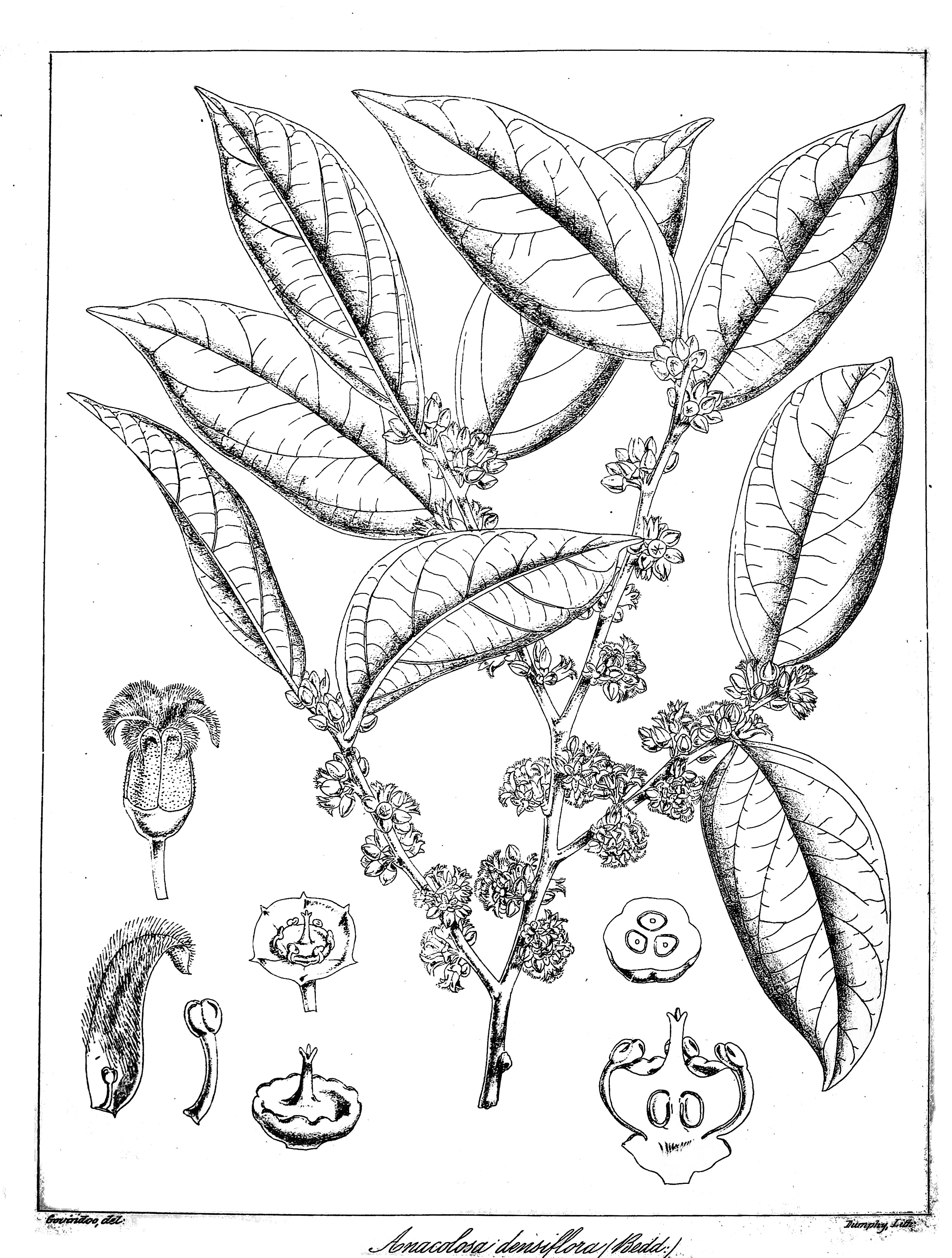
Anacolosa is a plant genus of 15 to 22 species belonging to the family Olacaceae within the order Santalales. Under the APG IV classification system it is placed in Olacaceae, though some taxonomic sources assign it to the segregate family Aptandraceae. Species in the genus grow as shrubs or trees distributed throughout the tropics, with particular representation in Malesia — the biogeographical region spanning the Malay Peninsula, the Indonesian archipelago, and the Philippines. The flowers are bisexual and the fruits are drupes, fleshy pitted fruits with a thin pericarp. The genus comprises around 15 to 22 accepted species, including Anacolosa frutescens, Anacolosa densiflora, and Anacolosa uncifera.
Etymology
The generic name Anacolosa derives from the Greek anakolos, meaning "knotted", and refers to the distinctive knotted rim of the calyx cup found in members of this genus.
Distribution
Anacolosa species are distributed throughout the tropics, with notable representation in Malesia — the region encompassing the Malay Peninsula, Indonesian archipelago, New Guinea, and the Philippines.
Taxonomy Notes
Under the APG IV classification, Anacolosa is placed in the family Olacaceae within the order Santalales. Some authorities treat the group in the segregate family Aptandraceae, reflecting ongoing debate about the circumscription of Olacaceae sensu lato. GBIF recognises the genus as accepted within Olacaceae.










