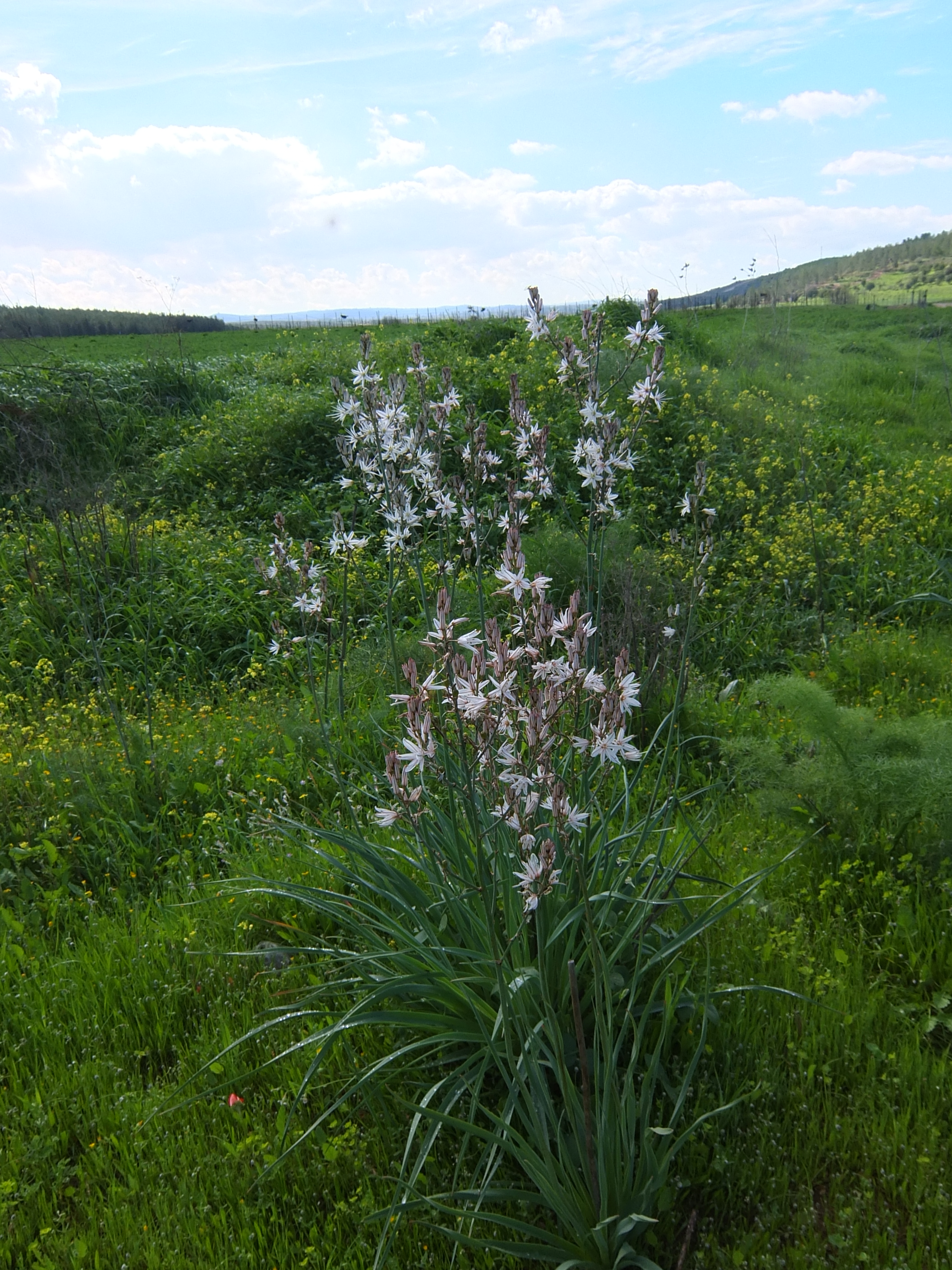
Asphodelus is a genus of hardy herbaceous perennials in the family Asphodelaceae (order Asparagales), comprising approximately 16–29 accepted species depending on the checklist consulted. The genus was formally described by Carl Linnaeus in 1753 and was formerly treated as part of the lily family (Liliaceae) before molecular systematics established its current placement. Plants grow from swollen rhizomes and produce narrow, tufted basal leaves. Flowering scapes are hollow or solid, rising to roughly 45 cm to over 1 m in height, and bear racemose or paniculate inflorescences of white or yellow six-tepalled flowers. Fruits are capsular and globose with loculicidal dehiscence; seeds are black and angled or winged.
The genus is centred on the Mediterranean Basin, extending through southern and eastern Europe, North Africa, the Middle East, and east to the Caucasus and Indian subcontinent. A few species have been introduced beyond this native range to regions including New Zealand, Australia, Mexico, and the southwestern United States. Asphodelus species favour dry, open habitats — grasslands, rocky slopes, and stony ground, typically on limestone — and thrive in well-drained soils with full or partial sun. In cultivation they tolerate a broad range of soil textures and are hardy to approximately −15 °C (USDA zones 6–9).
The genus carries deep cultural significance in Mediterranean history. In ancient Greek belief, asphodel was the flower of the dead, planted on graves and associated with Persephone and the Elysian Fields. Practically, the fleshy roots were roasted as food by poorer communities in antiquity, and the plant was reputed as a remedy for snake bites. Today the large paddle-shaped leaves of some species — particularly around the Mediterranean — are still used to wrap fresh cheeses such as burrata, imparting a mild flavour and extending shelf life. Well-known species include Asphodelus aestivus (summer asphodel), A. albus (white asphodel), A. ramosus (branched asphodel), and A. fistulosus (hollow-stemmed asphodel).
Etymology
The genus name Asphodelus is drawn directly from the ancient Greek word ἀσφόδελος (asphodelos). The Greek term itself is of uncertain deeper origin — it predates the classical period and may be borrowed from a pre-Greek Mediterranean language. In antiquity the name referred primarily to the white asphodel (Asphodelus albus or the closely related A. aestivus), the plant that ancient Greek poets placed in the meadows of the underworld.
Distribution
Asphodelus is a genus of Mediterranean and southwest Asian distribution. Its core native range encompasses the Mediterranean Basin, southern and eastern Europe, North Africa, the Middle East, and extends east to the Caucasus and the Indian subcontinent. The genus is especially diverse in the western Mediterranean, where rocky limestone hillsides and dry grasslands provide its preferred habitat. Within Europe, Asphodelus albus is the main representative reaching as far north as Switzerland. In North America the genus is not native; a single historical collection of A. ramosus from ballast dumps in New Jersey (1879) represents an accidental introduction with no established population. Several species have been deliberately introduced to New Zealand, Australia, Mexico, and the southwestern United States.
Ecology
Asphodelus species occupy open, sun-exposed habitats: dry grasslands, rocky slopes, stony hillsides, and scrubland, with a strong affinity for calcareous (limestone) substrates. Plants grow from swollen rhizomes that store reserves, allowing them to persist through summer drought. Inflorescences are racemose or paniculate; fruits are globose capsules that dehisce loculicidally to release angled or winged black seeds. The genus is characterised as scapose — leafless flowering scapes rise from a basal rosette — and some species have hollow scapes. Asphodelus is tolerant of both dry and moderately moist conditions, and grows in full sun or semi-shade.
Cultivation
In garden settings, Asphodelus species are grown as ornamental perennials valued for their architectural rosettes and wand-like flower spikes. They perform best in well-drained soil — sandy, loamy, or clay — in a position with full sun or light shade. Soil pH may range from mildly acidic to alkaline. Plants are hardy to approximately −15 °C, corresponding to USDA hardiness zones 6–9. Established plants are drought-tolerant and require little supplemental irrigation once settled. No significant hazards are known for this genus.
Propagation
Asphodelus may be propagated by seed or by division. Seeds are sown in late winter to spring (March–April) in a cold frame or cool greenhouse, with germination typically occurring within a few weeks of warming. Division of established clumps is carried out in spring or autumn when plants are not in active growth; each division should include at least one rhizome section with a growth point.
Cultural Uses
Asphodelus carries one of the richest cultural histories of any Mediterranean plant genus. In ancient Greek religion and literature the asphodel was the quintessential flower of the dead: Homer's Odyssey describes the spirits of the deceased wandering the Asphodel Meadows, and Greeks planted the flowers on graves to provide sustenance for the departed. Persephone, queen of the underworld, was closely associated with the plant.
Beyond mythology, asphodel was a practical food source for the rural poor of the ancient Mediterranean. The starchy roots were roasted and eaten, reportedly with a nutty flavour, and young shoots were cooked as a vegetable; raw flowers were also consumed. The plant was additionally credited with medicinal properties — as a remedy for snake bites and as a counter to sorcery — though no modern medicinal rating has been established. In contemporary southern Italian and other Mediterranean food traditions, the broad leaves of asphodel continue to serve as a natural wrapping for fresh cheeses such as burrata, where a shared shelf life of three to four days between leaf and cheese signals freshness to the buyer.
Taxonomy Notes
Asphodelus was described by Carl Linnaeus in the 1753 Species Plantarum and was long placed in the broad family Liliaceae under order Liliales. Molecular phylogenetic studies in the late twentieth and early twenty-first centuries repositioned the genus within the family Asphodelaceae, subfamily Asphodeloideae, in the order Asparagales — a reclassification now adopted by the Angiosperm Phylogeny Group and major global checklists including the GBIF backbone. Some checklists still record Asphodelaceae as a subfamily of the broader Xanthorrhoeaceae. Historical synonyms for the genus include Asphodeloides, Clausonia, Verinea, Gethosyne, Ophioprason, and Glyphosperma. The GBIF backbone recognises 29 accepted species; Wikipedia cites 16, reflecting differing circumscriptions among authorities.










