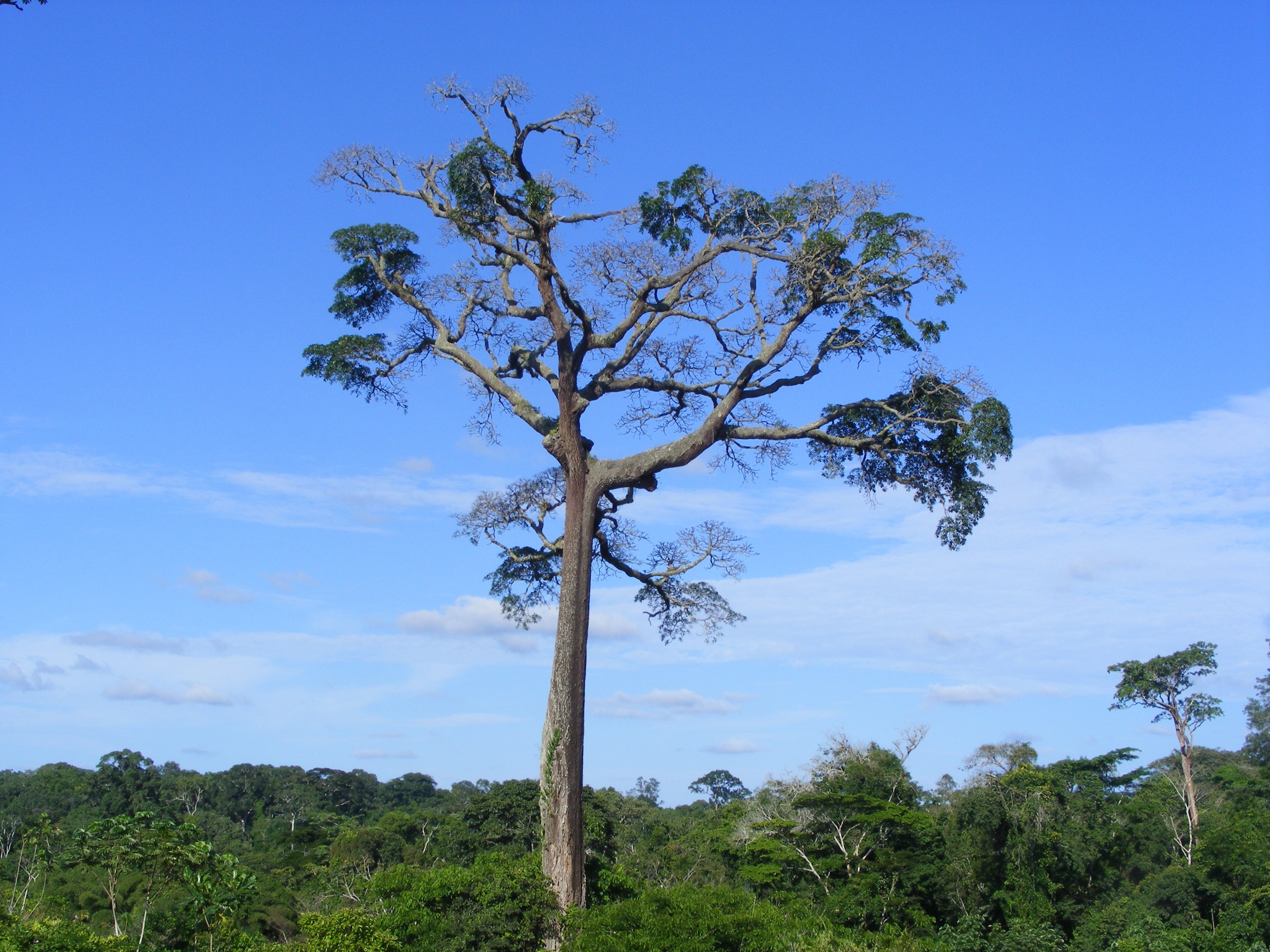
Baillonella is a monotypic genus of trees in the family Sapotaceae, order Ericales, containing a single species: Baillonella toxisperma, commonly known as moabi, African pearwood, or djave nut. The genus is native to the rainforests of west-central Africa, occurring in Angola, Cameroon, the Republic of the Congo, the Democratic Republic of the Congo, Gabon, and Nigeria. Its natural habitat is subtropical or tropical moist lowland forest.
The moabi tree is ecologically and culturally significant across its range. Its seeds yield a rich edible oil that forms a key component of the subsistence economy of the Baka and other indigenous forest peoples. The timber, marketed internationally as African pearwood, is a highly prized hardwood, and this dual pressure — commercial logging alongside extraction for oil — has driven the species into decline across much of its range. Baillonella toxisperma is assessed as Vulnerable on the IUCN Red List.
Distribution
Baillonella toxisperma grows in subtropical and tropical moist lowland forests across Angola, Cameroon, the Republic of the Congo, the Democratic Republic of the Congo, Gabon, and Nigeria.
Conservation
Baillonella toxisperma is classified as Vulnerable by the IUCN, declining over large parts of its range due to overexploitation both as a commercially exported hardwood and as a source of locally prized edible oil. Minimum-diameter logging restrictions are in place but have not halted the decline.
Cultural Uses
The oil extracted from moabi seeds (Baillonella toxisperma) is a dietary staple and a cornerstone of subsistence for the Baka and other indigenous peoples of west-central Africa. The timber is traded internationally under the names African pearwood and djave nut.










