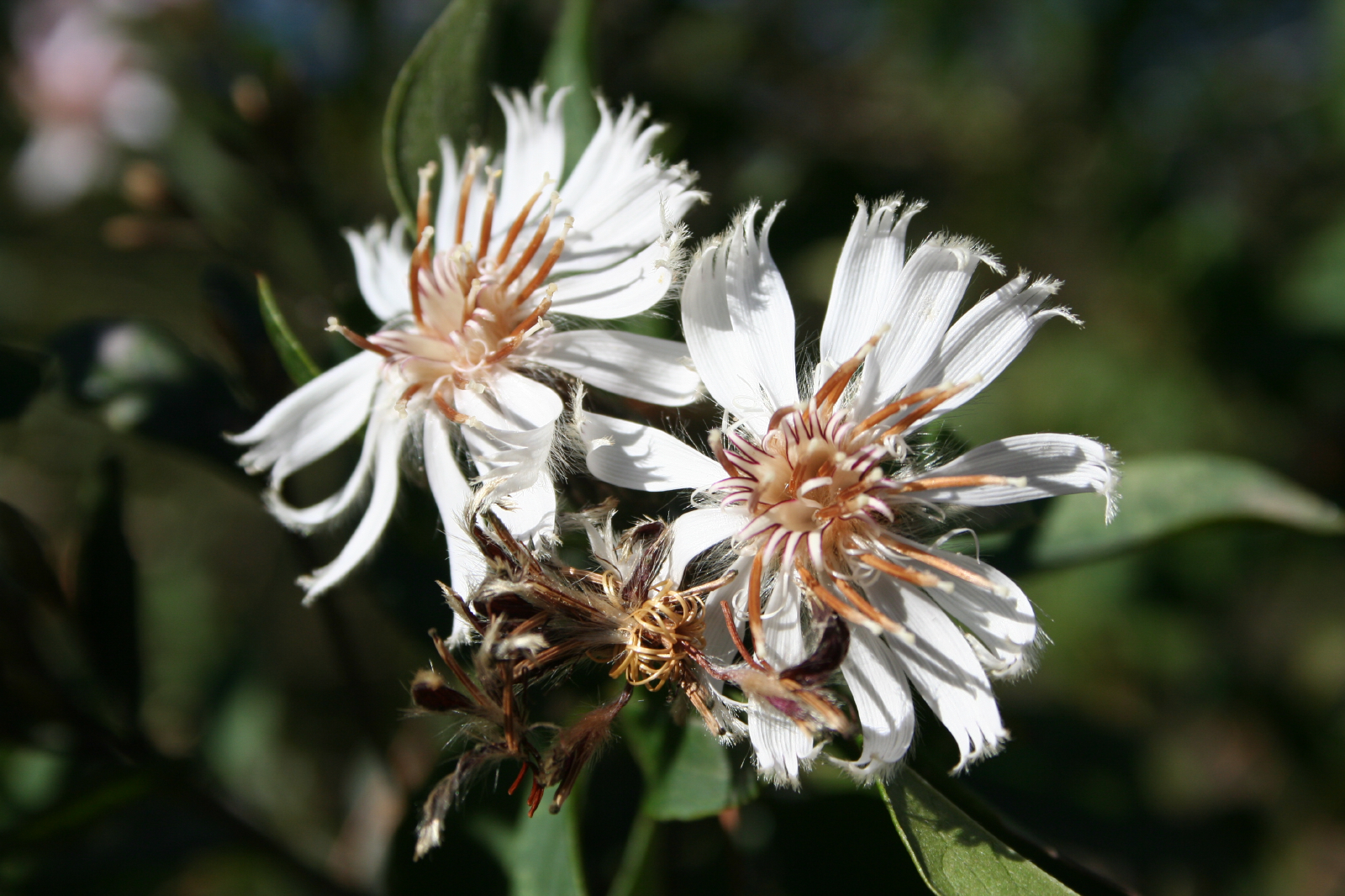
Barnadesia is a genus of flowering plants in the aster family, Asteraceae, placed in the order Asterales. It comprises mainly shrubs and small trees, with the largest individuals exceeding four metres in height. The stems are characteristically spiny, a feature reflected in several of the genus's common names such as espino de gato ("cat's thorn") and espino santo ("holy thorn").
The genus is native to South America, distributed from Colombia south to northern Argentina, with the greatest concentration of species in the Andes mountains. Flower heads carry pink, red, or purple florets, made up of 8 to 13 hairy ray florets and typically either one or three disc florets. The fruit from a ray floret bears a distinctive plumelike pappus, while the fruit from a disc floret carries a bristle-like, contorted pappus.
Barnadesia is one of the basal lineages of Asteraceae and is placed in the subfamily Barnadesioideae, which is regarded as the sister group to all other Asteraceae. GBIF records 23 descendants for the genus. Other common names used across its Andean range include clavelillo and chivo caspi.
Distribution
Barnadesia is native to South America, ranging from Colombia south to northern Argentina. Most species are concentrated in the Andes, where the genus is most diverse.
Taxonomy Notes
Barnadesia belongs to the subfamily Barnadesioideae within Asteraceae (order Asterales). This subfamily is considered the sister group to all remaining Asteraceae, making Barnadesia and its relatives among the most basally diverging lineages in the entire aster family.










