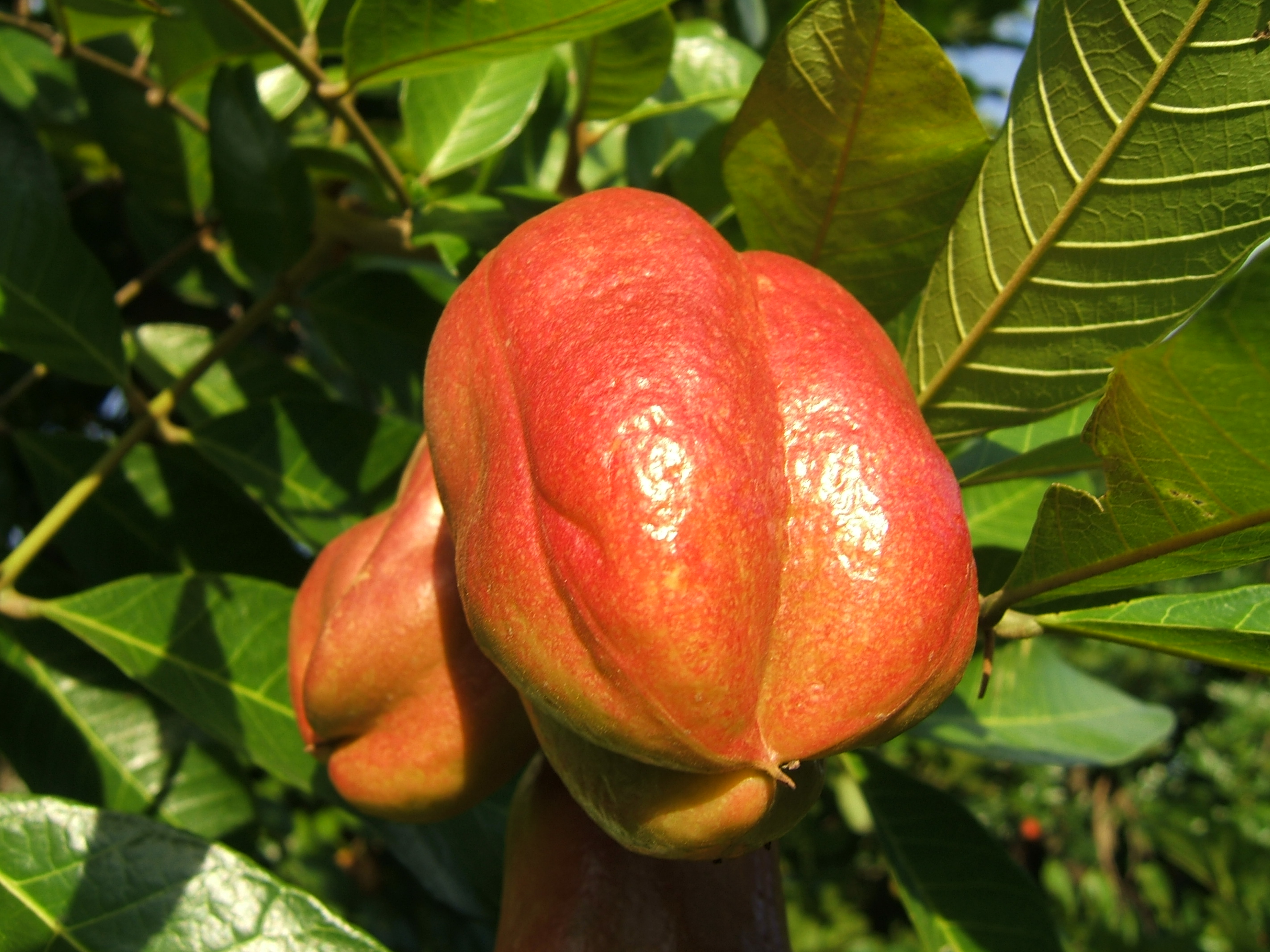
Blighia is a small genus of three species of evergreen trees and large shrubs in the soapberry family, Sapindaceae (order Sapindales). The genus is endemic to tropical Africa, ranging from Guinea in the west across to Kenya in the east, and south to Angola and KwaZulu-Natal in southern Africa.
Members of the genus grow to 10–20 metres tall and bear pinnate leaves. Flowers are small and produced in panicles. The fruit is a distinctive oval capsule, 4–8 centimetres long, that splits open at maturity to reveal three seeds, each enveloped in a fleshy, edible yellow aril. The outer skin and seeds are highly toxic; only the ripe, open aril is safe to eat.
The most economically significant member is Blighia sapida, the Ackee, which is cultivated commercially for its edible aril — most famously in Jamaica, where it forms part of the national dish. The two other accepted species, Blighia unijugata and Blighia welwitschii, are non-commercial African forest trees.
The genus name honours Captain William Bligh of HMS Bounty fame, who transported botanical specimens to England in the late eighteenth century.
Etymology
The genus Blighia is named in honour of Captain William Bligh, commander of the ill-fated HMS Bounty, who collected and transported specimens of these plants to England in the eighteenth century.
Distribution
Blighia is native to tropical Africa, distributed from Guinea in the west to Kenya in the east, and extending south to Angola and KwaZulu-Natal. The commercially grown Ackee (B. sapida) has been introduced and naturalised in the Caribbean and parts of Central America.
Cultural Uses
The Ackee (Blighia sapida) is the national fruit of Jamaica and, combined with saltfish, forms the country’s national dish. Only the mature, naturally opened aril is edible; the unripe fruit, seeds, and skin contain hypoglycin A and B, which are highly toxic and can cause Jamaican vomiting sickness if ingested.










