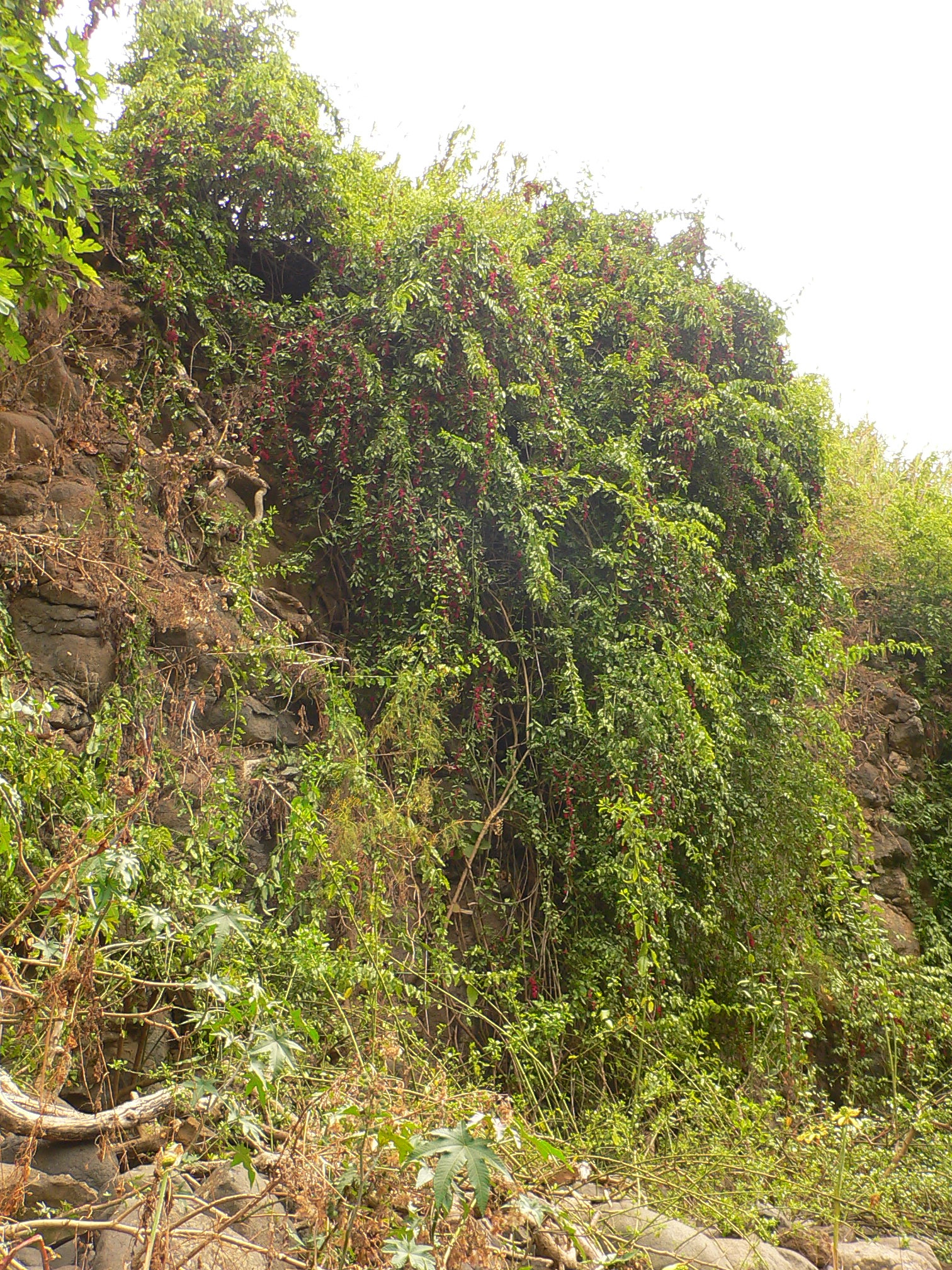
Bosea is a small genus of evergreen, woody shrubs in the family Amaranthaceae (order Caryophyllales), comprising just three species with a remarkably disjunct distribution across three widely separated regions: the Canary Islands, Cyprus, and the western Himalayas.
Plants are characterized by many crowded, cane-like stems arising from ground level, forming medium to tall shrubs. The leaves are smallish, simple, and have smooth margins. Flowers are tiny, white to greenish, and arranged in branched spikes at the tips of branches. The fruits are small berries that have been used locally both as food and in traditional medicine, depending on the region.
Despite its wide geographical scatter, the genus is monophyletically placed within Amaranthaceae and contains only three accepted species: Bosea yervamora (Canary Islands), Bosea cypria (Cyprus), and Bosea amherstiana (western Himalayas). This disjunct pattern across the Mediterranean and South Asia makes Bosea of particular interest to biogeographers studying ancient plant distributions.
Distribution
Bosea comprises three species distributed across three geographically isolated regions: B. yervamora in the Canary Islands, B. cypria in Cyprus, and B. amherstiana in the western Himalayas. This disjunct pattern spanning the Atlantic, eastern Mediterranean, and South Asia makes the genus biogeographically notable.
Cultivation
Although rarely encountered in cultivation, Bosea species are straightforward to grow in any well-drained soil in a position of full sun or warm shelter. They tolerate climates ranging from cool temperate to temperate and re-sprout vigorously after being cut back, making them suitable as ornamentals or informal hedges.
Propagation
Bosea can be propagated from cuttings, seed, or root division.










