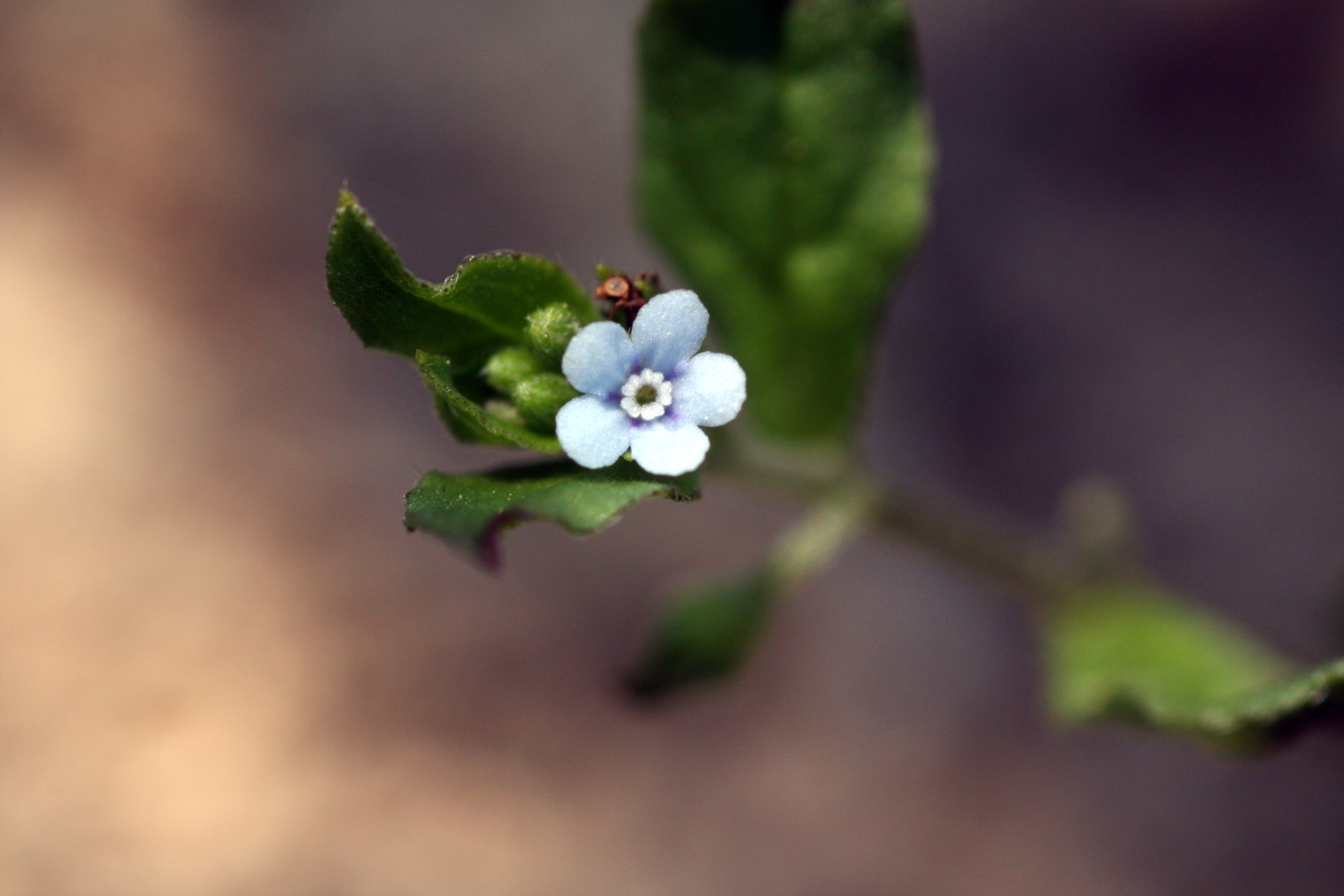
Bothriospermum is a small genus of annual or perennial herbaceous flowering plants in the borage family, Boraginaceae (order Boraginales). The genus is native to Tropical and Subtropical Asia, extending northward into Mongolia, and contains around six accepted species.
Members of Bothriospermum share the typical boraginaceous habit: alternate, often hairy leaves and small, five-petalled flowers arranged in scorpioid cymes — the coiled, one-sided inflorescences characteristic of the borage family. The flowers are generally white or pale blue, resembling those of related genera such as Myosotis (forget-me-nots) and Cynoglossum. The name Bothriospermum refers to the pitted or furrowed nutlets produced by the genus, a distinguishing feature of its fruit morphology.
Representative species include Bothriospermum zeylanicum, found across South and Southeast Asia, Bothriospermum secundum, occurring in East Asia, and Bothriospermum longistylum, described from China.
Etymology
The name Bothriospermum derives from the Greek bothrios (pitted or furrowed) and sperma (seed), referring to the distinctively pitted nutlets that characterize the genus.
Distribution
Bothriospermum is native to Tropical and Subtropical Asia, with its range extending north to Mongolia. Species are found across South Asia, East Asia, and Southeast Asia.
Taxonomy Notes
Bothriospermum is placed in the family Boraginaceae, order Boraginales. Multiple GBIF backbone records exist for the genus; the most complete accepted record (key 315121843) recognizes 6 descendants and places it in Boraginales within Magnoliopsida. An older record places it in Lamiales, reflecting historical disagreement over the circumscription of Boraginaceae — the family was formerly included within Lamiales by some classifications before being elevated to its own order Boraginales under APG IV.










