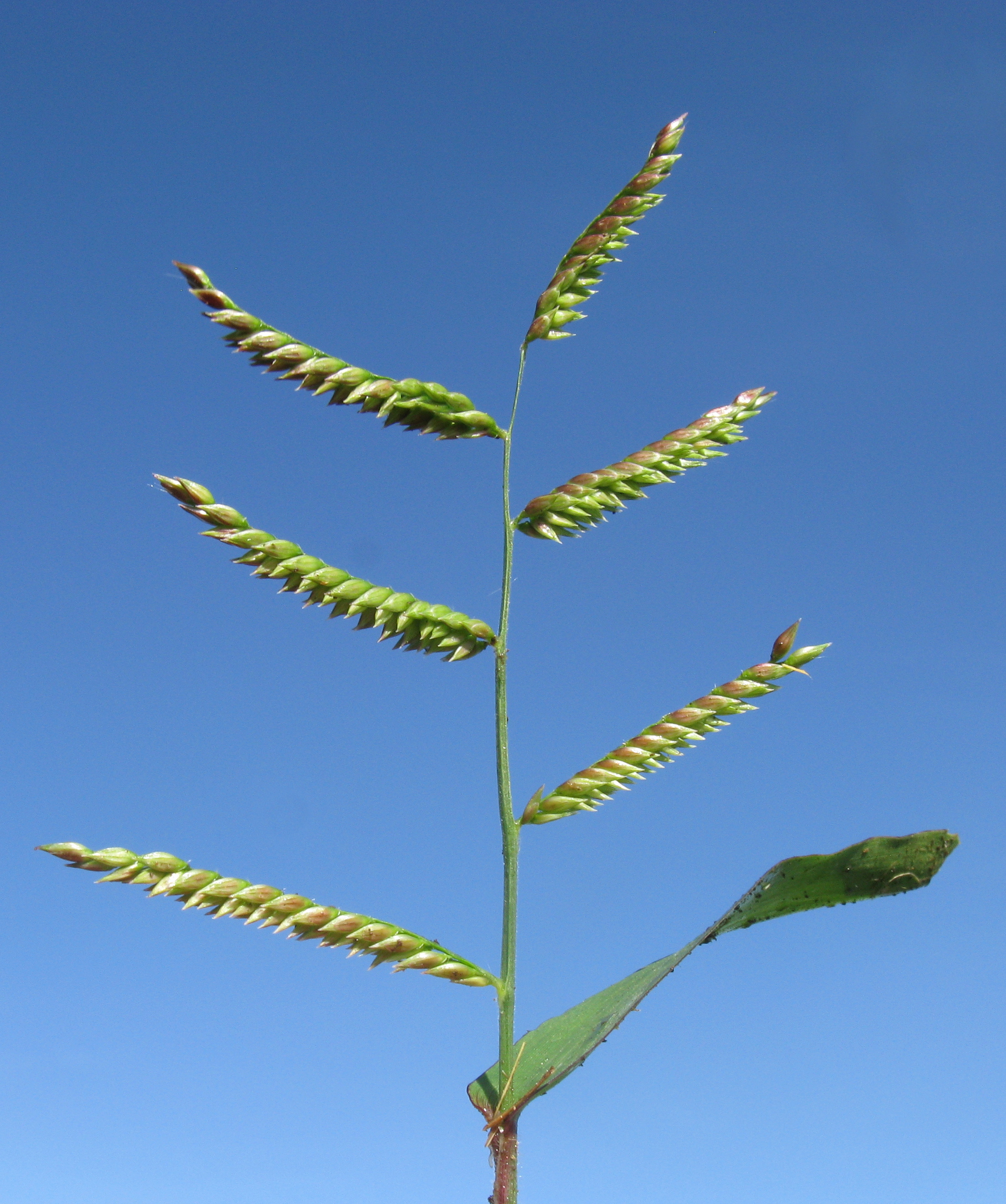
Brachiaria is a genus of grasses in the family Poaceae (order Poales), commonly known as signalgrass. It is native to tropical and subtropical regions of Africa, Eurasia, Australia, and the Americas. The genus has historically been broadly defined but modern taxonomic treatments have transferred most species into the closely related genus Urochloa; some classifications retain Brachiaria in a narrower sense for African species, while others treat it as a synonym of Urochloa.
The plants are annual or perennial grasses, typically growing in open, sunny habitats ranging from savannas and grasslands to disturbed ground, roadsides, and cultivation. Several species are widely cultivated as tropical forage grasses and rank among the most economically important pasture grasses in the world. Brazil alone has approximately 40 million hectares planted with species of this group, making it the most extensively used tropical grass genus in Central and South America.
Notable members include Brachiaria mutica (para grass), a vigorous perennial forage grass that has also become invasive in many tropical regions, and Brachiaria ramosa, a native Asian species used as forage and a food source for bird species such as the Eurasian collared dove. Brachiaria brizantha (palisade grass) is among the most widely planted cultivated varieties in the humid tropics. The genus was originally described from African material and many of its species originate in sub-Saharan Africa, from which some were introduced to the Americas during the colonial period.
Distribution
Brachiaria (including species now placed in Urochloa) is native to tropical and subtropical Africa, Eurasia, Australia, and the Americas. The centre of diversity lies in sub-Saharan Africa, particularly East Africa. Several species were introduced to the Americas — some apparently during the colonial period via slave ships — and have since become widespread throughout the Neotropics and parts of North America.
Taxonomy Notes
The genus Brachiaria was long used in a broad sense for a large group of tropical grasses, but molecular phylogenetic studies have shown it to be polyphyletic. Most species have now been transferred to Urochloa, and some authorities treat Brachiaria as a synonym of that genus. The GBIF backbone retains Brachiaria as a valid genus name while placing the majority of described species under Urochloa. This nomenclatural flux means that Brachiaria and Urochloa are often used interchangeably in agronomic and ecological literature.
Ecology
Species of Brachiaria occupy a wide range of habitats, from swamps and shaded forest margins to semi-arid scrub, but are most productive in open savannas and tropical grasslands. In East Africa they are characteristic of open savanna systems; in Angola, Brachiaria brizantha colonises termite mounds and woodland-grassland ecotones. Where introduced beyond their native range, Brachiaria grasses can become dominant ground-layer plants, suppressing native vegetation and slowing natural forest regeneration — a significant ecological concern in northern Australia and Brazil, where tens of millions of hectares of native habitat have been converted to Brachiaria pasture.
Cultivation
Brachiaria grasses are the single most important group of forage plants for tropical pastures globally. They are valued for their ability to grow in infertile, acidic soils and to maintain productivity under heavy grazing. Brazil is the world's largest user and seed producer; Mexico, Central American nations, and other tropical countries have all substantially expanded planted area. Common agricultural pests include spittlebugs, leafcutter ants, mound-building termites, and several species of shoot flies and caterpillars.
History
Some Brachiaria species — particularly those of African origin — were first brought to the Americas involuntarily during the Atlantic slave trade, introduced as bedding or food material in slave ships. Deliberate introduction of superior agronomic cultivars began in the twentieth century; Urochloa eminii was formally introduced to Brazil in 1952. Since then, systematic breeding and seed commercialisation programmes have made the genus the dominant forage grass across the Neotropics.

