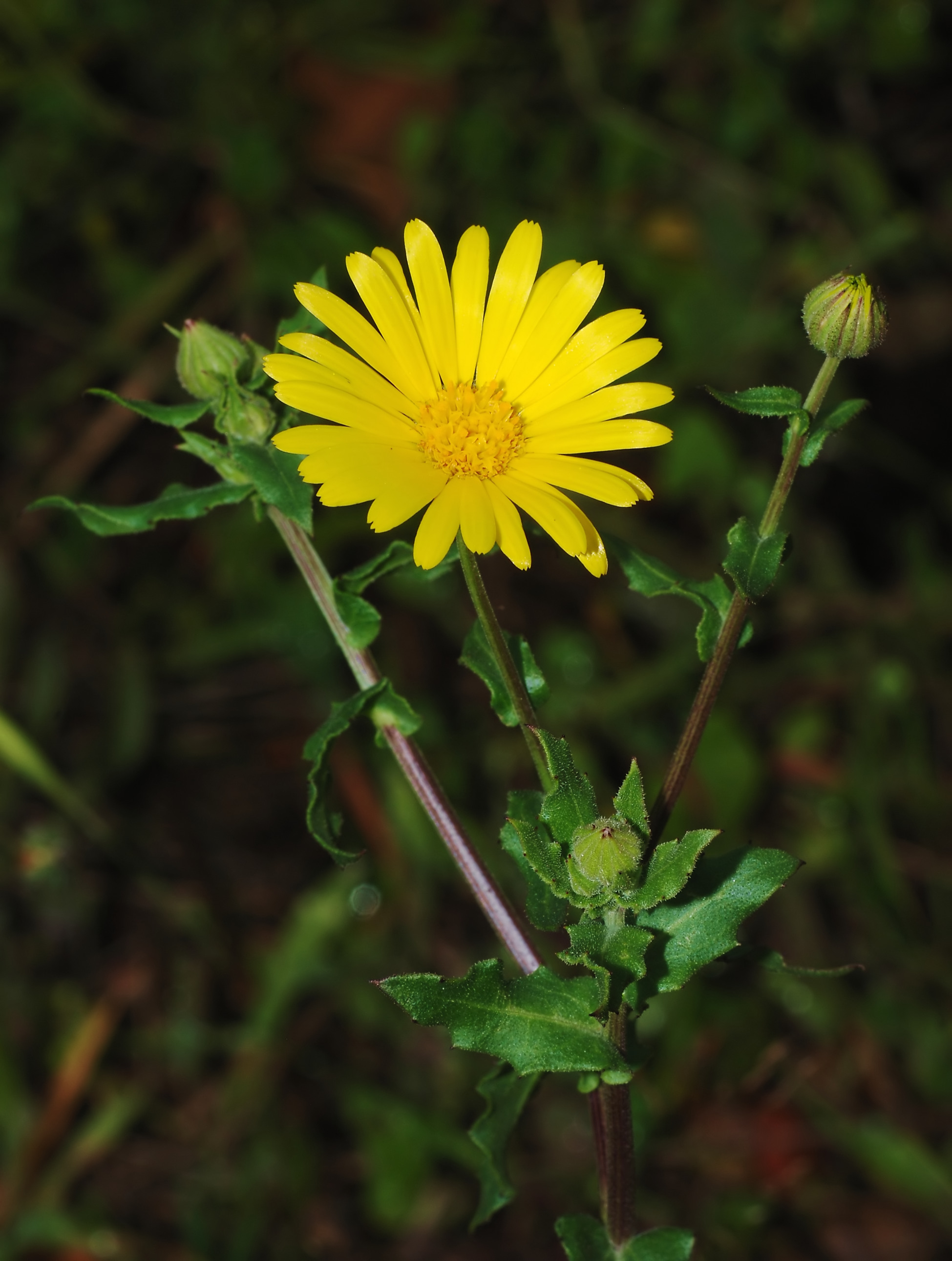
Calendula is a genus of roughly 15–20 species of annual and perennial herbaceous plants belonging to the daisy family Asteraceae (order Asterales). Commonly called marigolds, they are native to Europe, North Africa, Macaronesia, West Asia, and the Western Himalayas, with the greatest diversity concentrated around the Mediterranean Region. The genus should not be confused with other plants bearing the marigold name, including corn marigold, desert marigold, marsh marigold, and species of the related genus Tagetes.
The genus is best known through its most widely cultivated representative, Calendula officinalis (pot marigold or garden marigold), whose bright orange and yellow composite flower heads have made it a garden staple across temperate regions worldwide. The flowers of C. officinalis are chemically rich, containing flavonol glycosides, triterpene oligoglycosides, oleanane-type triterpene glycosides, saponins, and a sesquiterpene glucoside. Petals have long served culinary purposes — as a saffron substitute, a colorant for cheese and soups, and a salad ingredient — earning C. officinalis its British common name "pot marigold" from its use in broths. Dye extracted from the flowers yields shades of honey, gold, orange, and vibrant yellow.
Beyond the kitchen, Calendula species have a well-documented history in herbal medicine. Oil from C. officinalis is used as an anti-inflammatory and wound-healing agent, and pharmacological studies have suggested antiviral, antigenotoxic, and anti-inflammatory properties in vitro. Topical application has shown some benefit in reducing radiation dermatitis in clinical trials. The genus is also notable for its cultural and ritual history: ancient Romans and Greeks wore garlands of its flowers in ceremonies, it holds a sacred role in Hindu worship, and it appears in Christian Marian traditions across Europe and beyond.
Etymology
The genus name Calendula is a modern Latin diminutive of calendae (the first day of the Roman month), interpreted as "little calendar," "little clock," or possibly "little weather-glass" — likely an allusion to the flowers' long, calendar-spanning blooming season. The common name "marigold," used particularly for Calendula officinalis, is a contraction of "Mary's gold," a reference to the Virgin Mary rooted in early Christian devotional tradition.
Distribution
Calendula is native to Europe, North Africa, Macaronesia, West Asia, and the Western Himalayas. The genus reaches its highest species diversity in the Mediterranean Region, where most wild species occur. Calendula officinalis has been widely introduced beyond this native range through cultivation.
History
Calendula has been woven into human culture for centuries. Ancient Romans and Greeks used the golden flowers in rituals and ceremonies, fashioning crowns and garlands from them. In early Christian tradition the flowers were associated with the Virgin Mary — a connection preserved in the common name "Mary's gold." In India, calendula flowers are considered sacred and have historically adorned statues of Hindu deities. Historically, use was more often culinary or magical than medicinal: sixteenth-century accounts describe potions containing calendula for revealing fairies or true love, while culinary writers such as John Gerard noted that Dutch soups of his era routinely included the petals. By the 17th century, herbalist Nicholas Culpeper credited calendula with heart benefits, though contemporaries did not consider it a particularly efficacious medicine.
Cultural Uses
Petals of Calendula officinalis are edible — used fresh in salads or dried as a saffron substitute and colorant for cheese, custards, soups, and stews, earning the plant the nickname "poor man's saffron." Dye extracted from the flowers produces shades of honey, gold, orange, light brown, and vibrant yellow. Medicinally, calendula extracts and ointments are used topically for minor cuts, burns, acne, and skin irritation, and calendula oil is recognized in herbal medicine as an anti-inflammatory and wound-healing agent. Sacred use continues in India, where the flowers decorate Hindu religious offerings and statues.
Cultivation
Calendula officinalis is the most commonly cultivated species and is grown widely as a garden annual in temperate climates. It is valued for its long flowering season, ornamental bright orange and yellow flower heads, and utility in companion planting. Herbal and cosmetic products labeled "Calendula" invariably use this species as the source material.










