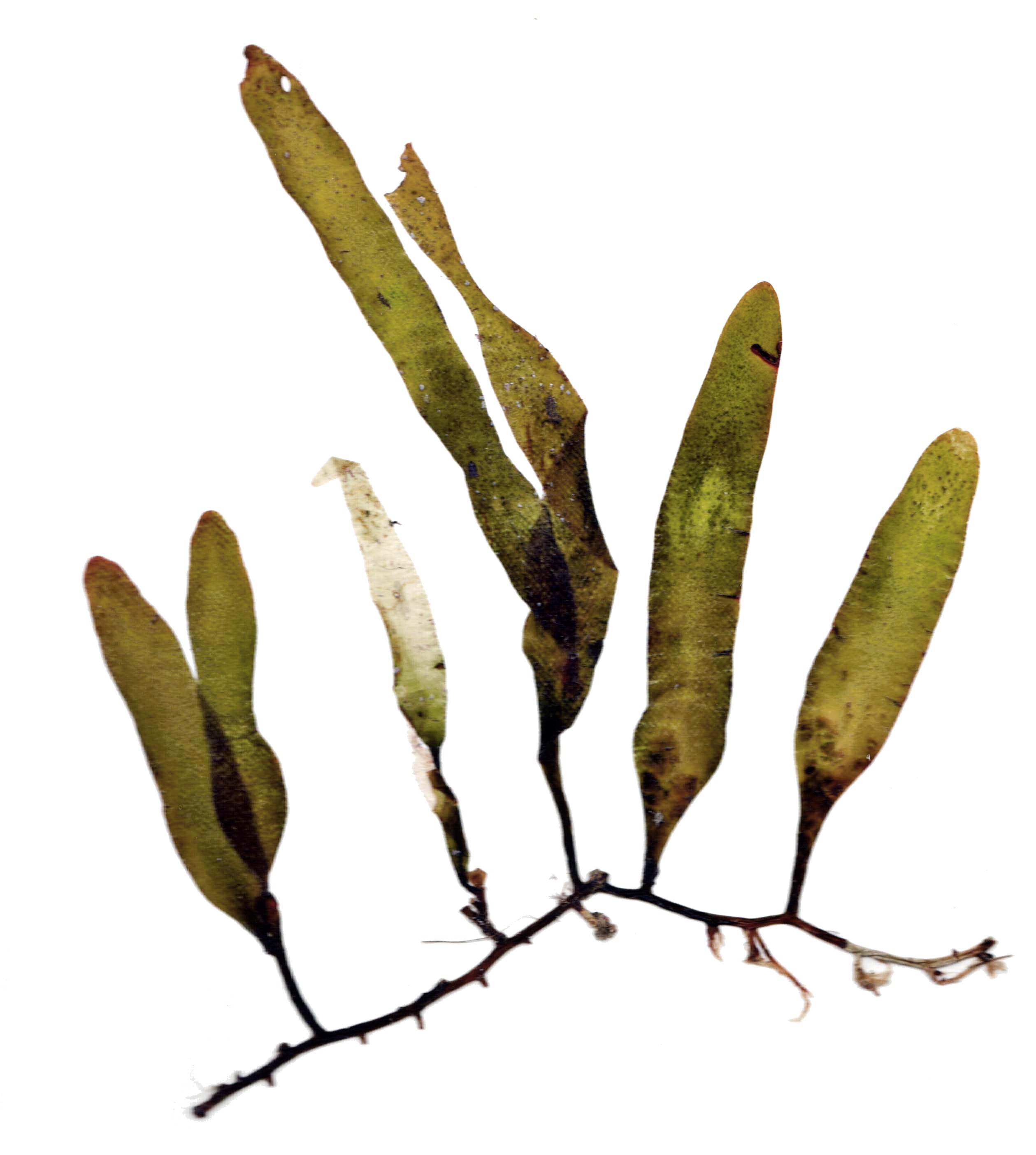
Caulerpa is a genus of tropical and subtropical marine green seaweeds placed in the family Caulerpaceae, within the order Bryopsidales, class Ulvophyceae, and phylum Chlorophyta. First described by the French botanist Jean Vincent Lamouroux in 1809, it is the only genus recognised within Caulerpaceae.
What makes Caulerpa biologically remarkable is its coenocytic (siphonous) body plan: each individual is a single cell containing thousands of nuclei with no internal cross-walls. This makes some species among the largest single cells in the world. The plant body (thallus) is organised into a creeping stolon that anchors to the substrate via root-like rhizoids, with erect assimilators that vary widely in shape across species — from feathery fronds to grape-like clusters. This high morphological variability has historically caused significant confusion in species identification, and molecular analyses using the tufA gene have been essential for resolving species boundaries. Those analyses also identified Pseudochlorodesmis as the sister clade to Caulerpa, and a revised classification by Cremen et al. treats Caulerpaceae and Halimedaceae as sister families within Bryopsidales.
Caulerpa is distributed primarily across tropical oceans, with greatest species diversity in the Caribbean, the Indo-Malay region, and southern Australia, where many species are endemic. Some populations extend into temperate zones. Within their habitat, species occupy shallow intertidal areas and can grow to approximately 100 metres depth. They are highly adaptable: they tolerate a wide temperature range, reproduce asexually through fragmentation and rhizoid extension, grow rapidly, and absorb nutrients directly from sediments — giving them a competitive advantage over other macroalgae that rely on dissolved nutrients in the water column. These traits also make certain species effective invaders; Caulerpa taxifolia spread extensively through the Mediterranean following an accidental release from an aquarium.
Several species are economically important as food. Caulerpa lentillifera and Caulerpa racemosa, both known as "sea grapes", are harvested and eaten raw in salads across Southeast Asia, Oceania, and East Asia. Commercial aquaculture of these species began in the Philippines in the 1950s and has since expanded to Japan, Vietnam, Taiwan, and coastal China. As of 2019, approximately 101 species are accepted in the genus, along with 40 varieties and 67 forms.
Etymology
The name Caulerpa derives from the Ancient Greek kaulos (καυλός, "stalk") and herpō (ἕρπω, "to creep"), together meaning "stalk that creeps" — a reference to the horizontal creeping stolon that forms the base of each thallus. The genus was first formally described under this name by Jean Vincent Lamouroux in 1809.
Distribution
Caulerpa is predominantly a tropical genus found in warm, shallow marine waters worldwide. Species richness is highest in the Caribbean Sea, the Indo-Malay region, and southern Australia, where a substantial proportion of species are endemic. Distribution extends into some temperate regions, and individual species are recorded from the intertidal zone down to approximately 100 metres depth.
Ecology
Caulerpa species thrive in shallow coastal and intertidal habitats across tropical and subtropical seas. Their ecological success stems from several traits: a wide thermal tolerance, rapid asexual reproduction through fragmentation and rhizoid extension, and the ability to absorb nutrients from sediments rather than relying solely on the water column — giving them a competitive advantage over other macroalgae. These characteristics also make certain species highly invasive when introduced outside their native range. Caulerpa taxifolia spread extensively through the Mediterranean following an accidental aquarium release and has been the focus of containment and eradication programmes.
Cultivation
Two species — Caulerpa lentillifera and Caulerpa racemosa — are cultivated in aquaculture for food. Commercial farming originated in Cebu, Philippines, in the 1950s after C. lentillifera was accidentally introduced to fish ponds, and later expanded to Japan (Okinawa, from 1986), Vietnam, Taiwan, and coastal China. Cultivation is facilitated by the genus's capacity to propagate through fragmentation. Production methods include off-bottom cage or tray systems used across the Pacific, bottom-planting on substrate in the Philippines, and land-based raceways in hatchery facilities for more controlled cultivation.
Taxonomy Notes
Caulerpa was described by Lamouroux in 1809 and remains the sole genus in Caulerpaceae. Morphology-based species identification is complicated by high phenotypic plasticity; tufA gene analyses have been used to resolve species boundaries and confirmed Pseudochlorodesmis as the sister clade. Cremen et al. proposed a revised classification of Bryopsidales in which Caulerpaceae and Halimedaceae are treated as sister families. Life-cycle studies show variable ploidy status and genome size within and between species. As of 2019, 101 species are accepted, with 40 varieties and 67 forms.










