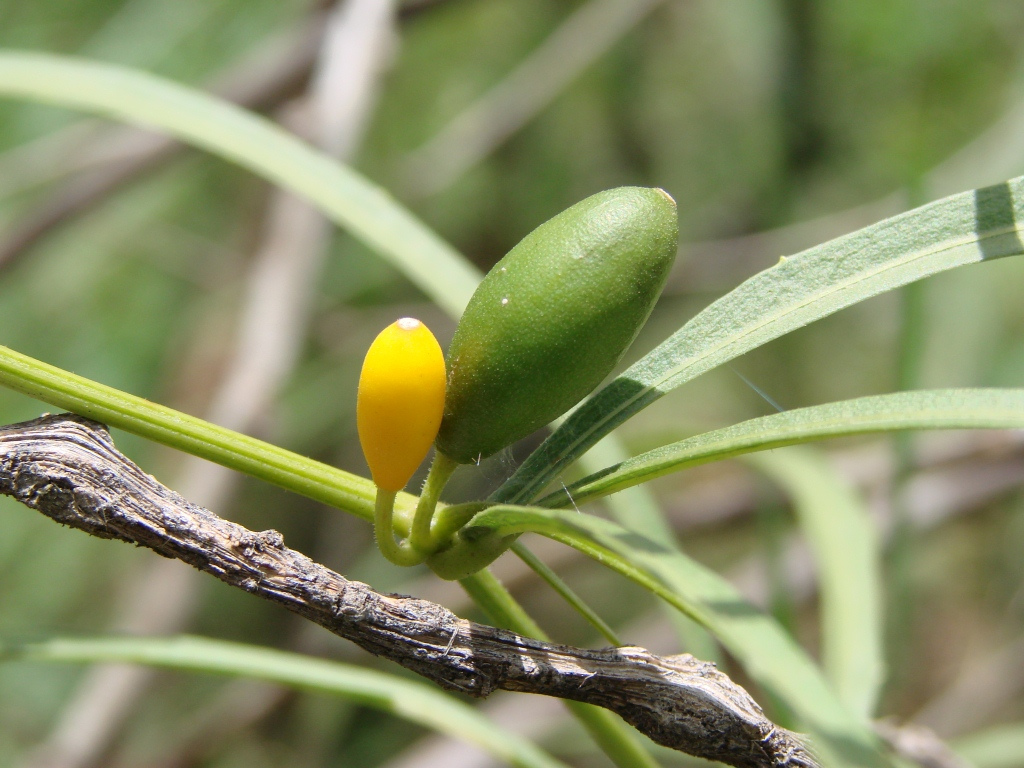
Cayaponia is a genus of climbing plants in the gourd family Cucurbitaceae, within the order Cucurbitales. It is among the largest genera in the family, with 74 accepted species commonly referred to as melonleaf. Most species inhabit rainforests and produce white or yellow-green flowers. The genus ranges from the southern United States through Central America and into South America, with some species also occurring in western Africa, Madagascar, and the Brazilian archipelago of Fernando de Noronha. Brazilian botanist António Luiz Patricio da Silva Manso established the genus, naming it after the indigenous Cayapo people of Brazil. A 2011 phylogenetic study merged the previously separate genus Selysia into Cayaponia. The ancestral pollination mode in the genus is inferred to have been by bats, with at least two independent evolutionary shifts to bee pollination — making it the first documented clade to transition from bat to bee pollination rather than the reverse.
Etymology
The genus was named by Brazilian botanist António Luiz Patricio da Silva Manso in honor of the indigenous Cayapo people of Brazil.
Distribution
Cayaponia species are found from the southern United States through Central and South America, primarily in rainforest habitats. Several species also occur in western Africa, Madagascar, and on Fernando de Noronha, an archipelago approximately 354 km off the coast of Brazil.
Ecology
Most Cayaponia species are rainforest plants. The ancestral mode of pollination in the genus is inferred to have been by bats, with at least two independent evolutionary shifts to bee pollination. This represents the first documented clade to shift from bat to bee pollination rather than the typical bee-to-bat direction.
Taxonomy
Cayaponia belongs to the family Cucurbitaceae, order Cucurbitales, and contains 74 accepted species (82 descendant taxa per GBIF). In 2011, a phylogenetic study resulted in the genus Selysia being subsumed into Cayaponia. GBIF records no authorship or original publication details for the genus.










