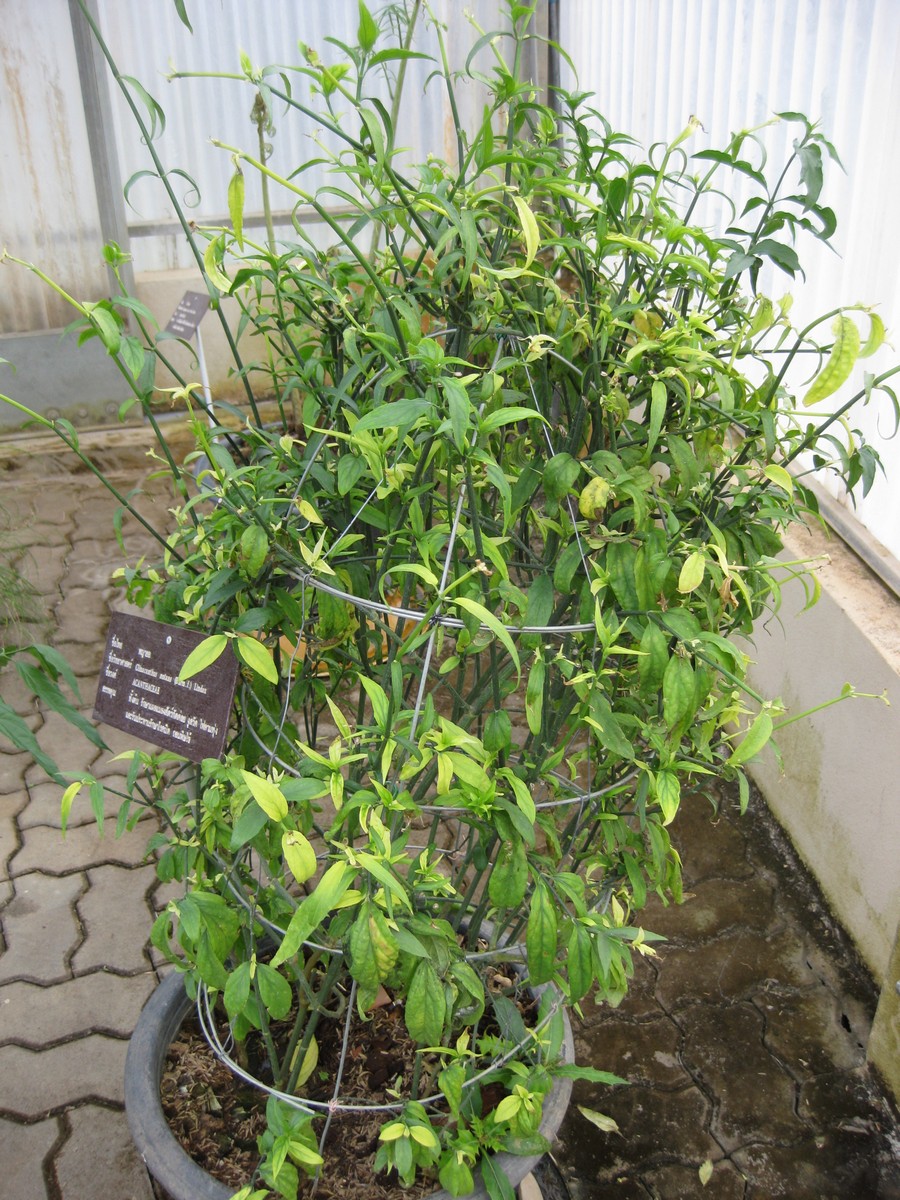
Clinacanthus is a small genus of flowering plants in the family Acanthaceae, within the order Lamiales (historically Tubiflorae). It is native to southern China and western Malesia, a region encompassing parts of mainland Southeast Asia and the Malay Archipelago. The genus is modest in size, with taxonomic sources reporting between two and four accepted species. The most well-known member is Clinacanthus nutans (Burm.f.) Lindau, commonly called Sabah snake grass, which has attracted interest for its traditional medicinal uses across Southeast Asia. Other named species include Clinacanthus robinsoni, Clinacanthus siamensis, and Clinacanthus spirei, though some of these may be treated as synonyms in more conservative taxonomic treatments. Like many Acanthaceae, members of this genus are herbaceous or shrubby plants.
Distribution
Clinacanthus is native to southern China through western Malesia, spanning parts of Southeast Asia including Thailand, Vietnam, Malaysia, and Indonesia. The genus occurs across this subtropical to tropical range, with GBIF confirming its presence in the region.
Taxonomy Notes
The genus Clinacanthus was established in the family Acanthaceae. Wikipedia lists four species (C. nutans, C. robinsoni, C. siamensis, C. spirei), while GBIF recognizes only two accepted descendant taxa under the genus — suggesting that some of the named species may be treated as synonyms in more conservative taxonomic databases. The type species, C. nutans, was originally described under Justicia nutans by Burman fils and later transferred to Clinacanthus by Lindau.










