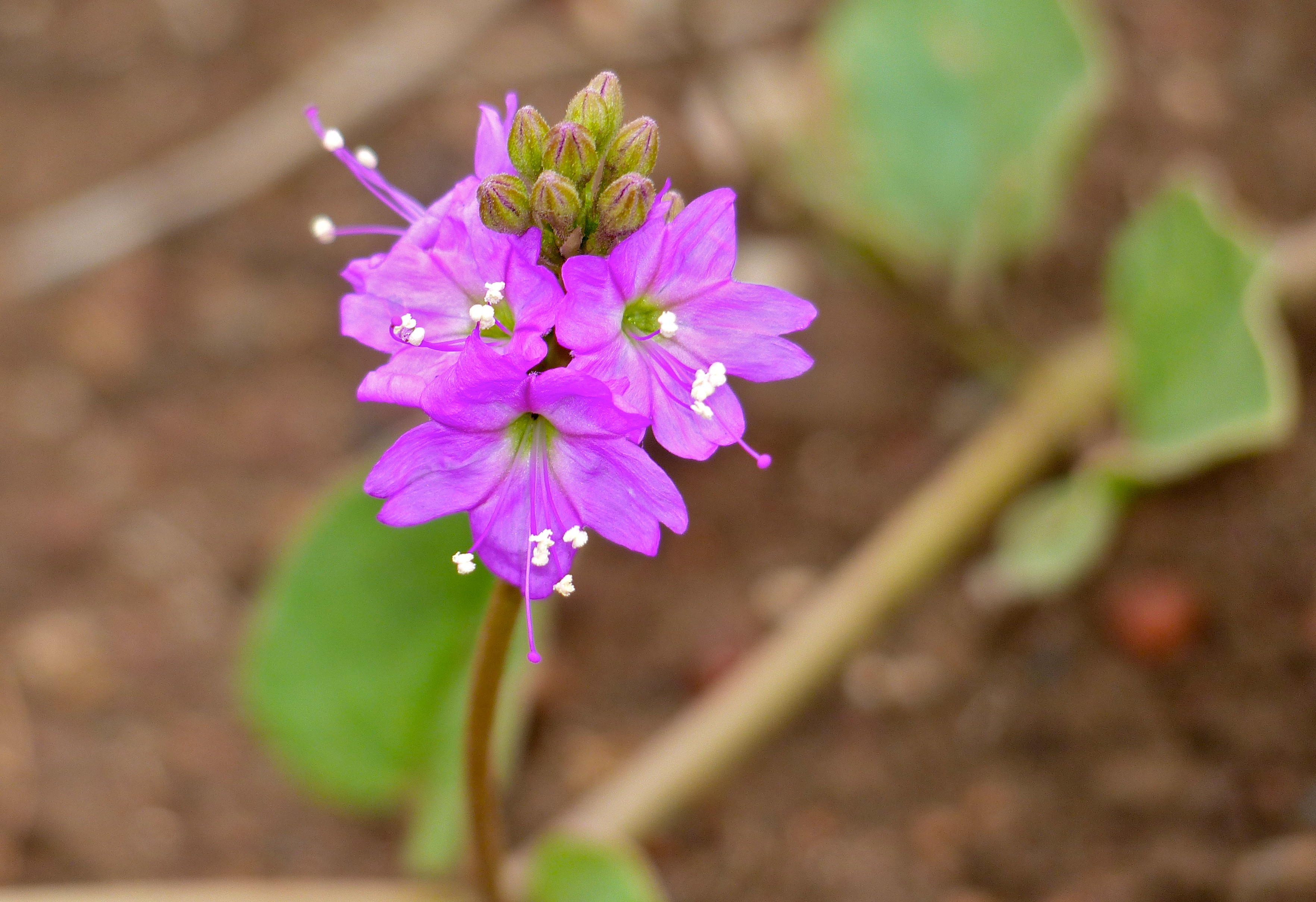
Commicarpus is a genus of flowering plants in the four-o'clock family, Nyctaginaceae, within the order Caryophyllales. The genus was described by American botanist Paul Carpenter Standley in 1909 in the Contributions from the United States National Herbarium. Species counts vary by source: Wikipedia cites roughly 30 to 35 recognized species, while the GBIF taxonomic backbone lists 43 descendant taxa, a discrepancy likely reflecting ongoing taxonomic revision.
Commicarpus is native to the tropics and subtropics, with its greatest diversity in Africa and western Asia; eight species are native to southern Africa specifically. Taxonomic and biogeographic data aggregated by GBIF (from the World Checklist of Vascular Plants) additionally record occurrences spanning Macaronesia (the Azores, Canary Islands, Cape Verde) and parts of the Americas, including Arizona, Aruba, the Bahamas, and Bolivia — indicating a wider pantropical distribution, whether through native range, introduction, or naturalization.
Species in the genus are distinguished from one another largely by details of the anthocarp (the fruit-like structure formed from the fused perianth base) and by the shape and indumentum (hairy covering) of the lower, leathery (coriaceous) part of the flower. Ecologically, Commicarpus species tend to grow in calcium-rich soils, particularly those with a strong component of heavy metals.
The genus's boundaries have been debated: some authors, including Govaerts, Rottbøll, and Greuter & Burdet, have published combinations that transfer a number of Commicarpus species into the related genus Boerhavia. If that treatment were followed, Commicarpus would be considerably smaller than currently circumscribed.
Distribution
Commicarpus is native to the tropics and subtropics, with the greatest species richness in Africa and western Asia; eight species are native to southern Africa. Distribution data aggregated by GBIF from the World Checklist of Vascular Plants additionally show records across Macaronesia and parts of the Americas (e.g. Arizona, Aruba, Bahamas, Bolivia), indicating an even broader pantropical range than the core Africa/western Asia distribution highlighted by Wikipedia.
Ecology
Species typically grow in soil rich in calcium, especially soil with a strong component of heavy metals. Individual species are told apart largely by details of the anthocarp and the shape and indumentum of the flower's lower, leathery part.
Taxonomy Notes
The genus Commicarpus was described by Paul C. Standley in 1909 (Contributions from the U.S. National Herbarium 12: 373). Recognized species counts differ between sources — Wikipedia states roughly 30 to 35 species, while GBIF's taxonomic backbone lists 43 descendant taxa. Some authors (Govaerts; Rottbøll; Greuter & Burdet) have published combinations moving a number of Commicarpus species into the genus Boerhavia; under that treatment, Commicarpus would be much smaller than currently circumscribed.










