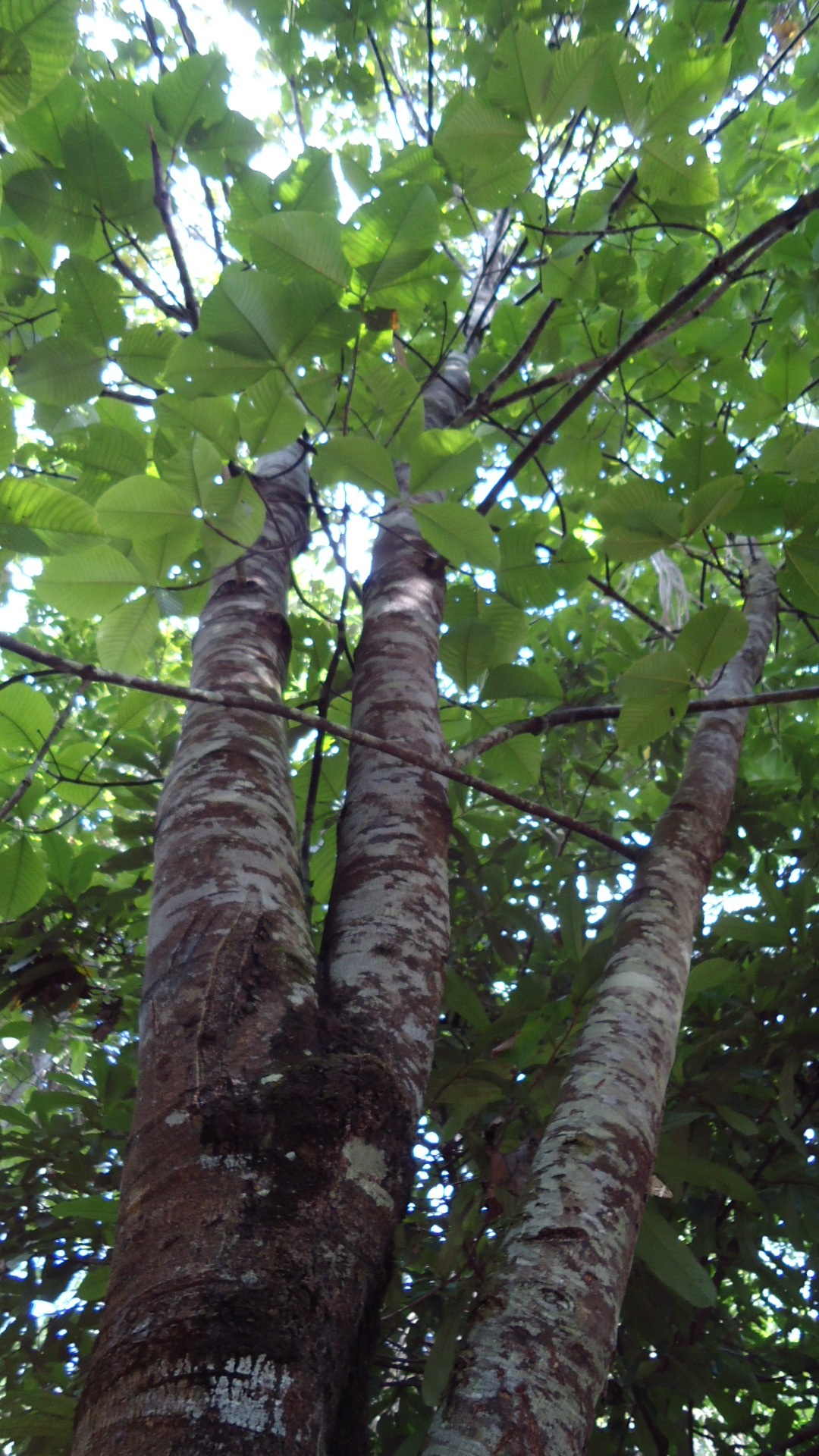
Couma is a genus of flowering plants in the family Apocynaceae (the dogbane family), placed in the order Gentianales. The genus was first described in 1775 and comprises a small number of species — currently around five — native to tropical South America and Central America. Species occur from Belize and Colombia south through the Amazon basin to Bolivia and Brazil, with notable concentrations in Venezuela, the Guianas, and Amazonian Peru and Brazil.
Members of Couma are trees or large shrubs that, like many Apocynaceae, produce a milky latex when cut. The most economically significant species are Couma macrocarpa Barb.Rodr. (leche caspi or sorva), a widespread Amazonian tree whose latex is tapped for a chicle-like gum used in chewing gum and as a food flavouring, and Couma utilis (Mart.) Müll.Arg. (also known as sorva), harvested similarly across Colombia, Venezuela, and northwestern Brazil. The edible fruits of C. macrocarpa are consumed locally and give the tree its common name of "milk tree" in parts of Amazonia.
Distribution
Couma is native to tropical South America and Central America, with species recorded from Belize south through Colombia, Venezuela, the Guianas, and Amazonian Brazil to Bolivia. The genus reaches its greatest diversity in the western Amazon basin and the Guiana highlands.
Cultural Uses
Several Couma species, particularly C. macrocarpa and C. utilis, are harvested for their milky latex (known as sorva or leche caspi), which is used locally as a chewing-gum base and food ingredient. The sweet, fleshy fruits of C. macrocarpa are eaten fresh by communities across Amazonia.










