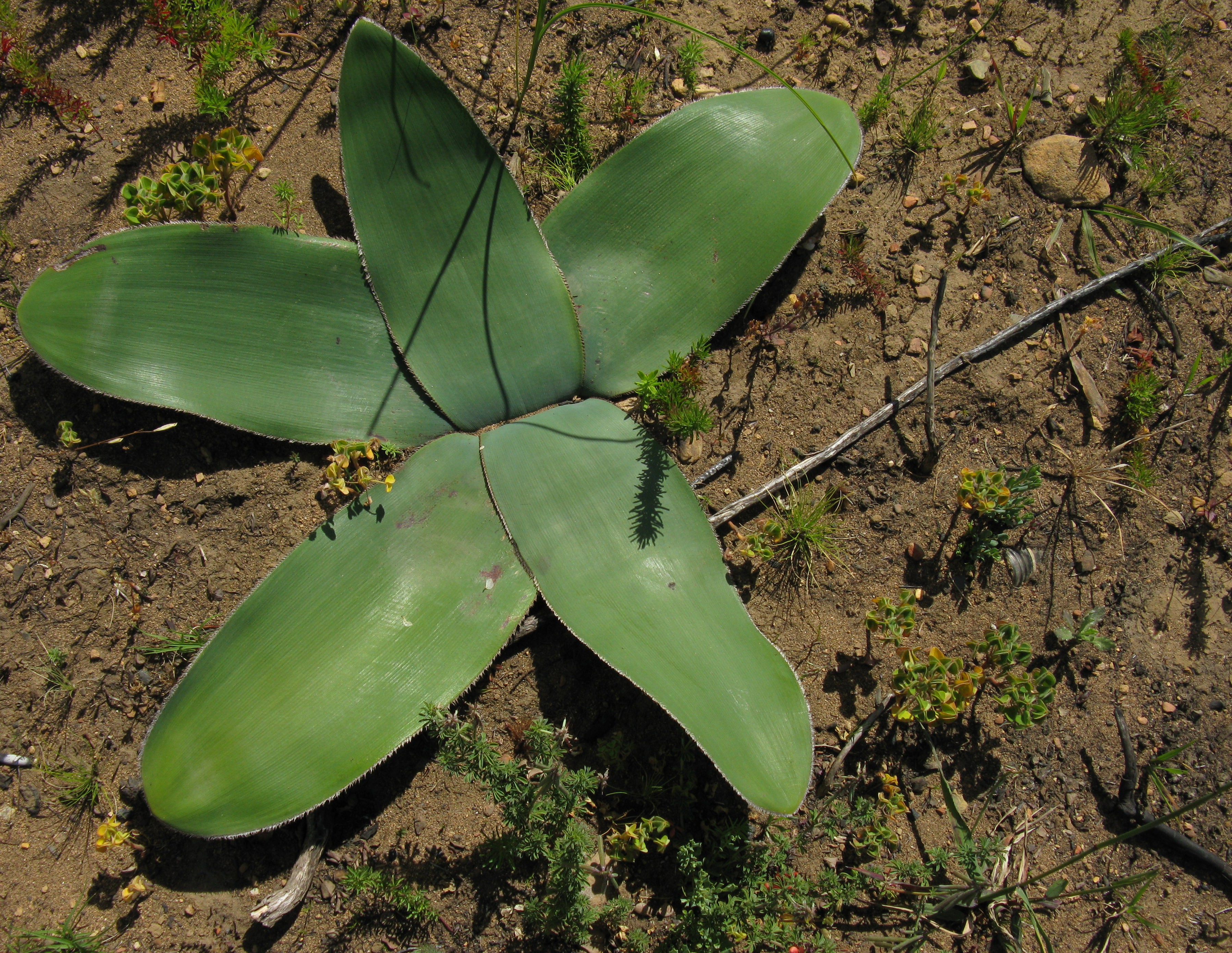
Crossyne is a small genus of bulbous flowering plants in the family Amaryllidaceae (the amaryllis family), native to the Cape region of South Africa. First described by Salisbury in 1866, the genus contains just two species — Crossyne guttata and Crossyne flava — sometimes known collectively as parasol lilies for their large, rounded flower heads.
For many decades the two species were classified within the related genus Boophone, until Crossyne was raised to full genus status in the 1990s on the strength of several consistent morphological differences. Crossyne bulbs remain entirely below ground, unlike Boophone's, which typically project partway above the soil surface. Crossyne leaves are also fringed along their margins with rows of short, straight bristles, whereas Boophone leaves are glabrous (hairless). The two genera further differ in their capsule and seed structure — Crossyne seed coats bear stomata, while Boophone seed coats are corky — and in flower number, with Crossyne producing many small flowers per inflorescence.
Crossyne foliage also shows a distinctive age-related change in growth habit: seedlings begin with narrow, semi-erect, strap-shaped leaves, but once the bulb reaches four to six years of age, it starts producing broad, flat, prostrate leaves that spread over and smother smaller neighboring plants. Plants occupy shale and granite flats and lower slopes in Renosterveld vegetation of the western and southern Cape, and flowering — in dusky pink to purple-maroon heads of up to 200 small flowers — is stimulated by wildfire, though not strictly dependent on it. The flowers are pollinated by small butterflies, wasps, honeybees, and short-proboscid flies. Crossyne bulbs are extremely poisonous, and the plants are sometimes grown as ornamental container bulbs valued for their bristle-fringed leaves and for their dried seed heads, used decoratively.
Distribution
Both species of Crossyne are native to the Cape region of South Africa. Crossyne guttata is widespread on shale and granite flats and lower slopes in Renosterveld vegetation of the western and southern Cape.
Ecology
Crossyne flowers are pollinated by small butterflies, wasps, honeybees, and short-proboscid flies, with flowers aging sequentially to prolong the display. Flowering is stimulated by wildfire, though not obligate, and blooms often appear in abundance within weeks of a fire. The genus's spherical, dehiscent seed capsules break loose and tumble in the wind to disperse seed. As the bulb matures, leaves shift from narrow and semi-erect to broad, flat, and prostrate, smothering competing low vegetation for space.
Taxonomy Notes
Crossyne was described by Salisbury in 1866 but was included within the genus Boophone for many decades before being raised back to genus status in the 1990s. It is distinguished from Boophone by entirely subterranean bulbs (vs. partly exposed), leaf margins fringed with short bristles (vs. glabrous leaves), a corky vs. stomate-bearing seed coat, and by bearing many small flowers per inflorescence.
Conservation
Crossyne guttata, the genus's better-documented species, is assessed as Least Concern (LC) on the SANBI Red List of South African Plants (checked 2016).
Cultural Uses
Crossyne guttata is grown as an ornamental potted bulb, prized for its bristle-fringed leaves; its dried seed heads (infructescences) are used as hanging decorations. The bulb itself is extremely poisonous.
Cultivation
Crossyne guttata is typically grown in pots or dry rock-garden pockets kept absolutely dry in summer, in full sun, with sporadic watering (roughly every two weeks) during the winter growing season. Seed is sown in autumn in deep containers; seedlings normally need 7–8 years to reach flowering maturity. A sandy mix (river sand and bark, 2:1) is recommended, and flowering can be irregular in cultivation. Plants are prone to lily borer caterpillars and mealybug.










