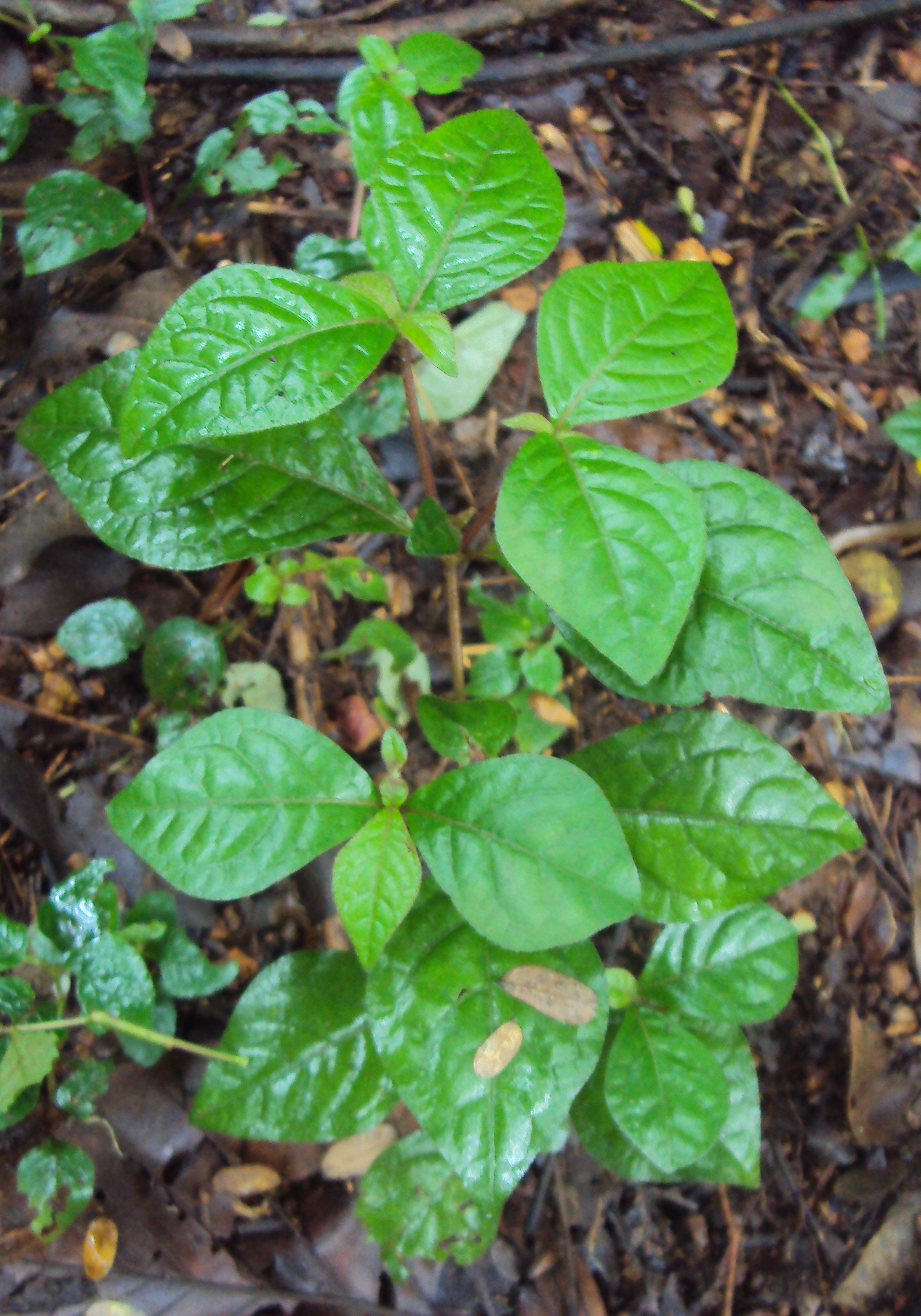
Cyathula is a genus of flowering plants in the amaranth family (Amaranthaceae), placed in the order Caryophyllales. It was described by Carl Ludwig Blume in 1825, published in his Bijdrage tot de Flora van Nederlandsch Indië (p. 548), and the name is formally treated as a conserved name (nom. cons.) rather than being displaced by any earlier synonym. Species counts vary slightly by source: Wikipedia lists 42 accepted species, while GBIF's backbone recognizes 48 descendant taxa.
The genus is pantropical, native to subtropical and tropical regions of Africa, Asia, Oceania, and the Americas. Distribution records compiled by the World Checklist of Vascular Plants and echoed on GBIF span an especially wide range, from Angola, Benin, and Botswana across Assam, Bangladesh, Borneo and Cambodia to Belize, Bolivia, and multiple regions of Brazil.
The genus name is a diminutive meaning "small cup," referring to the cup-shaped membranous tube formed where the flower's stamen filaments fuse together — a feature well documented in the widespread species Cyathula prostrata. Cyathula species are typically perennial herbs, sometimes prostrate or trailing, with opposite leaves and small flowers borne in narrow, slender terminal spikes. Each flower cluster mixes a single fertile flower with several sterile ones; the sterile flowers carry hooked, awn-like tepals that catch onto fur and clothing, a bur-type dispersal strategy shared with related Amaranthaceae genera such as Achyranthes. Fruits are small, compressed achenes.
Several species have documented human uses. Cyathula officinalis, native to parts of China (including Guizhou, Sichuan, and Yunnan) and Nepal, is the source of a traditional Chinese medicinal material known as "chuan niu xi" (Radix Cyathulae, or Cyathula root). Cyathula prostrata, a widespread pantropical weed sometimes called "prostrate pastureweed," is likewise used locally as a medicine and additionally as a food and a source of soap; it also serves as a larval host plant for the Fulvous Pied Flat butterfly. Wikipedia describes the genus overall as encompassing both medicinal and ornamental plants.
Etymology
"Cyathula" is a diminutive of Latin/Greek cyathus ("cup"), meaning "small cup." The name refers to the cup-shaped membranous tube formed by the fusion of the flower's stamen filaments, a feature documented in the widespread species Cyathula prostrata.
Distribution
Cyathula is pantropical, native to subtropical and tropical Africa, Asia, and Oceania, with GBIF/WCVP distribution records also extending into the Americas (e.g. Belize, Bolivia, Brazil). Recorded native regions include Angola, Benin, Botswana, Assam, Bangladesh, Borneo, Cambodia, and Cameroon, among many others.
Ecology
In the well-documented species Cyathula prostrata, sterile flowers within each cluster bear hooked, awn-like tepals that catch on fur and clothing — a bur-type seed-dispersal strategy — and the species is recorded as a larval host plant of the Fulvous Pied Flat butterfly.
Cultural Uses
Cyathula officinalis root is used in traditional Chinese medicine under the name "chuan niu xi" (Radix Cyathulae). Cyathula prostrata is used locally as a medicine and also as a food and a source of soap. Wikipedia's genus-level summary characterizes Cyathula overall as comprising both medicinal and ornamental plants.
Taxonomy Notes
Cyathula was described by Carl Ludwig Blume in 1825 (Bijdrage tot de Flora van Nederlandsch Indië, p. 548) and is a conserved name (nom. cons.) in family Amaranthaceae, order Caryophyllales. Accepted species counts differ slightly between sources — 42 per Wikipedia, 48 descendant taxa per GBIF's backbone.










