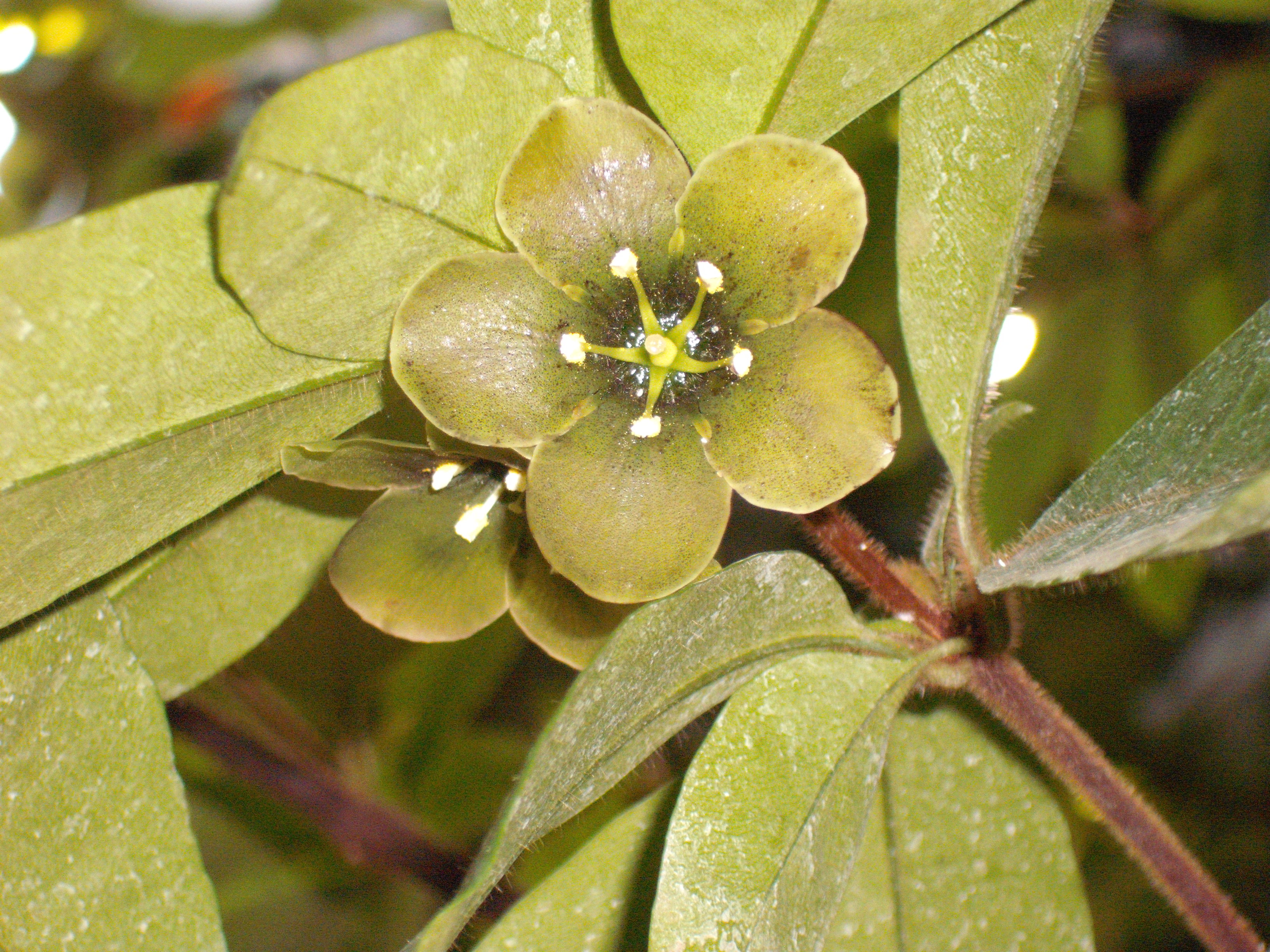
Deherainia is a small genus of flowering plants in the family Primulaceae, within the order Ericales. It comprises just two accepted species, both native to Central America: Deherainia matudae and Deherainia smaragdina. The genus was published by the French-Belgian botanist Joseph Decaisne in 1876, with Jacquinia smaragdina Planch. ex Linden designated as the type species. The genus name honors Pierre-Paul Dehérain, a 19th-century French agronomist and plant physiologist.
Historically, a third species, Deherainia cubensis, along with its subspecies oligospinosa, was included in the genus, but these have since been reclassified as synonyms of Neomezia cubensis and moved out of Deherainia.
Members of the genus are shrubs bearing flowers with an unusually unpleasant fragrance, an adaptation that attracts flies as pollinators rather than the bees or butterflies typical of many showier Primulaceae relatives.
Etymology
The genus name Deherainia honours Pierre-Paul Dehérain, and was published by Joseph Decaisne in 1876.
Distribution
Deherainia is native to Central America, specifically Belize, Costa Rica, Guatemala, Honduras, and Mexico.
Ecology
The flowers of Deherainia produce a very unpleasant fragrance that attracts flies, which act as their pollinators.
Taxonomy Notes
The genus was published by Joseph Decaisne in 1876, with Jacquinia smaragdina Planch. ex Linden as the type species. A third species formerly placed here, Deherainia cubensis (including subsp. oligospinosa), is now treated as a synonym of Neomezia cubensis, leaving two accepted species in the genus today — consistent with GBIF's descendant count.










