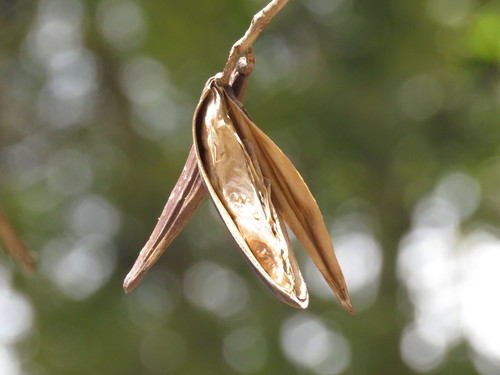
Delostoma is a small genus of flowering plants in the family Bignoniaceae, within the order Lamiales. The genus was formally described by Scottish botanist David Don in 1823, in the Edinburgh Philosophical Journal.
The genus is native to western South America, with a range spanning Colombia, Ecuador, and Peru and extending north into western Venezuela, placing it among the Andean-centered genera of Bignoniaceae — a large, mostly tropical family better known overall for trees, shrubs, and lianas with showy, trumpet-shaped flowers.
Delostoma is species-poor: the genus includes Delostoma dentatum and D. integrifolium, both described by David Don alongside the genus itself in 1823. The GBIF taxonomic backbone recognizes five accepted taxa under the genus — one more than the two named species documented here, a discrepancy the available sources do not resolve.
Beyond its taxonomic placement, native range, and species count, little further botanical description, ecological detail, or documented cultural or economic use of Delostoma was found in the available sources.
Distribution
Delostoma is native to western South America — Colombia, Ecuador, and Peru — extending north into western Venezuela.
Taxonomy Notes
Delostoma D.Don was published in 1823 in the Edinburgh Philosophical Journal (vol. 9: 263) and is placed in family Bignoniaceae, order Lamiales. The GBIF backbone accepts 5 taxa under the genus, one more than the 2 species documented here.










