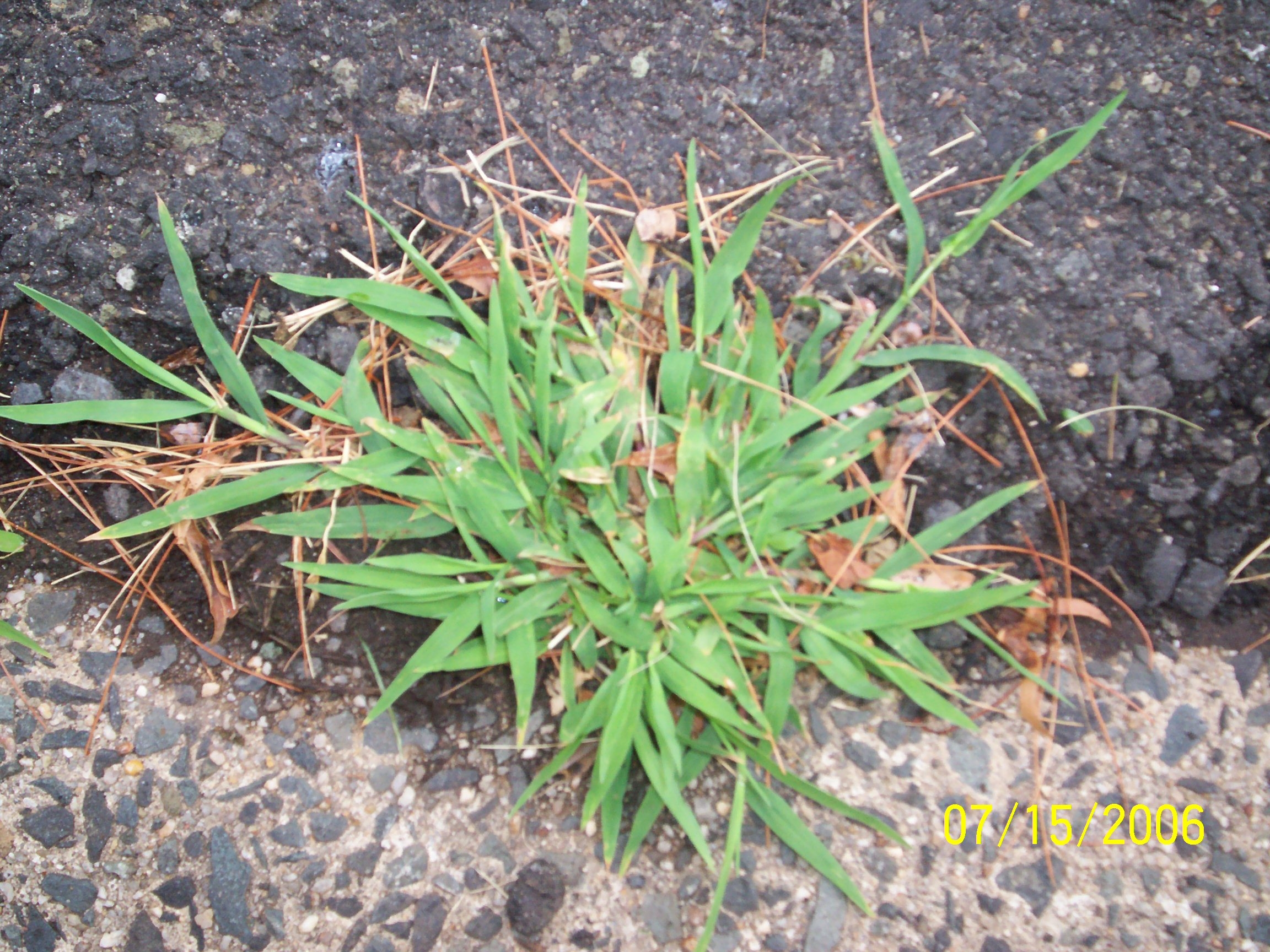
Digitaria is a large genus of annual and perennial grasses in the family Poaceae (order Poales), comprising several hundred species distributed across tropical and warm temperate regions worldwide, with outliers in cooler temperate zones. The name derives from the Latin digitus ("finger"), a reference to the genus's most distinctive feature: slender, finger-like racemes that radiate from the top of the flowering stem like an open hand.
Members of the genus are typically small to medium-sized, slender monocots forming tufted clumps or spreading mats. The inflorescences consist of multiple elongated racemes bearing small two-flowered spikelets. Both annual and perennial life-forms occur, and many species are important components of pasture and forage systems in tropical Africa, Asia, and Australia.
The genus is perhaps best known in the Northern Hemisphere for its weedy crabgrass species. In North America, Digitaria sanguinalis (large or hairy crabgrass) and D. ischaemum (smooth crabgrass) are common warm-season annual lawn weeds that germinate in late spring, spread rapidly through summer, and die back in autumn, leaving bare patches where seeds accumulate for the following year. A single plant can produce up to 150,000 seeds per season.
Beyond its weedy reputation, Digitaria includes economically important grain crops. Fonio — comprising white fonio (D. exilis) and black fonio (D. iburua) — has been cultivated as a staple cereal in sub-Saharan West Africa for thousands of years. The grains can be toasted, milled into flour, cooked as porridge, or fermented to produce beer. Digitaria sanguinalis seeds have also been used to produce a fine white flour with good keeping qualities. Several species, including D. eriantha (pangola grass), are important tropical pasture grasses valued for their fodder quality.
Etymology
The genus name Digitaria derives from the Latin digitus, meaning "finger." It alludes to the characteristic finger-like racemes of the inflorescence, which radiate outward in a hand-like arrangement from the top of the flowering stem.
Distribution
Digitaria is native to tropical and warm temperate regions across Africa, Asia, Australia, and the Americas, with some species extending into cooler temperate zones. Weedy species such as D. sanguinalis and D. ischaemum are now widely naturalized across North America and Europe. Fonio species (D. exilis, D. iburua) are native to sub-Saharan West Africa, where they remain significant food crops.
Ecology
Most Digitaria species thrive in open, disturbed, or cultivated habitats including roadsides, lawns, pastures, and crop fields. Annual weedy species germinate from seed in late spring and early summer, grow rapidly in warm conditions, and die with the first frosts of autumn. A single crabgrass plant can produce up to 150,000 seeds per season, enabling rapid reinfestation of bare or thin turf. The genus favors sandy to loamy, well-lit soils and does not tolerate shade. Many species are important components of tropical grassland and savanna ecosystems, and several serve as significant forage plants for livestock.
Cultural uses
Several Digitaria species have been used as food sources. Fonio — white fonio (D. exilis) and black fonio (D. iburua) — is one of Africa's oldest cultivated cereals and remains a dietary staple across parts of the Sahel and West Africa; the small grains are milled into flour, cooked into porridge, or fermented to make beer. Digitaria sanguinalis seeds yield a fine white flour with good keeping qualities, historically ground for semolina-type preparations, and the species has occasionally been cultivated for this purpose in parts of Europe (notably Poland). Stems of D. sanguinalis have also been used as a source of fiber for paper-making. Multiple species, including D. eriantha (pangola grass), are cultivated as tropical pasture and hay crops valued for their nutritional quality as cattle fodder.










