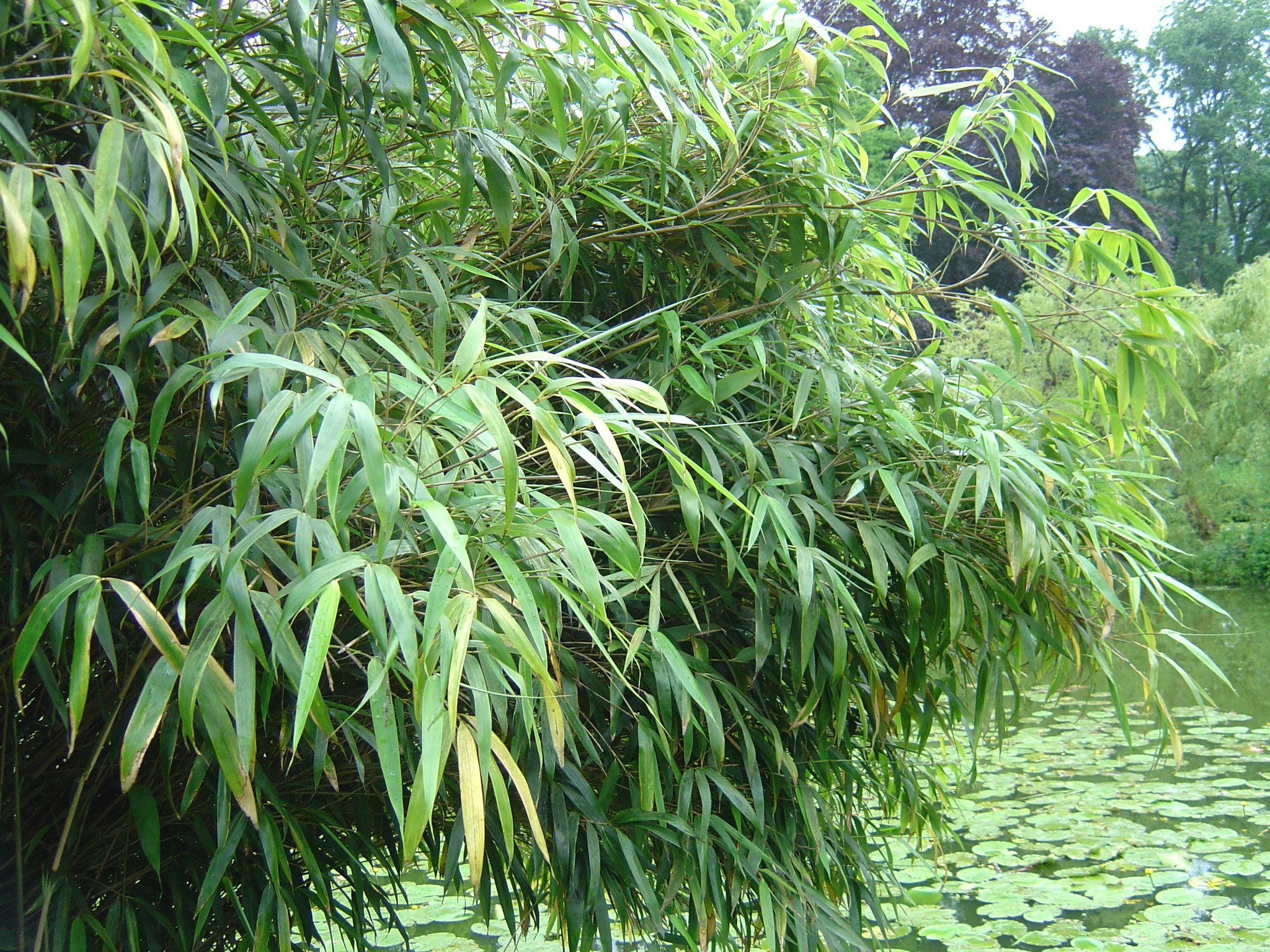
Fargesia is a genus of clumping bamboos in the grass family Poaceae, order Poales, comprising around 49 accepted species. Native primarily to China, with additional species extending into Vietnam and the eastern slopes of the Himalayas, these medium to small mountain bamboos are characteristic of alpine conifer forests across East Asia.
Unlike many bamboos, Fargesia species grow in dense, non-invasive clumps and are regarded as among the hardiest bamboos in cultivation. In Chinese they are known as jiànzhú (箭竹), meaning "arrow bamboo," a name reflecting their traditional use for making arrows.
Fargesia is ecologically critical as the principal food source for the giant panda. Because most Fargesia species undergo mass flowering followed by die-off — sometimes decades apart — large-scale flowering events have periodically caused food shortages that have had severe consequences for panda populations. Conservation efforts in panda habitat therefore aim to ensure that at least two Fargesia species are present in any given area, so that pandas retain a food supply while one species recovers.
Several species have become popular ornamental plants in temperate gardens worldwide, where they are sold under the common names umbrella bamboo and fountain bamboo. Their compact, arching culms and cold tolerance make them suitable for hedging and screening without the spreading habit of running bamboos.
The genus was previously broader but has been revised through morphological and genetic analysis, with many former members transferred to the related genera Borinda, Thamnocalamus, and Yushania.
Etymology
The genus name Fargesia honours Père Paul Guillaume Farges (1844–1912), a French Catholic missionary stationed in China who also worked as an amateur botanist and plant collector. Farges sent thousands of plant specimens to Europe and is commemorated in several other plant names.
Distribution
Fargesia species are native primarily to China, spanning alpine conifer forest zones, with a smaller number of species occurring in Vietnam and on the eastern slopes of the Himalayas. They are mountain plants, typically found at higher elevations where they form dense understorey thickets.
Ecology
Fargesia bamboos are a keystone food source for the giant panda (Ailuropoda melanoleuca). Mass-flowering events — in which an entire species flowers synchronously and then dies — can eliminate a panda's primary food supply across large areas. Because of this, wildlife managers emphasise maintaining habitat with overlapping populations of at least two Fargesia species so that flowering of one species does not leave pandas without food. The genus is also associated with high-altitude conifer forests of East Asia, where its dense clumps provide shelter for a range of forest fauna.
Cultivation
Fargesia species are among the most widely cultivated ornamental bamboos in temperate climates. Their dense, non-running clumping habit makes them low-maintenance choices for hedging, screening, and specimen planting. Common garden species sold under the names umbrella bamboo and fountain bamboo tolerate significant cold and are generally not invasive. Availability has increased as clumping bamboos have grown in popularity, and they can now be found at many specialist and general nurseries.










