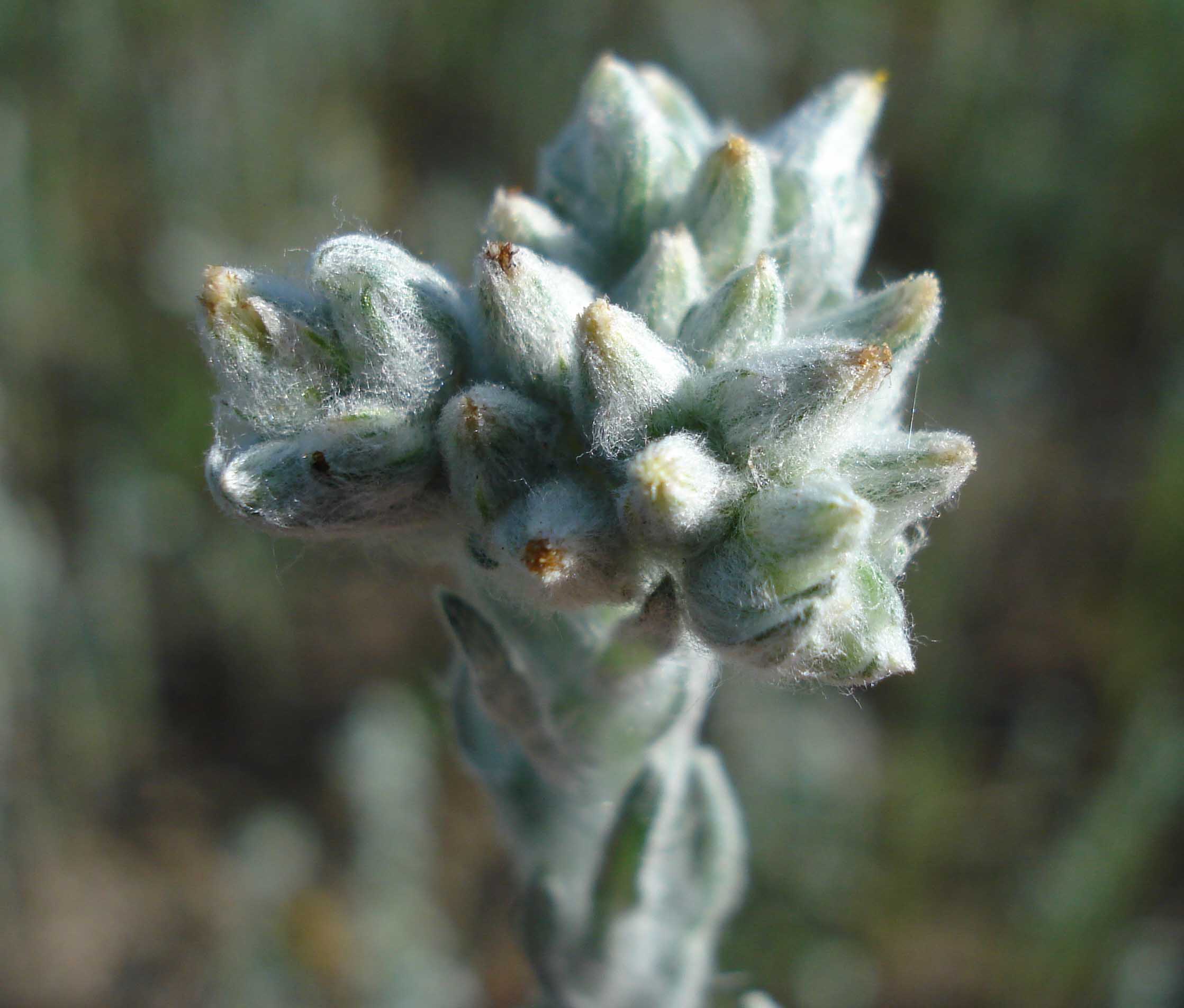
Filago L. is a genus of annual, woolly herbs in the sunflower family Asteraceae (order Asterales), named by Linnaeus in his landmark Species Plantarum (1753). The genus comprises roughly 50–70 accepted species, commonly known as cottonroses or cudweeds, distributed across Europe, northern Africa, Macaronesia, and extending east through western and central Asia to Mongolia and Nepal, with a few species in southwestern North America and Mexico.
Plants in Filago are characterised by their dense, woolly or cottony indumentum — the mat of fine hairs that gives the stems, leaves, and flower heads a whitish or greyish felted appearance. Leaves are narrow and strap-shaped with untoothed margins, alternately arranged and typically clasping the stem. The flower heads are very small and are gathered into dense, stalkless (sessile) clusters often nestled in the axils of leaves, so that the leafy stem appears to envelop the clusters. The fruits are small achenes crowned by a feathery pappus (the modified calyx), which aids wind dispersal.
Filago belongs to the tribe Gnaphalieae within Asteraceae. The genus boundary has long been debated: several species historically placed in Filago are now treated in the segregate genus Logfia, and the concept of Filago in a strict sense (sensu stricto) reflects modern molecular and morphological revisions. The genus is most species-rich in the Mediterranean Basin and the Iberian Peninsula, where numerous narrow endemics occur on dry, sandy, or disturbed ground.
Etymology
The common name cudweed derives from the historical practice of feeding these plants to cattle that had lost the ability to chew their cud, reflecting a long association between the genus and pastoral agriculture. The alternative name cottonrose alludes to the dense cottony or woolly indumentum covering the plants. The genus name Filago was established by Linnaeus in 1753.
Distribution
Filago has its centre of diversity in Europe and the Mediterranean Basin, extending across northern Africa and Macaronesia, and ranging eastward through the Caucasus, western and central Asia, Siberia, and as far as Mongolia and Nepal. A handful of species are native to southwestern North America and Mexico. Many species favour dry, open, and disturbed habitats such as sandy fields, roadsides, and stony slopes.
Taxonomy Notes
The circumscription of Filago has been contentious: several species are sometimes treated as members of the closely related genus Logfia, particularly following molecular phylogenetic studies of tribe Gnaphalieae. GBIF treats Filago L. as an accepted genus (published in Sp. Pl. 2: 927, 1753, nom. cons.) with approximately 76 infraspecific and specific taxa recognised. The synonym Filagopsis (Batt.) Rouy has been applied to part of the group.

