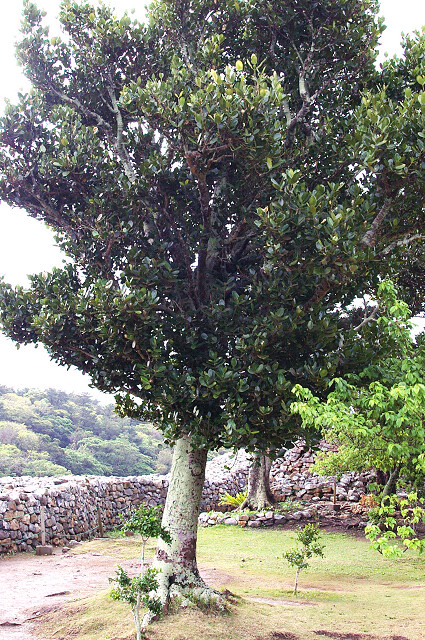
Garcinia L. is a large genus of evergreen trees and shrubs in the family Clusiaceae (order Malpighiales), first described by Carl Linnaeus in Species Plantarum (1753). The genus comprises roughly 416 accepted species according to Plants of the World Online, with over 598 taxa documented in GBIF across its full taxonomic scope. Members of the genus are predominantly dioecious and, in several cases, apomictic — reproducing without fertilization.
Plants in this genus are typically slow-maturing: flowering generally does not begin until 10–15 years after establishment. The fruits are berries with fleshy white pulp enclosed in reddish to dark-coloured woody exocarps at maturity. Growth habit ranges from shrubs to medium-sized trees, often developing dense, rounded crowns. In cultivation, most species are adapted to USDA zones 10–12 and prefer moist, tropical or subtropical conditions in full sun to semi-shade.
Garcinia is distributed across the Sundaland bioregion of Asia, the Americas, Australia, tropical and southern Africa, and Polynesia. Species tend to inhabit deep forest environments, often growing alongside other canopy or understorey plants. Habitat destruction poses the primary conservation threat to wild populations.
The genus is economically and culturally significant. The purple mangosteen (Garcinia mangostana) is among the most celebrated tropical fruits in Southeast Asia. Garcinia gummi-gutta (commonly called garcinia cambogia) yields a dried rind spice used widely in South and Southeast Asian cuisines. Certain species historically provided gamboge, a deep yellow resin used as a pigment and artist's colour. Some species have been studied for hydroxycitric acid content and marketed as appetite suppressants, though clinical evidence for efficacy is considered unproven, and prolonged high-dose use has been associated with severe acidosis.
Etymology
The genus name Garcinia honours Laurent Garcin (1683–1751), a French botanist and naturalist. Linnaeus formally established the genus in 1753 in Species Plantarum, volume 1, page 443, giving it the authorship citation "L."
Distribution
Garcinia species are distributed across tropical and subtropical regions worldwide. The genus is concentrated in the Sundaland bioregion of Southeast Asia but extends through tropical Africa, the Indian subcontinent, Australasia, the Pacific islands (Polynesia), and parts of tropical America. South American species such as Garcinia bacupari are native to Brazil, Bolivia, Peru, Paraguay, and French Guiana, occurring in secondary forests and seasonally flooded lowland habitats. African species such as Garcinia afzelii (bitter-kola) are native to West Africa. In all regions, species typically inhabit deep or dense forest environments.
Taxonomy
Garcinia belongs to the family Clusiaceae (Malpighiales) and was erected by Linnaeus in 1753. The genus has been substantially enlarged over time through synonymization of many related genera. Former genera now treated as synonyms include Rheedia L. (1753), Cambogia L. (1754), Mangostana Rumph. ex Gaertn. (1790), Oxycarpus Lour. (1790), Brindonia Thouars (1806), Ochrocarpos Noronha ex Thouars (1806), Discostigma Hassk. (1842), Lamprophyllum Miers (1854), Clusianthemum Vieill. (1865), Pentaphalangium Warb. (1891), and Septogarcinia Kosterm. (1962), among others. Plants of the World Online recognizes approximately 416 accepted species; GBIF documents over 598 descendant taxa when including species of uncertain status.
Ecology
Garcinia species are forest trees and shrubs that grow in shaded to semi-shaded understorey or mid-canopy positions within tropical and subtropical moist forests. They tend to grow in association with other forest plants rather than in open habitats. Most species are dioecious, requiring both male and female individuals for sexual reproduction; some are apomictic. The fruits, which are fleshy berries, are dispersed by frugivorous animals. In South America, some species tolerate periodic inundation of their root zones, indicating adaptation to seasonally flooded forest types.
Cultivation
Garcinia species are suited to humid tropical and subtropical climates (USDA zones 10–12). Most require consistently moist soils and will grow in a range of soil textures — from sandy to heavy clay — provided drainage is adequate; they tolerate mildly acid to basic pH. Plants can grow in full sun to semi-shade, though fruiting is more productive in full sun. Establishment is slow: trees typically do not begin flowering until 10–15 years of age, and newly planted specimens grow away slowly during the initial establishment phase. Some species can withstand seasonal waterlogging.
Propagation
Garcinia species are typically propagated from seed. Seeds should be sown fresh, as viability declines relatively quickly — typically around four months from harvest. Seeds are best placed on their sides in a nursery seedbed or individual containers under semi-shaded conditions. Germination rates can exceed 50% and generally occur within 15–25 days under appropriate conditions.
Uses
Garcinia species have been used across their range for food, medicine, commerce, and the arts. The fruits of many species are eaten locally, with translucent white pulp consumed fresh or processed into preserves. Garcinia gummi-gutta produces a dried rind used as a souring spice throughout South and Southeast Asian cuisines. Historically, some species produced gamboge, a deep yellow resin extracted from the sap and used as a pigment by artists and in traditional medicine. The seed oil of certain South American species (8–9% oil content) has been applied in poultices for wounds and tumours, and root bark extracts of some species contain xanthones and other bioactive compounds. In recent decades, extracts standardized for hydroxycitric acid (HCA) content have been marketed globally as appetite suppressants and weight-loss supplements; clinical evidence for efficacy is characterized as unproven, and prolonged high-dose consumption has been associated with severe metabolic acidosis. Timber from some species is used in rural construction and as fuel.
Conservation
Wild Garcinia populations are considered threatened primarily by habitat destruction, particularly deforestation of tropical forest ecosystems across their range in Asia, Africa, and the Americas. Individual species-level conservation assessments vary and are not covered at genus level by a single authority.










