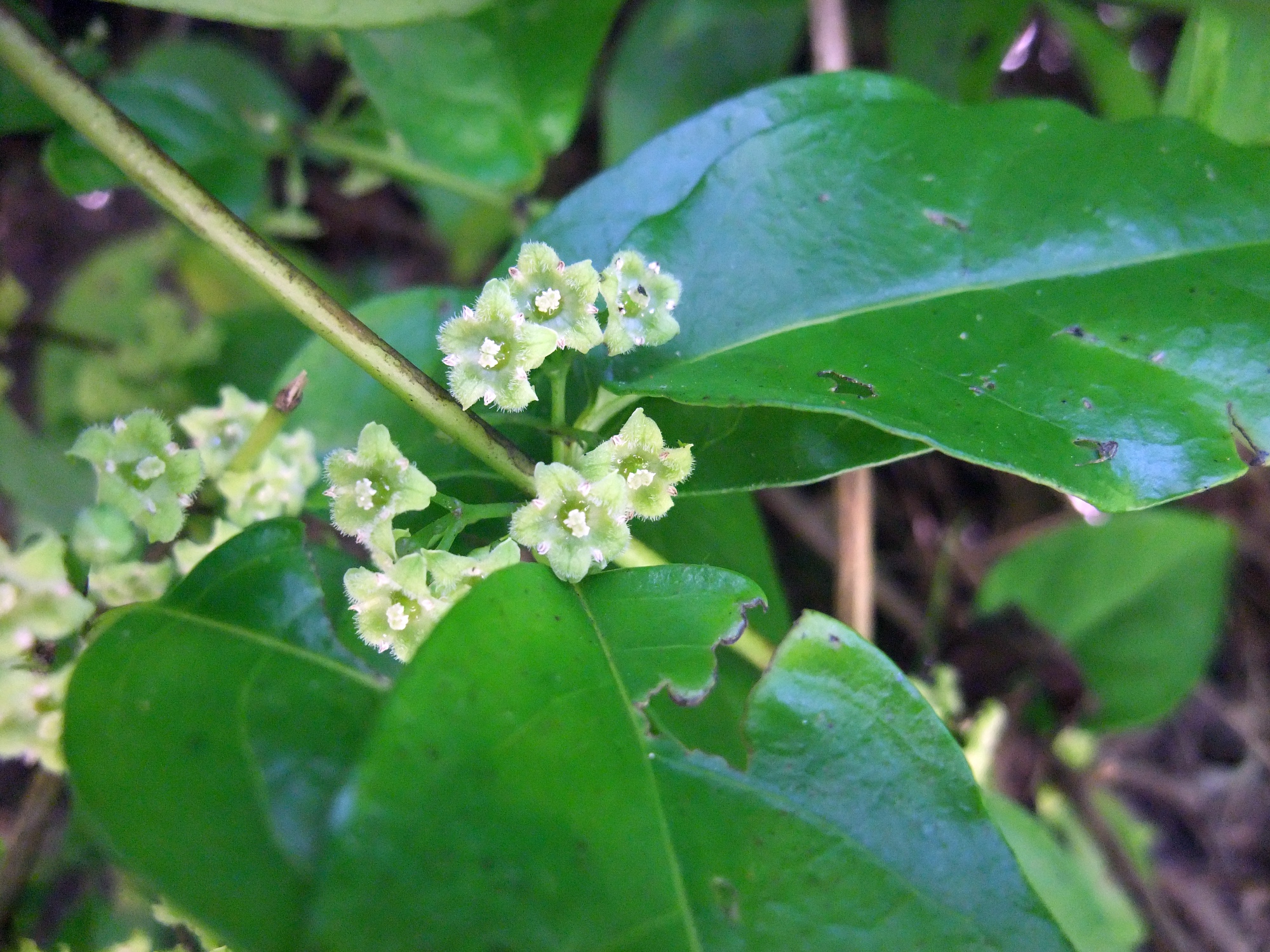
Geniostoma is a genus of approximately 49 species of flowering shrubs and small trees in the family Loganiaceae (order Gentianales). Plants are characterised by simple, petiolate, oppositely arranged leaves with inflorescences borne in the leaf axils. The flowers are arranged in cymes and are pentamerous (five-parted). The genus ranges widely across the Pacific, from Japan, Malesia, and Australia westward to the Tuamotu Archipelago in the east; a single species also occurs on the Mascarene Islands in the Indian Ocean.
The Hawaiian endemic genus Labordia — whose species are commonly known as labordias or Kamakahala in Hawaiian — is now included within Geniostoma by Plants of the World Online and other contemporary authorities. The two groups were historically placed together in the family "Geniostomaceae", but the Angiosperm Phylogeny Group treats them as part of the broader Loganiaceae.
Etymology
The name Geniostoma derives from the Greek words γένειον (geneion, meaning "beard") and στόμα (stoma, meaning "mouth"), a reference to the distinctive hairs found inside the corolla tube of certain species in the genus.
Distribution
Geniostoma is widely distributed across the Pacific Ocean, ranging from Japan, Malesia, and Australia in the west to the Tuamotu Archipelago in the east. One species is also found on the Mascarene Islands in the Indian Ocean.
Taxonomy Notes
The Hawaiian endemic genus Labordia, whose species are known locally as Kamakahala, is included within Geniostoma by Plants of the World Online and several other authorities. Historically, Geniostoma and Labordia were grouped together in a separate family "Geniostomaceae", but the Angiosperm Phylogeny Group places both genera within a broader circumscription of Loganiaceae.










