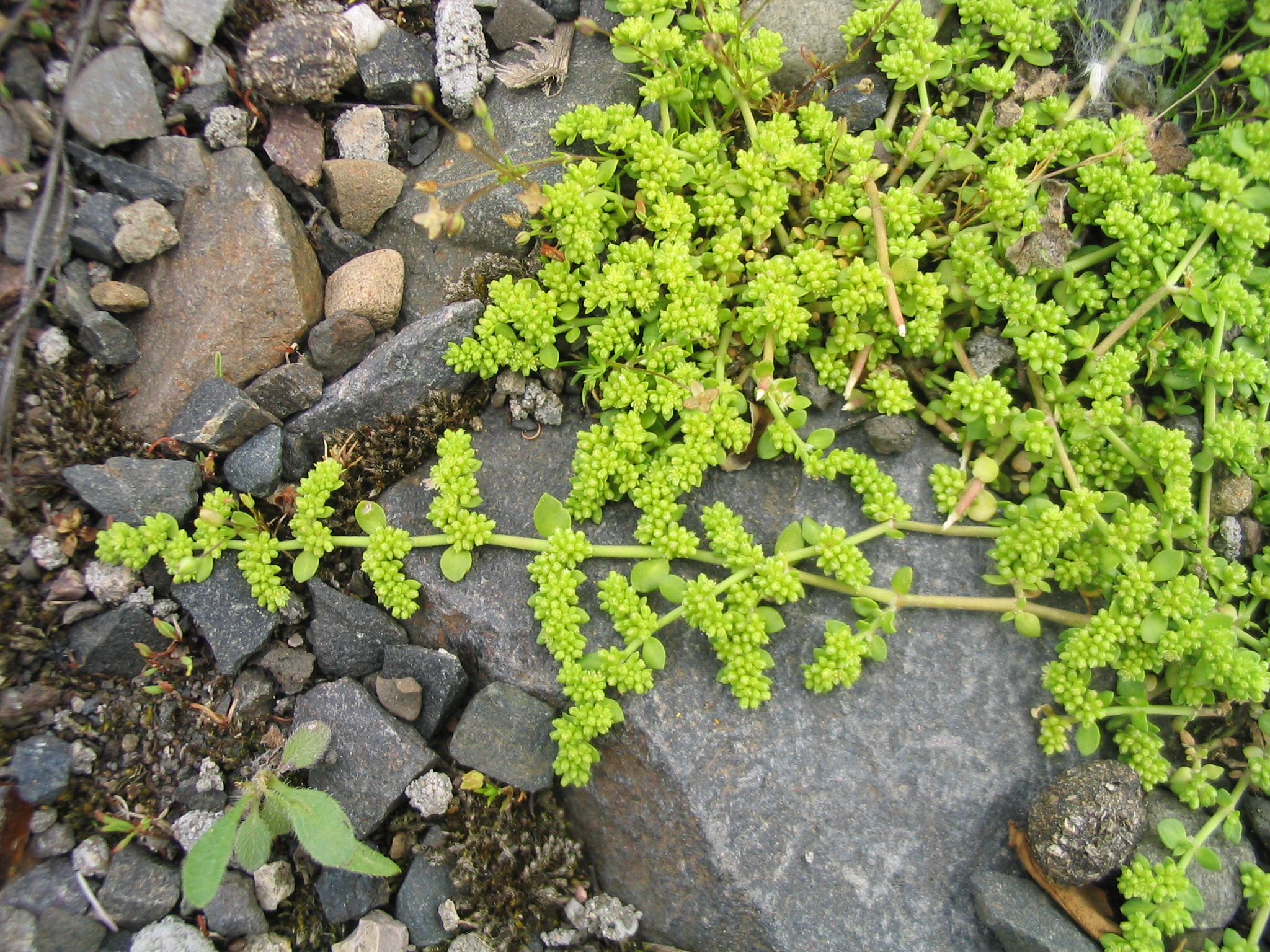
Herniaria is a genus of flowering plants in the family Caryophyllaceae (order Caryophyllales), commonly known as ruptureworts. The genus comprises small, prostrate, mat-forming annual or perennial herbs characterised by dense, low-growing stems and tiny, inconspicuous flowers. Plants typically form flat cushions or spreading mats pressed close to the ground, which makes them distinctive among members of the pink family.
The genus is native to Eurasia and Africa, with its centre of diversity in the Mediterranean basin and the Middle East. Several species have been widely naturalised on other continents, including North America and Australia, where they colonise disturbed ground, roadsides, sandy soils, and waste places.
The common name "rupturewort" and the scientific name both reflect a longstanding ethnobotanical belief that plants of this genus could serve as an herbal remedy for hernias. Herniaria glabra, smooth rupturewort, is the best-known species and has historically been used in European folk medicine.
Etymology
The genus name Herniaria derives from the Latin hernia (rupture or protrusion), reflecting the once-held belief that plants of this genus could be used as an herbal remedy for hernias. The common name "rupturewort" shares the same derivation.
Distribution
Ruptureworts are native to Eurasia and Africa, with greatest diversity in the Mediterranean region and western Asia. Several species have been widely introduced beyond their native range and are naturalised on other continents, where they typically occur in disturbed habitats, sandy soils, and roadsides.
Ecology
Species of Herniaria favour open, disturbed, or sandy habitats including roadsides, dry grasslands, waste ground, and coastal sands. Their flat, mat-forming growth habit allows them to colonise bare or compacted soils where taller vegetation cannot establish.
Cultural Uses
Species of Herniaria, particularly H. glabra, were used in European herbal medicine as a supposed remedy for hernias and urinary complaints. This medicinal use gave the genus both its scientific and common names.

