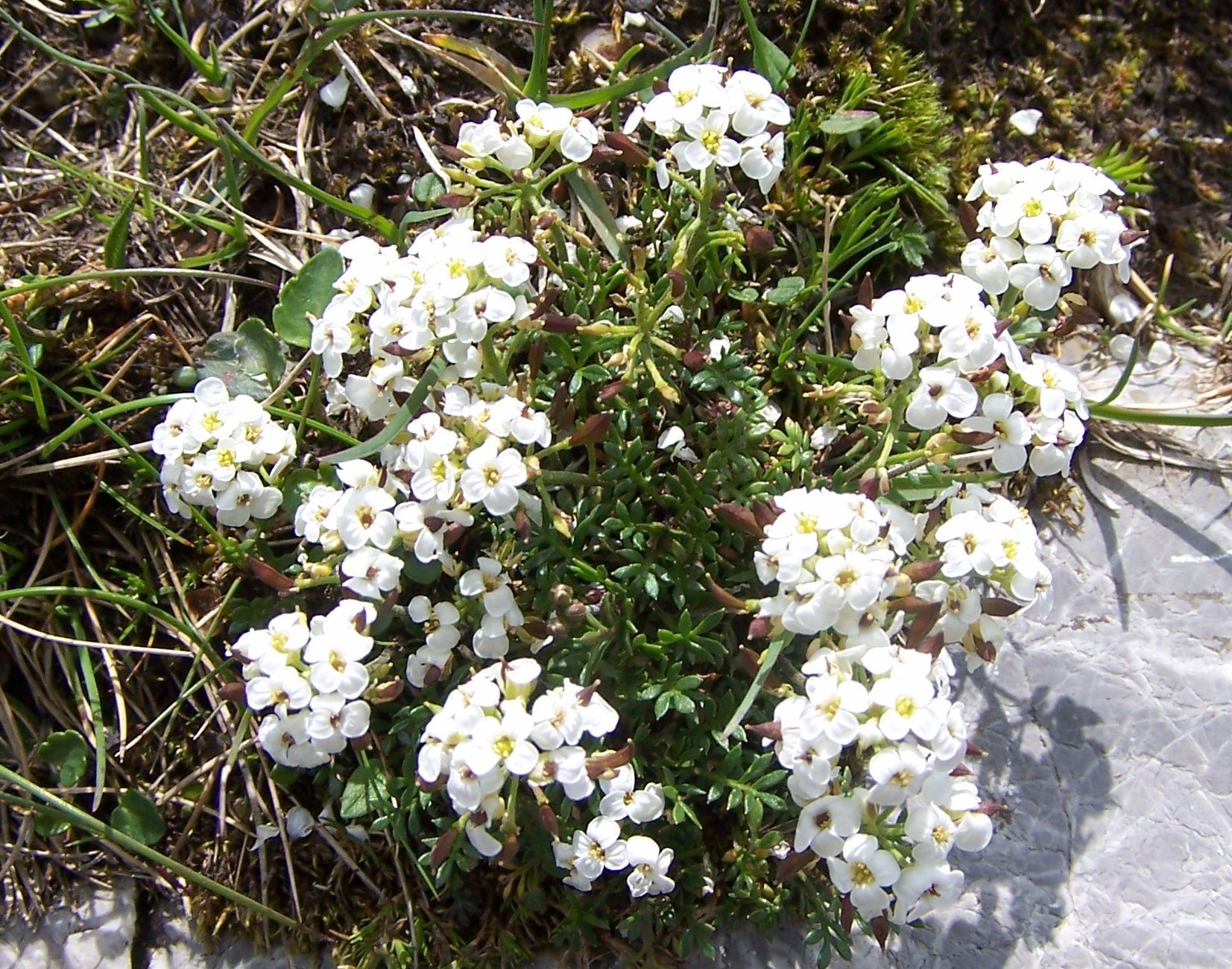
Hornungia is a small genus of flowering plants in the family Brassicaceae (the mustard or cabbage family), placed within the order Brassicales. The genus comprises a handful of species — currently around seven are accepted — that are fleshy annuals producing small white flowers. Members of the genus are native to Eurasia, and one species, Hornungia procumbens, has also become widespread in North America.
The genus has a complex taxonomic history: species now placed in Hornungia were previously classified under the genera Hutchinsia and Pritzelago, among others, and those genera are often still treated as synonyms of Hornungia. Notable members include Hornungia alpina (formerly Hutchinsia alpina), a small alpine plant of European mountain ranges, Hornungia petraea (formerly Hutchinsia petraea), and the cosmopolitan annual Hornungia procumbens.
Etymology
The genus name Hornungia honours Ernst Gottfried Hornungia (1795–1862), a German botanist. The former genus name Hutchinsia, used as a synonym, was named for Ellen Hutchins (1785–1815), an Irish botanist noted for her work on bryophytes and algae.
Distribution
Hornungia species are native to Eurasia, occurring across Europe and into central and western Asia. Hornungia procumbens is the most widespread member and is also naturalised across North America.
Taxonomy Notes
Hornungia has a contested circumscription. Species now placed here were historically distributed among Hutchinsia R.Br. and Pritzelago Kuntze, and those genera are usually treated as synonyms of Hornungia. GBIF records the genus as accepted within Brassicaceae. Wikipedia notes that seven species are currently accepted, whereas the GBIF record shows only one descendant, reflecting ongoing disagreement about generic limits in this group.










