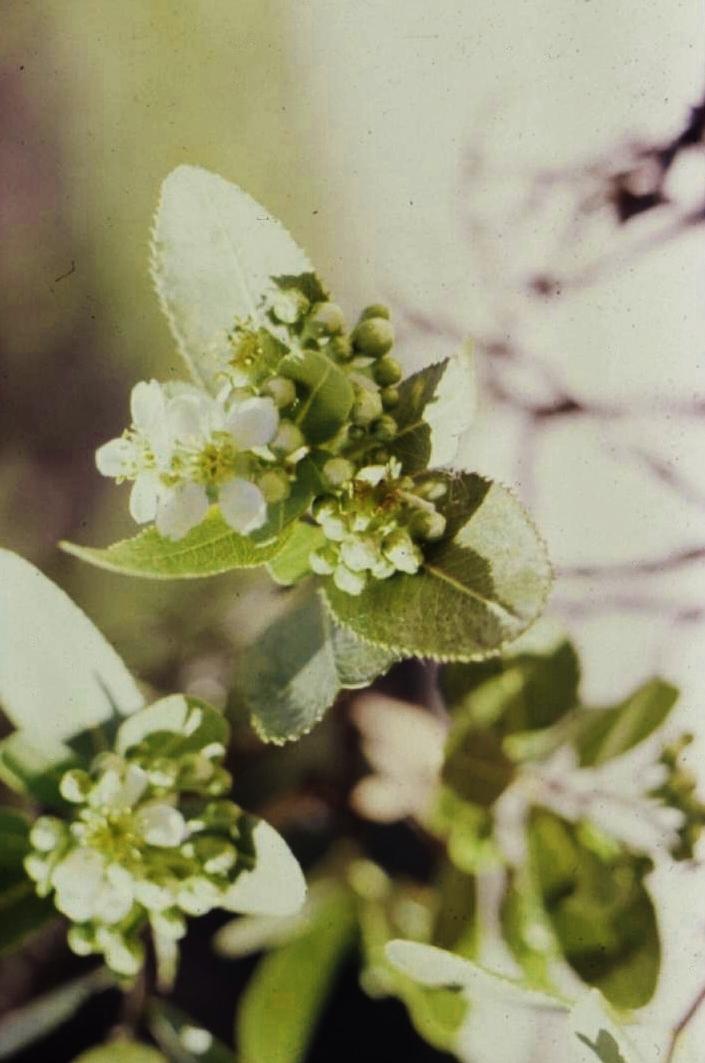
Kageneckia is a small genus of shrubs and trees in the rose family (Rosaceae), comprising three accepted species native to the Andes of Chile and Peru. The genus was described by Ruiz and Pavón and belongs to the order Rosales. Unlike most members of its family, Kageneckia produces dry, dehiscent fruits rather than the fleshy pomes typical of relatives such as apples and pears. It shares a base chromosome number of 17 with the pome-fruited members of tribe Maleae, indicating a close evolutionary relationship despite the divergent fruit type.
Taxonomic placement of the genus has shifted over time. Kageneckia was formerly treated as a member of the family Quillajaceae, together with the related genera Vauquelinia and Lindleya; molecular and morphological evidence has since returned all three to Rosaceae. The three accepted species are Kageneckia oblonga, K. lanceolata, and K. angustifolia, all described by Ruiz and Pavón or D. Don and all restricted to western South America.
Distribution
Kageneckia is native to western South America, with its range spanning northern, central, and southern Chile and extending into Peru. The genus is associated with Andean and Mediterranean-climate habitats in these countries.
Taxonomy Notes
Kageneckia was originally placed in the family Quillajaceae alongside Vauquelinia and Lindleya, but is now accepted within Rosaceae. The genus shares a base chromosome number of 17 with the pome-fruited members of tribe Maleae, yet its fruits are dry and dehiscent rather than fleshy — a key morphological distinction within the family.










