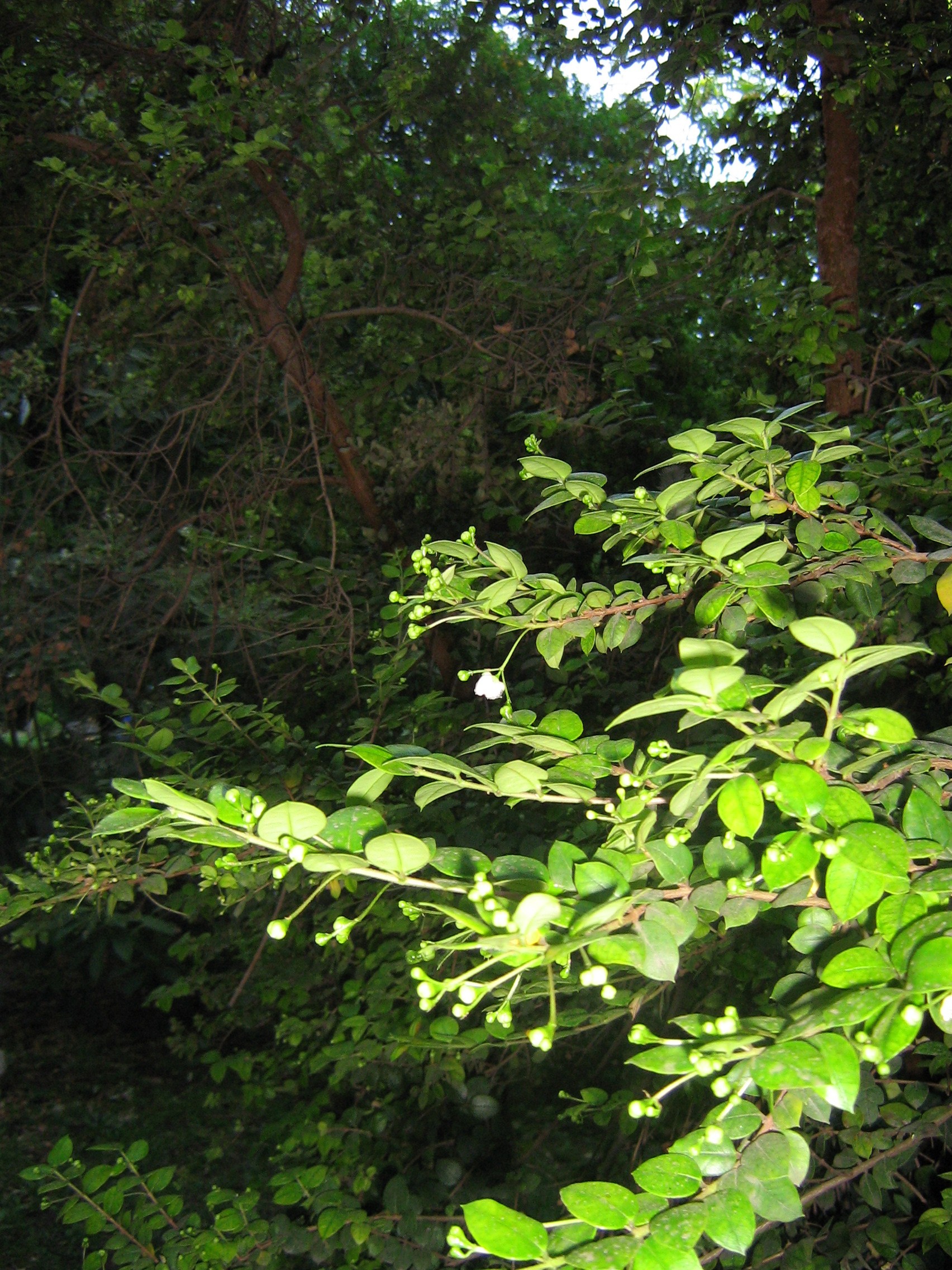
Luma is a small genus of evergreen shrubs and trees in the myrtle family, Myrtaceae (order Myrtales). It was described as a genus in 1853 and contains two accepted species, both native to the Valdivian temperate rain forests of southern Chile and adjacent Argentina — one of the world's most biodiverse temperate forest biomes.
Plants in the genus typically grow 10–20 metres tall and develop trunks up to 1 metre in diameter, with distinctively smooth red or orange peeling bark that becomes a visual hallmark of mature specimens. The leaves are opposite, oval, 1–5 cm long, glossy dark green, and release a spicy scent when crushed. Flowers are about 2 cm across, bearing four white petals and a prominent cluster of numerous stamens characteristic of the myrtle family. The fruit is a small purple or black berry approximately 1 cm in diameter.
The wood of Luma is notably dense and durable, though growth is slow. Historically, many species were placed in this genus; the vast majority have since been reclassified into related genera such as Blepharocalyx, Eugenia, and Myrceugenia, leaving the genus in its current narrow circumscription.
Etymology
The genus name Luma is derived from the Mapuche (indigenous people of south-central Chile and Argentina) name for a closely related species, Amomyrtus luma, reflecting the deep cultural familiarity of Andean and Valdivian peoples with these forest trees.
Distribution
Luma is endemic to the Valdivian temperate rain forests of southern Chile and adjacent Argentina, a narrow coastal and montane belt recognized as one of South America's most important centres of endemic biodiversity.
Taxonomy Notes
Luma was formally described as a genus in 1853. More than 100 names have at various times been placed within it, but these are now considered members of other Myrtaceae genera, chiefly Blepharocalyx, Eugenia, and Myrceugenia. The genus is currently accepted in a narrow sense with two species: Luma apiculata and Luma chequen.










