Machaerium is a genus of flowering plants in the legume family Fabaceae, comprising approximately 155 accepted species (out of roughly 262 described). The genus belongs to the tribe Dalbergieae and has been assigned to the informal monophyletic Dalbergia clade, placing it among the rosewoods and related timber legumes.
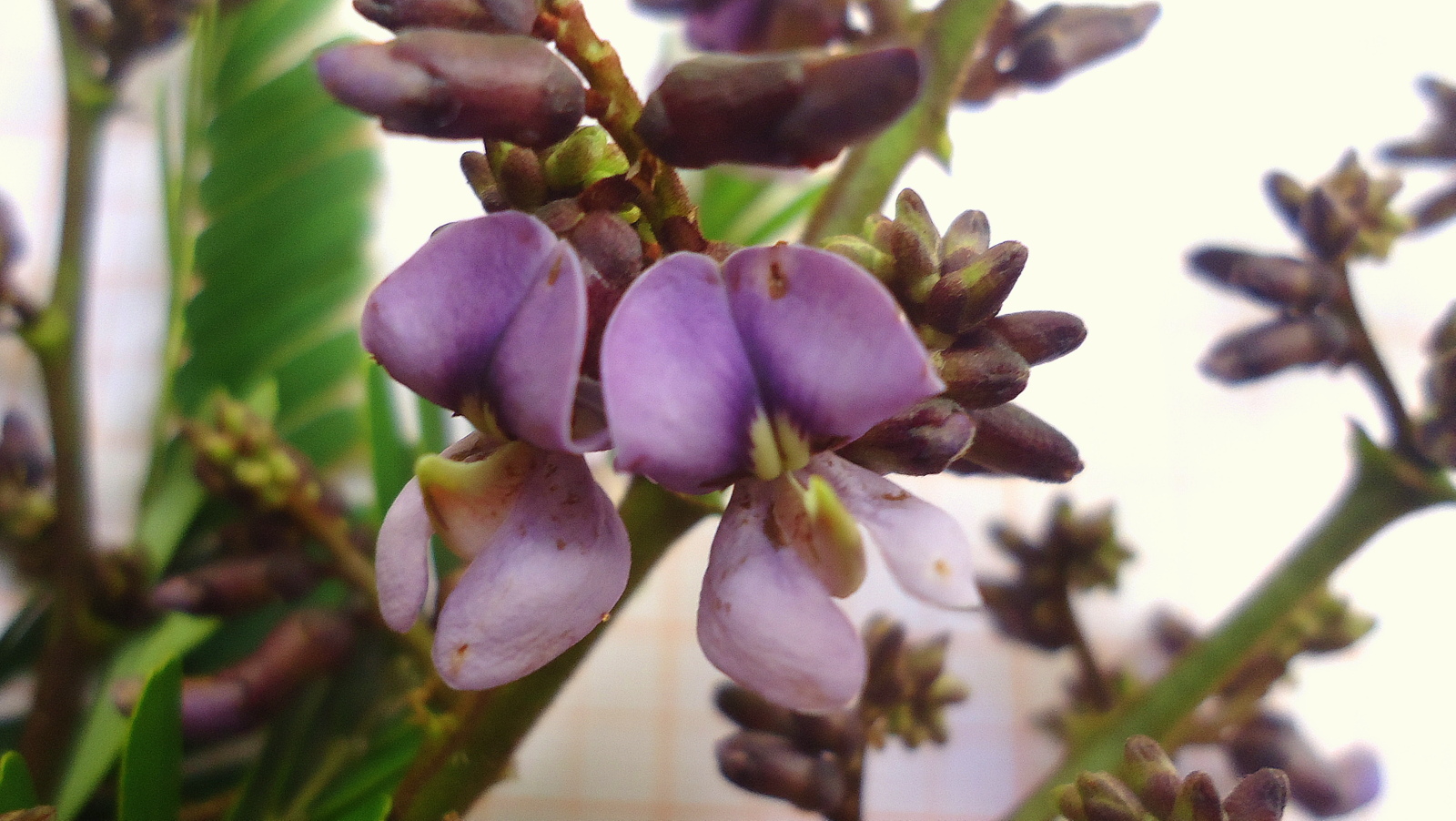
Members of Machaerium are morphologically diverse, growing as trees, shrubs, or lianas (climbing vines), and are sometimes armed with hardened stipules that become spinescent. Leaves are imparipinnate, with alternate leaflets; stipules are often present and toughened. Inflorescences appear as racemes or panicles, axillary or terminal, bearing flowers with purple to pink, white, or yellowish petals and ten stamens that are monadelphous or diadelphous. The fruit is characteristic: flattened and indehiscent, typically bearing a basal seed and a pronounced terminal wing resembling a samara, though some species have lunulate or falcate fruits with a reduced wing. Seeds number one to two per fruit, ovate to reniform.
The genus is primarily Neotropical in distribution, ranging from Mexico through Central America and across South America to Bolivia and Argentina, with some representation in paleotropical regions. Several species display remarkable plasticity in growth habit — the same species (for example M. aristulatum and M. floribundum) can develop as either a liana or an upstanding tree depending on conditions.
Chemically, Machaerium multiflorum has been found to contain machaeriols and machaeridols — hexahydrodibenzopyrans structurally related to tetrahydrocannabinol — which carry bibenzyl and benzofuran side chains. These compounds have attracted research interest for antibiotic and antiparasitic properties; related compounds are believed to occur in other species of the genus.
Distribution
Machaerium is a primarily Neotropical genus, naturally distributed from Mexico south through Central America to Bolivia and Argentina. The Spanish Wikipedia notes it is also found in paleotropical regions. Individual species span a wide range of habitats, with some growing as lianas in closed-canopy forest and the same species occasionally developing as upright trees in more open conditions.
Taxonomy Notes
Machaerium was described by Christiaan Hendrik Persoon and published in Synopsis Plantarum 2(2): 276 (1807), with Diphysa carthagenensis Jacq. as the type species. The genus is placed in tribe Dalbergieae (family Fabaceae, order Fabales) and recent phylogenetic work has assigned it to the informal Dalbergia clade — a monophyletic group that also includes the commercially important rosewood genus Dalbergia.
Ecology
Species of Machaerium occupy a broad ecological range across the Neotropics, occurring as lianas, shrubs, and trees in habitats from seasonally dry forests to moist tropical forest. Notable plasticity in growth form has been documented within single species: M. aristulatum and M. floribundum can develop as either climbers or trees depending on light availability and support. Fruits are wind-dispersed via a terminal samara-like wing, a dispersal strategy shared with other Dalbergieae.










