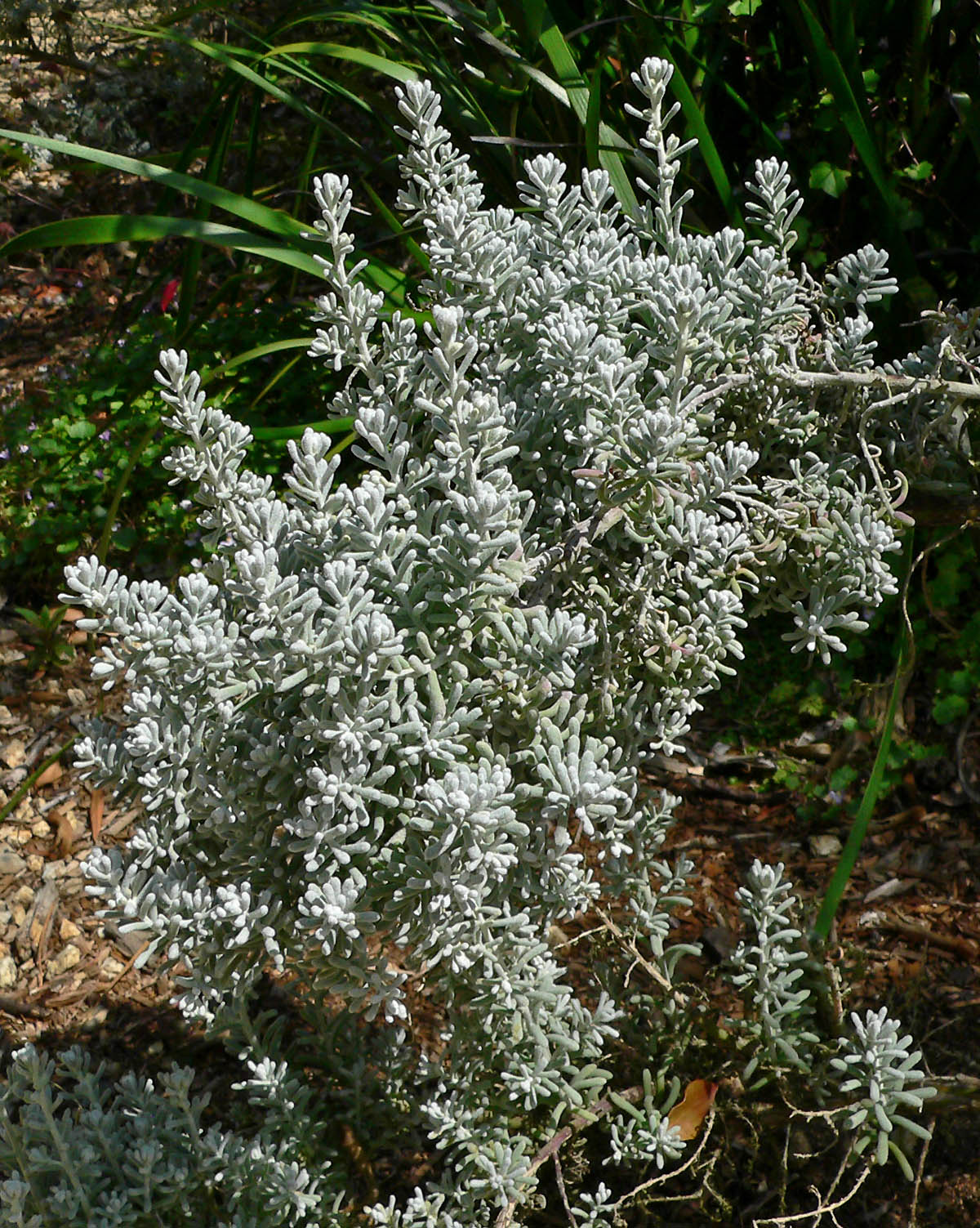
Maireana is a genus of approximately 58 species of flowering plants in the family Amaranthaceae (order Caryophyllales), endemic to Australia and commonly known as bluebushes. The genus encompasses herbaceous to woody perennial plants and small shrubs distributed across all mainland Australian states, typically adapted to arid and semi-arid conditions.
Plants in the genus share a distinctive suite of characters. The leaves are globe-shaped, terete, or narrowly oblong and are frequently fleshy or succulent — an adaptation to the dry environments in which these plants grow. Stems may be glabrous or covered with woolly hairs. The flowers are small and sessile, arranged singly or in pairs in the leaf axils; they may be dioecious or hermaphrodite and bear five petals with five stamens positioned opposite them. The ovary is roughly spherical, topped by a short style with two or three linear stigmas.
The fruit is a utricle — a small, single-seeded bladder-like structure — that is enclosed within the persistent perianth. In fruit, the perianth develops a characteristic wing at its base, which can be a continuous structure or divided into separate leathery lobes that more or less conceal the utricle. The utricle itself may be disc-like, top-shaped (turbinate), or spherical. This winged fruit is a key diagnostic feature of the genus and contributes to its taxonomic placement within the chenopod group of Amaranthaceae.
Maireana was first formally described in 1840 by the French botanist Moquin-Tandon. The type species is Maireana tomentosa. With around 58 accepted species recognised by the Australian Plant Census, the genus is the dominant bluebush lineage in the Australian flora, with species such as Maireana sedifolia (pearl bluebush) and Maireana campanulata forming part of the characteristic shrubland vegetation of inland Australia.
Etymology
The genus Maireana was formally described in 1840 by the botanist Moquin-Tandon. He named it in honour of Joseph François Maire (1780–1867), an amateur botanist who befriended him during his first visit to Paris in 1834.
Distribution
Species of Maireana occur across all mainland states of Australia, with the genus endemic to the continent. PlantNET records 58 species globally, all Australian. The plants are characteristically associated with arid and semi-arid inland regions, where they form bluebush shrublands.
Ecology
Maireana species are key components of Australian arid and semi-arid shrubland communities, commonly referred to as bluebush country. The succulent or fleshy leaves of many species are an adaptation to drought and saline soils. Plants can be dioecious or hermaphrodite, and the winged, wind-dispersed utricle fruits facilitate spread across open landscapes.
Taxonomy Notes
The genus was placed in Chenopodiaceae under classical circumscriptions; modern treatments (APG) subsume Chenopodiaceae within the broader Amaranthaceae. GBIF records the family as Chenopodiaceae, while Wikipedia places the genus in Amaranthaceae. Moquin-Tandon's 1840 description is accepted; the type species is Maireana tomentosa.










