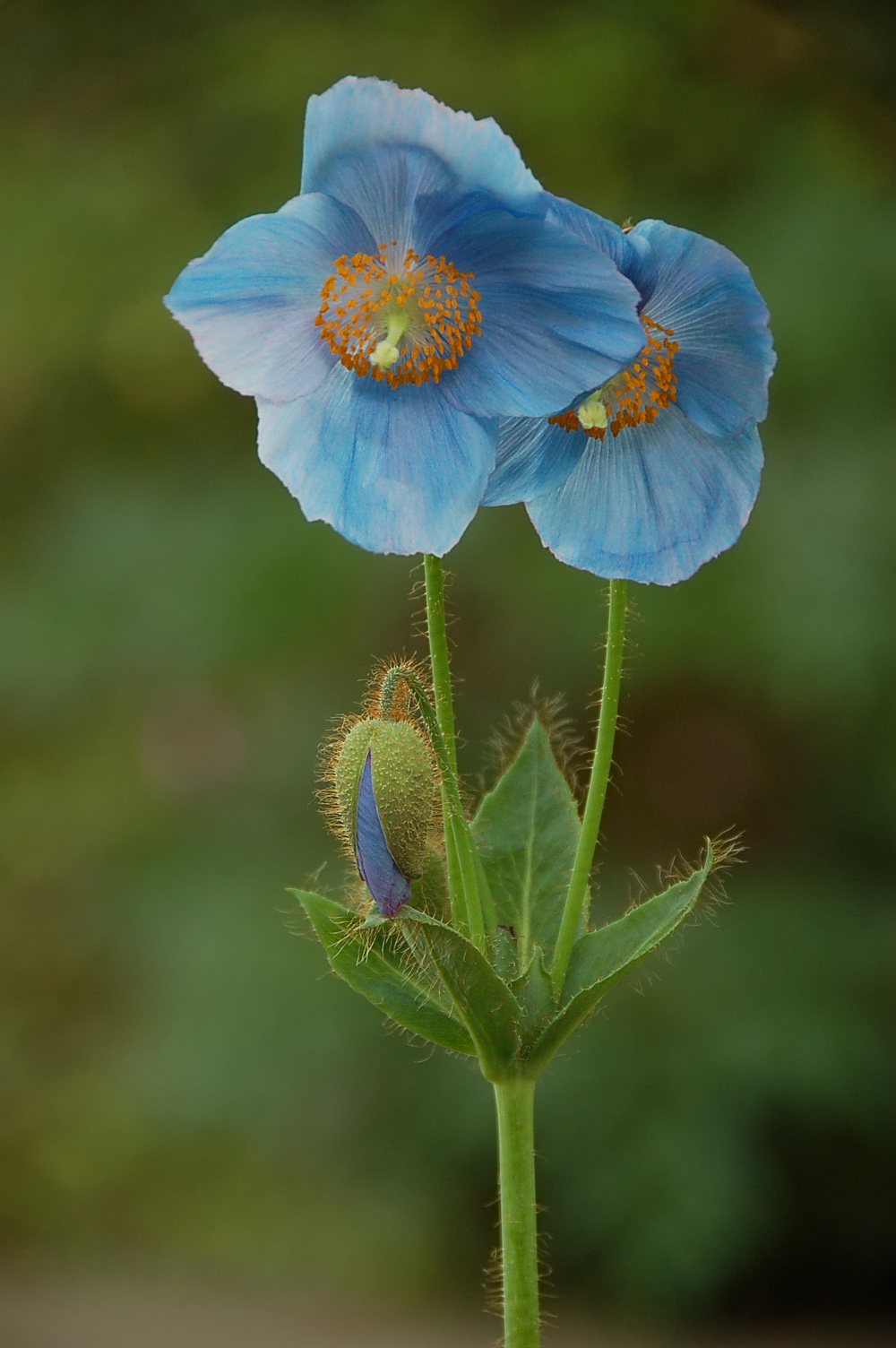
Meconopsis is a genus of flowering plants in the poppy family Papaveraceae, order Ranunculales, comprising roughly a dozen species native to the Himalayas and the surrounding mountain regions of central and south Asia. The genus was established in 1814 by the French botanist Louis Viguier for the Welsh poppy (Papaver cambricum of Linnaeus), on the grounds that it bore a true style — a feature that distinguished it from all other poppies then known. As Himalayan poppy-like plants with similar styles were discovered, they too were placed in Meconopsis, giving the genus its characteristic diversity of spectacular, often blue-flowered mountain plants.
Molecular phylogenetic studies beginning in 1995 revealed that the Welsh poppy was in fact more closely related to Papaver than to the Himalayan species. By 2011–2012 the nomenclature was resolved: the Welsh poppy was returned to Papaver and the name Meconopsis was formally conserved with Meconopsis regia as the new type species. All species now recognised in Meconopsis are therefore Himalayan or high-altitude Asian plants.
The flowers of Meconopsis are among the most celebrated in horticulture, particularly the iconic sky-blue blooms produced by several species. A large proportion of species are monocarpic — they flower once and then die — which contributes to their reputation as challenging garden subjects. Meconopsis species do not produce opium, distinguishing them from true Papaver opium poppies despite the family resemblance.
Etymology
The genus name Meconopsis is derived from the Greek mekon (poppy) and opsis (alike or resembling), meaning “poppy-like.” It was coined in 1814 by the French botanist Louis Viguier when he transferred the Welsh poppy from Papaver to his new genus.
Distribution
All species currently placed in Meconopsis are native to the Himalayas and the surrounding high-altitude regions of central and south Asia. The Welsh poppy, formerly Meconopsis cambrica, has been removed from the genus and returned to Papaver, so no European species remain.
Cultivation
Himalayan Meconopsis species have a reputation for being difficult to grow from seed; using fresh seed significantly improves germination success. All species require an acid or neutral soil pH and a partially shaded, sheltered position. Cultivated forms are available in a range of colours including blue, red, orange, purple, white, and yellow depending on species and cultivar. Many species are monocarpic and will die after flowering, which means they must be grown from seed rather than divided repeatedly.
Taxonomy Notes
The taxonomy of Meconopsis is unsettled and contested. Some authorities treat it as distinct from Papaver; others sink it entirely. The number of species is also uncertain because many hybridise readily with each other and produce viable seed, suggesting some named species may represent a single variable species. The decisive shift came from molecular phylogenetic work from 1995 onward, which demonstrated that the former type species — the Welsh poppy (M. cambrica) — belonged within Papaver. The genus name was conserved in 2012 with M. regia as the new type, resolving the nomenclatural conflict and confining Meconopsis to its Himalayan members.










