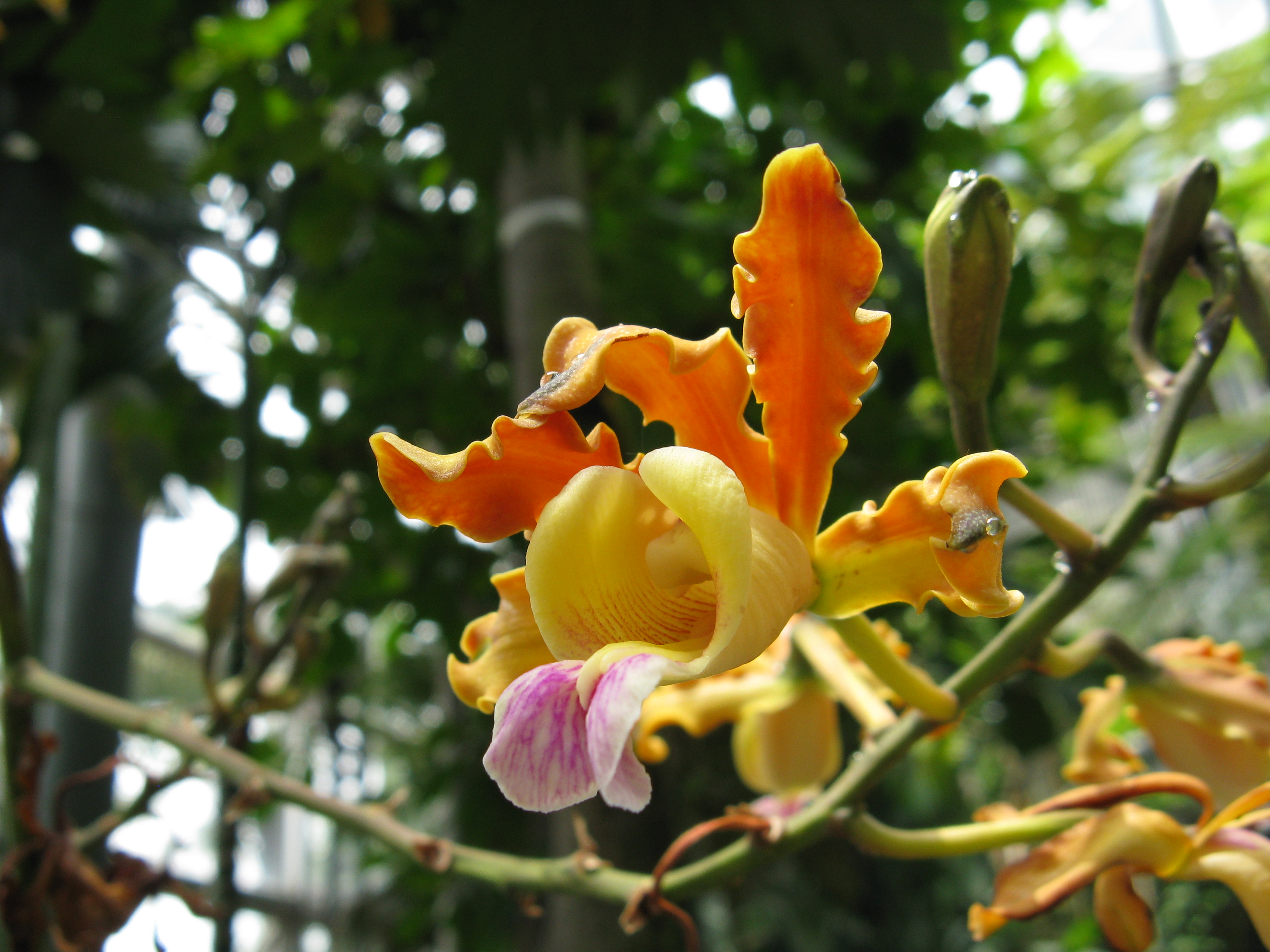
Myrmecophila is a small genus of orchids in the family Orchidaceae (order Asparagales), comprising around a dozen species native to southern Mexico, Central America, the West Indies, and Venezuela. Plants grow as epiphytes on tree bark or as lithophytes on rock surfaces in open-canopied tropical habitats.
The genus is immediately recognizable by its large, hollow, banana-shaped pseudobulbs and its exceptionally tall inflorescences — pole-like growths that rise 1 to 4 meters above the plant and take up to four months to develop before producing their slightly fragrant flowers. This combination of towering flower spikes and swollen, hollow pseudobulbs is unique among Neotropical orchids.
Myrmecophila is best known for its remarkable mutualism with ants. Colonies of several ant species — including Camponotus planatus, Camponotus abdominalis, Crematogaster brevispinosa, and others — occupy the hollow pseudobulbs, entering through a natural opening at the base. The ants harvest nectar from the inflorescences and foraging from neighboring plants, and in return pack the pseudobulb cavities with organic debris: dead insects, plant fragments, seeds, and soil particles. Myrmecophila tibicinis, the most studied species, directly absorbs minerals from this "garbage dump," supplementing nutrient uptake in the otherwise poor substrates of open tropical canopies. While plants can survive without ant tenants, uninhabited specimens are rare in the wild.
The genus was established when Robert Allen Rolfe transferred several species from Schomburgkia into Myrmecophila in 1917, recognizing the distinctive morphology and ant association as grounds for generic separation. The name itself is a compound of the Greek words for ant (myrmex) and lover (philos), directly acknowledging this relationship.
Etymology
The name Myrmecophila derives from the Greek myrmex (ant) and philos (lover), a direct reference to the genus's defining trait: colonies of ants that inhabit the large, hollow pseudobulbs. The relationship is mutualistic — ants gain shelter and access to nectar, while the orchid benefits from the mineral-rich debris the ants deposit inside the pseudobulbs.
Distribution
Myrmecophila is native to southern Mexico, Central America, the West Indies, and Venezuela. Species grow as epiphytes or lithophytes in open-canopied tropical and subtropical habitats, where nutrient availability in bark and rock substrates is low.
Ecology
Species of Myrmecophila maintain mutualistic associations with several ant species (including Camponotus planatus, Camponotus abdominalis, Crematogaster brevispinosa, Brachymyrmex spp., and others) that nest inside the hollow pseudobulbs. The ants harvest nectar from peduncles and flowers and pack the pseudobulb interiors with organic debris — dead arthropods, plant material, seeds, and sand — from which the orchid absorbs minerals. This supplemental nutrient source is ecologically significant in the nutrient-poor open-canopied tropical forests where these orchids occur. Plants can grow without ants but rarely do so in nature.
Taxonomy Notes
Myrmecophila was recognized as a distinct genus when Robert Allen Rolfe transferred several Schomburgkia species into it in 1917, citing the unique combination of hollow pseudobulbs and ant mutualism. The species M. tibicinis, for example, was formerly known as Schomburgkia tibicinis. GBIF recognizes the genus within the tribe Laeliinae, family Orchidaceae, order Asparagales.

