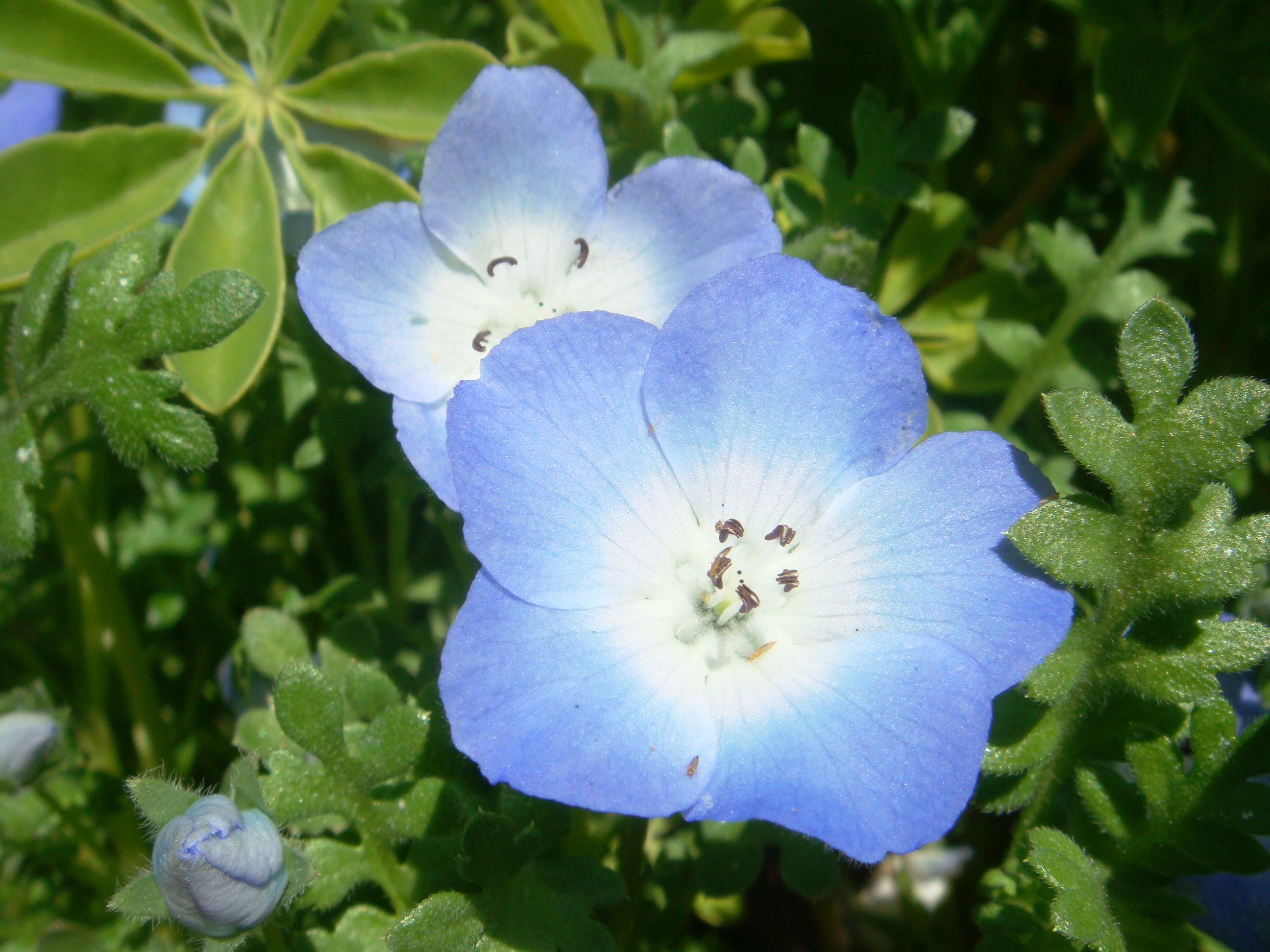
Nemophila is a genus of annual flowering plants belonging to the family Hydrophyllaceae, placed in the order Boraginales. The genus comprises around 13 accepted species, native predominantly to the western United States, with a smaller number of species extending into Mexico and the southeastern United States.
All members of the genus are annuals, typically blooming in spring. Their flowers are bell- or cup-shaped, composed of five petals, and range in colour from purple and blue to white, often bearing distinctive spots or markings. The stamens are included within the flower, and each flower contains a single ovary chamber. Leaves are simple, with either opposite or alternate arrangement, and a generally bristly petiole; the leaf blade is pinnately toothed or lobed. The fruit is small (2–7 mm wide), spherical to ovoid, hairy, and usually enclosed by the calyx. Seeds are ovoid with a colorless, conic appendage at one end.
The genus is best known horticulturally for Nemophila menziesii, commonly called baby blue eyes, which is widely grown as a cool-season annual in gardens worldwide. Most species share some variant of this common name; an exception is Nemophila maculata, known as fivespot for its white petals each marked with a single purple spot at the tip. Other notable members include Nemophila phacelioides (largeflower baby blue eyes) of Texas and the south-central United States, and Nemophila breviflora (Great Basin nemophila) of the interior West.
The genus name derives from the Greek νέμος (némos, wooded pasture or glade) and philos (loving), reflecting the habitat preferences of some species for shaded or semi-shaded woodland margins, though many also thrive in open meadows and disturbed ground.
Etymology
The name Nemophila derives from the Greek νέμος (némos), meaning wooded pasture or glade, and philos, meaning loving — a reference to the woodland or shaded habitats favoured by some species. The genus was established and named in recognition of this characteristic habitat association.
Distribution
Nemophila species are primarily native to the western United States, with the greatest diversity concentrated in California and the Pacific states. A smaller number of species extend southward into Mexico and eastward into the southeastern United States. Several species are restricted to specific subregions, such as Nemophila breviflora in the Great Basin or Nemophila phacelioides in Texas and adjacent states.
Cultivation
Nemophila species, particularly Nemophila menziesii, are commonly grown as cool-season annuals in gardens. They are valued for their ornamental flowers and are generally easy to establish from seed in temperate gardens.










