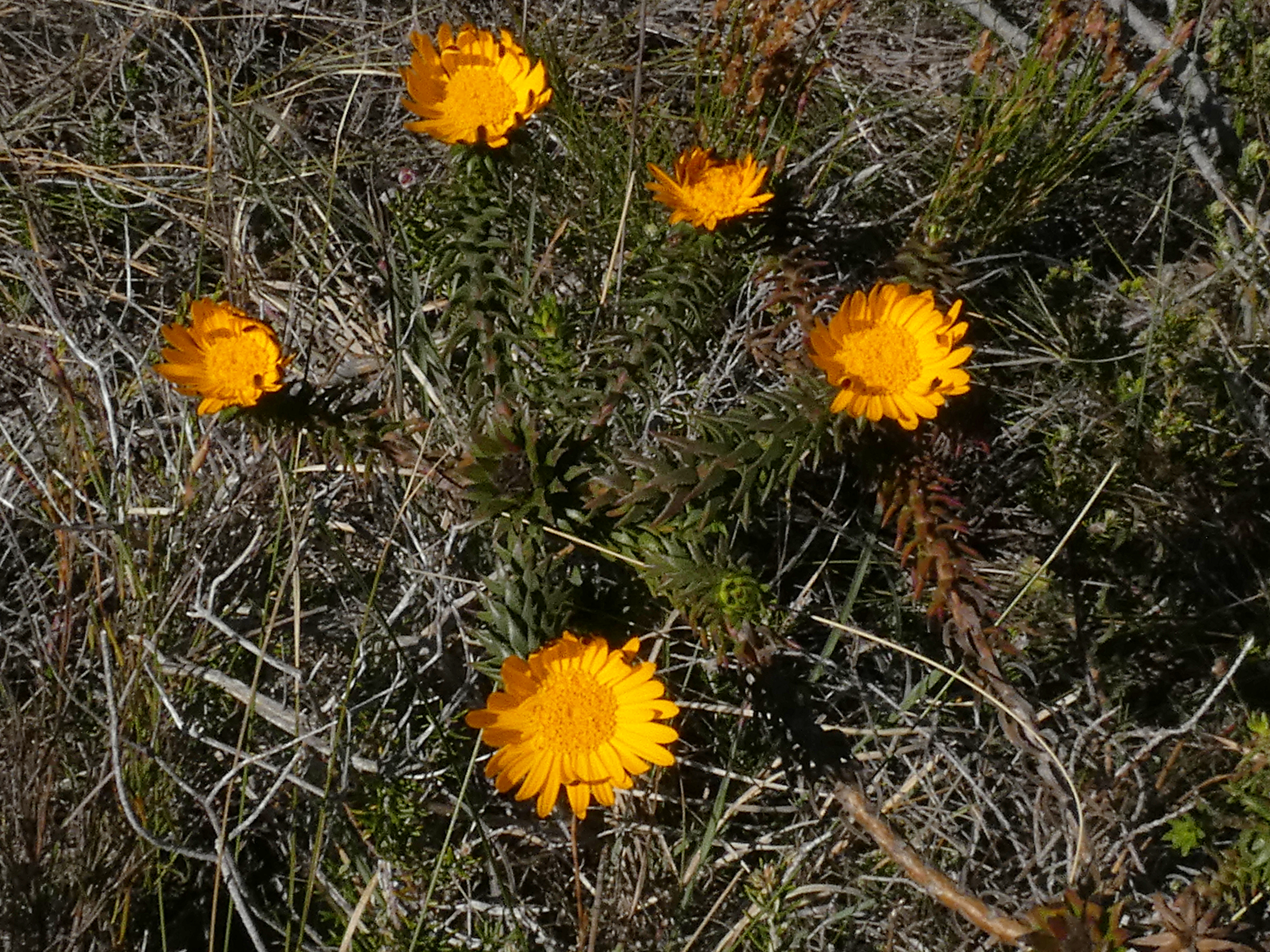
Oedera is a small genus of flowering plants native to Africa, placed in the tribe Gnaphalieae of the daisy family Asteraceae (also known as Compositae). The genus comprises approximately 22 accepted species, the majority of which are endemic or near-endemic to the Cape Floristic Region of southern Africa.
Plants in this genus are characterised by flower-heads bearing yellow ray florets and yellow central (disc) florets — a consistent floral trait across the genus. The seeds (cypselas) are topped by a small pappus composed of scales rather than the feathery bristles typical of many other composites. The leaves are frequently fragrant and are generally unpalatable to grazing livestock, likely reflecting chemical defences.
Oedera is classified within the tribe Gnaphalieae, a large group within Asteraceae that also includes everlastings and related African genera. The genus was described in honour of Georg Christian Oeder, a Danish botanist of the eighteenth century. Several species formerly placed in Oedera have been transferred to related genera including Heterolepis, Hirpicium, and Flaveria.
Etymology
The genus name Oedera commemorates Georg Christian Oeder (1728–1791), a Danish botanist who served as the first director of the Danish flora project Flora Danica.
Distribution
Oedera is an African genus concentrated in southern Africa, with most species occurring in the Cape Floristic Region of South Africa's Western and Northern Cape provinces. The type species Oedera capensis is recorded from the Hanklip area of the Western Cape.
Taxonomy Notes
Several species formerly placed in Oedera have been reassigned to other genera: Oedera aliena L.f. is now Heterolepis aliena; Oedera alienata Thunb. is now Hirpicium alienatum; and Oedera trinervia Spreng. is now Flaveria trinervia. The family name Compositae is a conserved synonym for Asteraceae, both used interchangeably.










