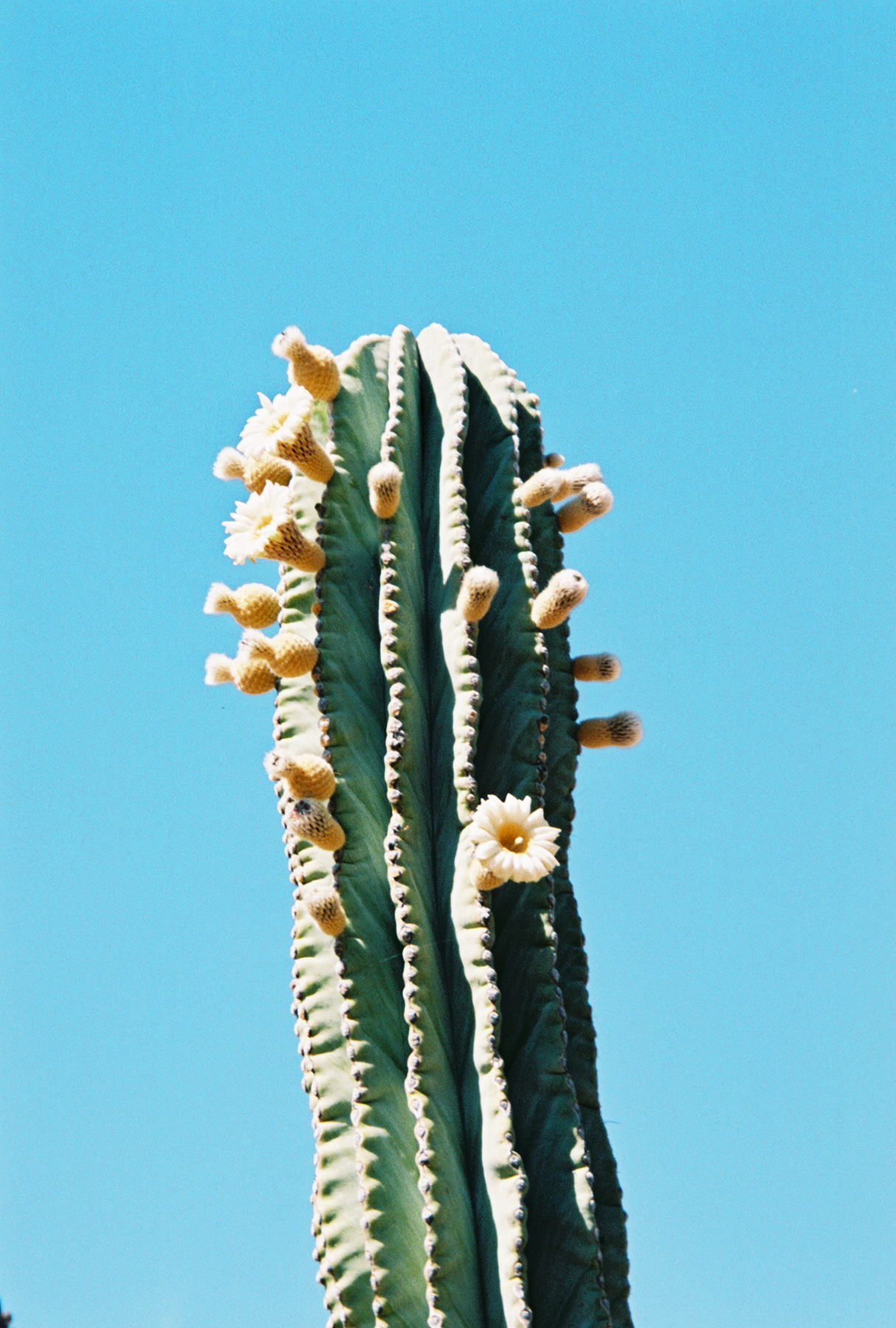
Pachycereus is a genus of large columnar cacti in the family Cactaceae, placed within the order Caryophyllales. Native to Mexico and Central America, these impressive plants grow as large shrubs or small trees, typically reaching up to 15 metres in height with thick, stout stems that can exceed 1 metre in diameter.
The genus was formally described by Britton & Rose in 1909, originally drawing on earlier work by A. Berger. Pachycereus is closely allied to several other columnar cactus genera — Lemaireocereus and Marginatocereus have been treated as synonyms by some authorities, though Plants of the World Online had not fully accepted these synonymizations as of late 2023.
Among the best-known members is Pachycereus pringlei, the cardón, which holds the distinction of being the tallest cactus species in the world, with a maximum recorded height of 19.2 metres. Other notable species include Pachycereus pecten-aboriginum, the etcho cactus, and Pachycereus schottii, the senita cactus. The genus comprises around six to eight accepted species depending on the classification followed.
Etymology
The name Pachycereus combines the ancient Greek παχύς (pachys), meaning "thick", with the Latin cereus, meaning "torch" — a reference to the plants' characteristically stout, torch-like columnar stems.
Distribution
Pachycereus species are native to Mexico and Central America, where they grow in arid and semi-arid habitats. The genus is particularly characteristic of the Sonoran and Baja California deserts, with individual species ranging into Mesoamerican dry forests.
Taxonomy Notes
Pachycereus was described by Britton & Rose (1909), based on earlier work by A. Berger. The genera Lemaireocereus Britton & Rose and Marginatocereus (Backeb.) Backeb. have been treated as synonyms by some taxonomists, and species such as P. hollianus, P. lepidanthus, and P. militaris may be placed in those segregate genera depending on the authority followed. As of October 2023, Plants of the World Online had not accepted these synonymizations.

