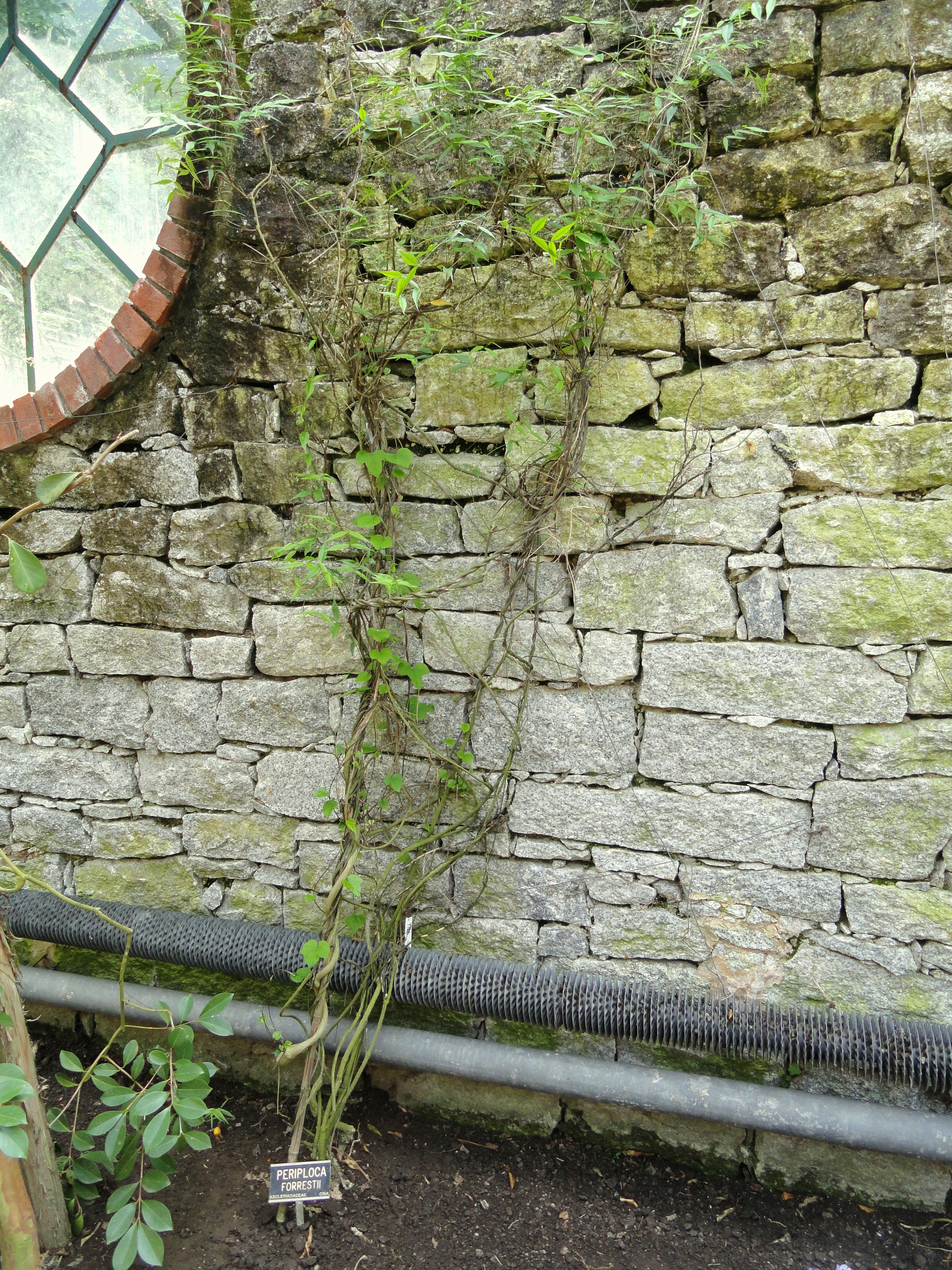
Periploca is a genus of twining woody climbers and shrubs in the family Apocynaceae (order Gentianales), first formally described by Carl Linnaeus in 1753. The genus belongs to what was historically treated as the family Asclepiadaceae — a group now recognised as the subfamily Asclepiadoideae within the broader Apocynaceae. Periploca comprises roughly 15–20 species distributed across a wide arc from the Mediterranean basin and Atlantic islands through sub-Saharan Africa, the Middle East, South Asia, and East Asia as far as China and Southeast Asia.
Plants in the genus are typically deciduous or evergreen woody lianas or erect shrubs with opposite, simple leaves and small, star-shaped flowers that often display a distinctive corona of appendages — a characteristic shared with related milkweeds. Like other members of Apocynaceae, species produce a milky latex. Among the best-known members are Periploca graeca, the silk vine native to the Mediterranean and widely grown as an ornamental climber, and Periploca sepium, the Chinese silk vine used in traditional East Asian medicine. Periploca aphylla is a leafless desert shrub of the Middle East and South Asia notable for its adaptation to arid conditions. Periploca laevigata is endemic to the Canary and Savage Islands.
Distribution
Periploca is native to a broad range spanning southern Europe (including the Mediterranean islands), the Canary Islands, much of Africa, the Middle East from the Sinai Peninsula to Pakistan, and Asia extending through the Himalayas, China, and into Southeast Asia. Individual species occupy markedly different habitats: P. graeca favours Mediterranean scrub and woodland margins, while P. aphylla grows in hot arid conditions and P. laevigata is restricted to the Macaronesian islands.
Taxonomy Notes
Periploca was described by Linnaeus in 1753 and gives its name to the tribe Periplocaceae (or formerly the family Periplocaceae), a lineage historically separated from the core milkweeds. Modern molecular systematics has placed the genus firmly within Apocynaceae, subfamily Asclepiadoideae, order Gentianales. Some GBIF checklists still record the genus under the older family name Asclepiadaceae, which is now treated as a synonym of Apocynaceae.










