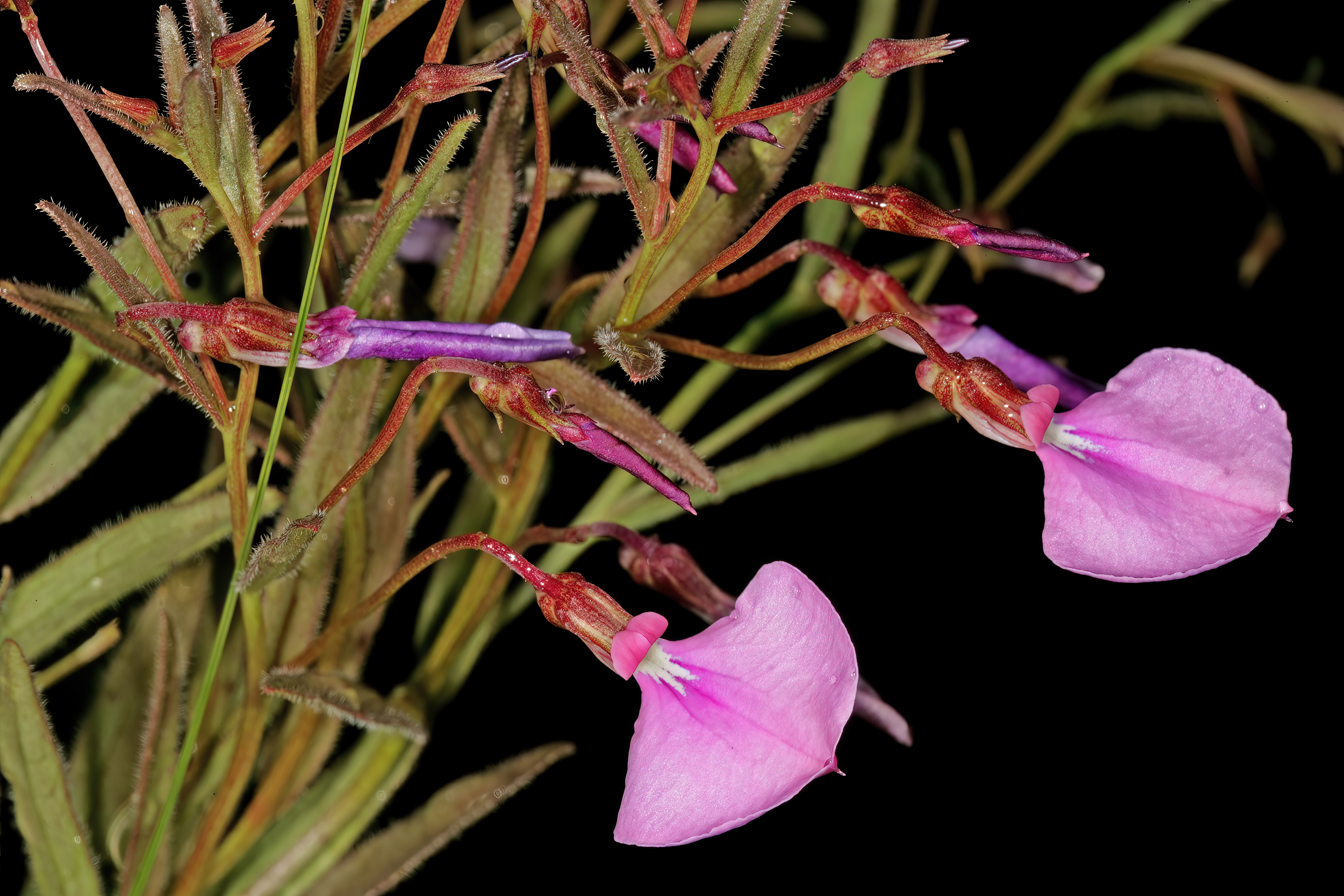
Pigea is a genus of flowering plants in the family Violaceae, placed within the order Malpighiales. The genus comprises around 31 accepted species of herbs and small shrubs, distributed across a wide pantropical and subtropical range spanning tropical and southern Africa, Madagascar, the Indian subcontinent, Southeast Asia, and Australia.
Pigea belongs to the violet family (Violaceae), a family best known for the genus Viola, and shares with its relatives a characteristic floral architecture featuring five petals and five sepals. Species in Pigea are generally small plants adapted to open or lightly wooded habitats across their broad geographic range.
The genus was revised and circumscribed in its modern form by P.I. Forster, with many species transferred from related genera. Species such as Pigea enneasperma, a plant native to tropical Asia and Australia, and Pigea buxifolia, known from Australia, are among the more widely documented members of the genus.
Distribution
Pigea has a wide pantropical and subtropical distribution, with its native range encompassing tropical and southern Africa, Madagascar, and tropical Asia through to Australia.
Taxonomy Notes
Pigea is placed in the family Violaceae within the order Malpighiales. Many of its species were transferred to this genus by P.I. Forster following taxonomic revision, as reflected in the "(Author) P.I.Forst." authorship pattern seen across most accepted species names. GBIF currently recognises 5 accepted descendants under its record for this genus, while Wikipedia and other sources list approximately 31 accepted species — the discrepancy likely reflects differences in taxonomic treatment or indexing lag.










