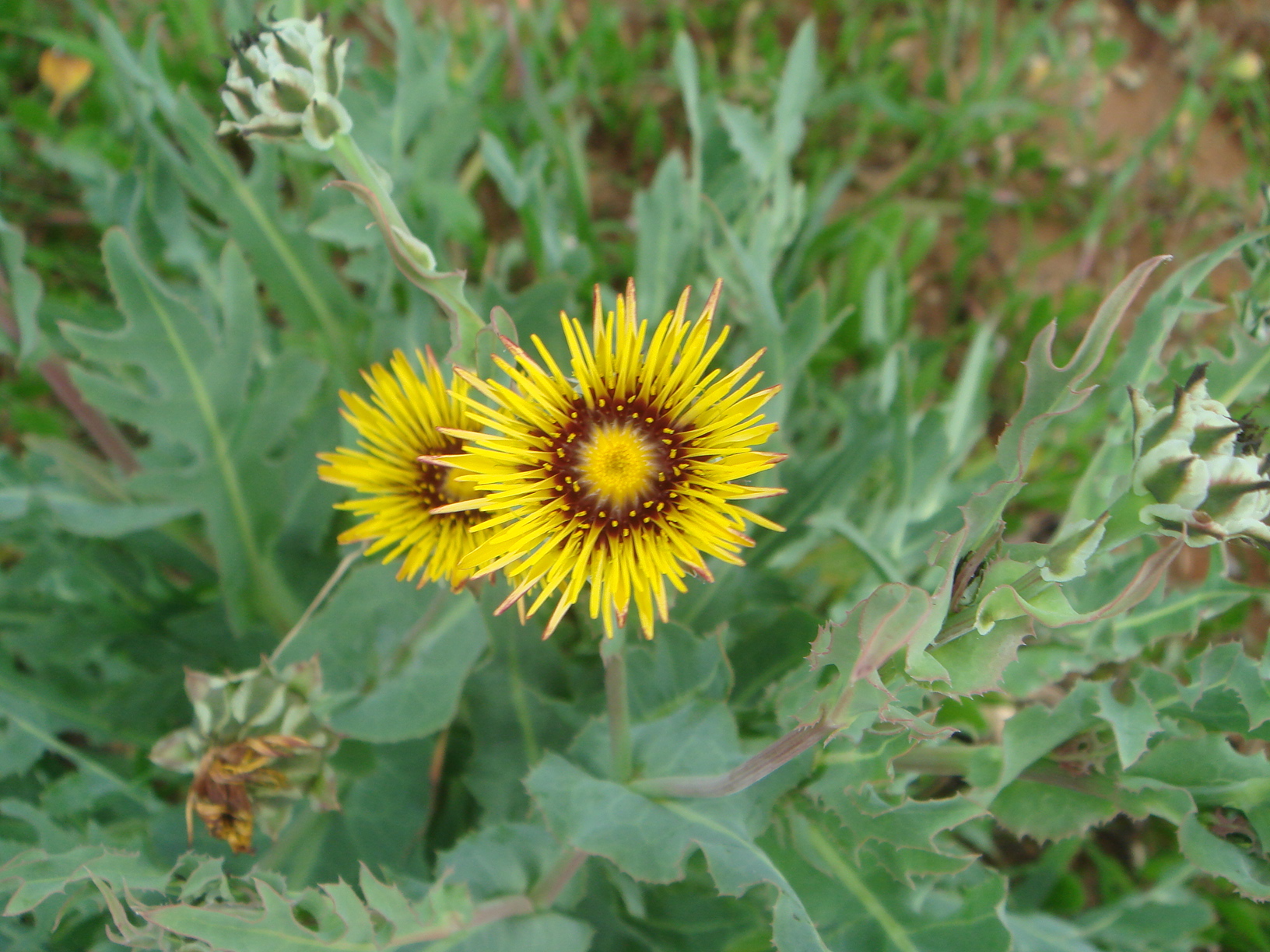
Reichardia is a genus of flowering plants in the tribe Cichorieae within the family Asteraceae (the daisy family), placed in the order Asterales. The genus is native to the Mediterranean Basin and western Asia, where its members grow in open, often disturbed or rocky habitats typical of that region. Plants in the genus are commonly known as brighteyes.
Like other members of Cichorieae, Reichardia species produce composite flower heads composed entirely of ligulate (strap-shaped) ray florets — a hallmark of the chicory tribe — and typically bear yellow flowers. The genus includes annual and perennial herbs with milky latex, a characteristic shared across the tribe.
The genus contains roughly seven recognised species, including Reichardia picroides, R. tingitana, R. gaditana, R. intermedia, R. crystallina, R. dichotoma, and R. ligulata. Several species, particularly R. picroides, have a long history of use as edible greens in Mediterranean cuisines — in Crete the leaves and tender shoots are eaten raw, boiled, steamed, or sautéed in olive oil, where the plant is known locally as galatsida (γαλατσίδα).
Etymology
The genus name Reichardia honours Johann Jakob Reichard (1743–1782), a German botanist and physician. The common name "brighteyes" alludes to the bright yellow composite flower heads characteristic of the genus.
Distribution
Reichardia is native to the Mediterranean region and western Asia, with species distributed across southern Europe (including Spain, France, Italy, and Greece), North Africa, and into the Middle East. The genus is centred on the Mediterranean Basin, where species occupy open, rocky, or disturbed ground in coastal and inland habitats.
Cultural Uses
Reichardia picroides has been gathered and eaten as a wild green across the Mediterranean for centuries. In Crete it is known as galatsida (γαλατσίδα) and the leaves and tender shoots are prepared raw in salads, boiled, cooked in steam, or browned with olive oil — a practice that continues among local communities today.

