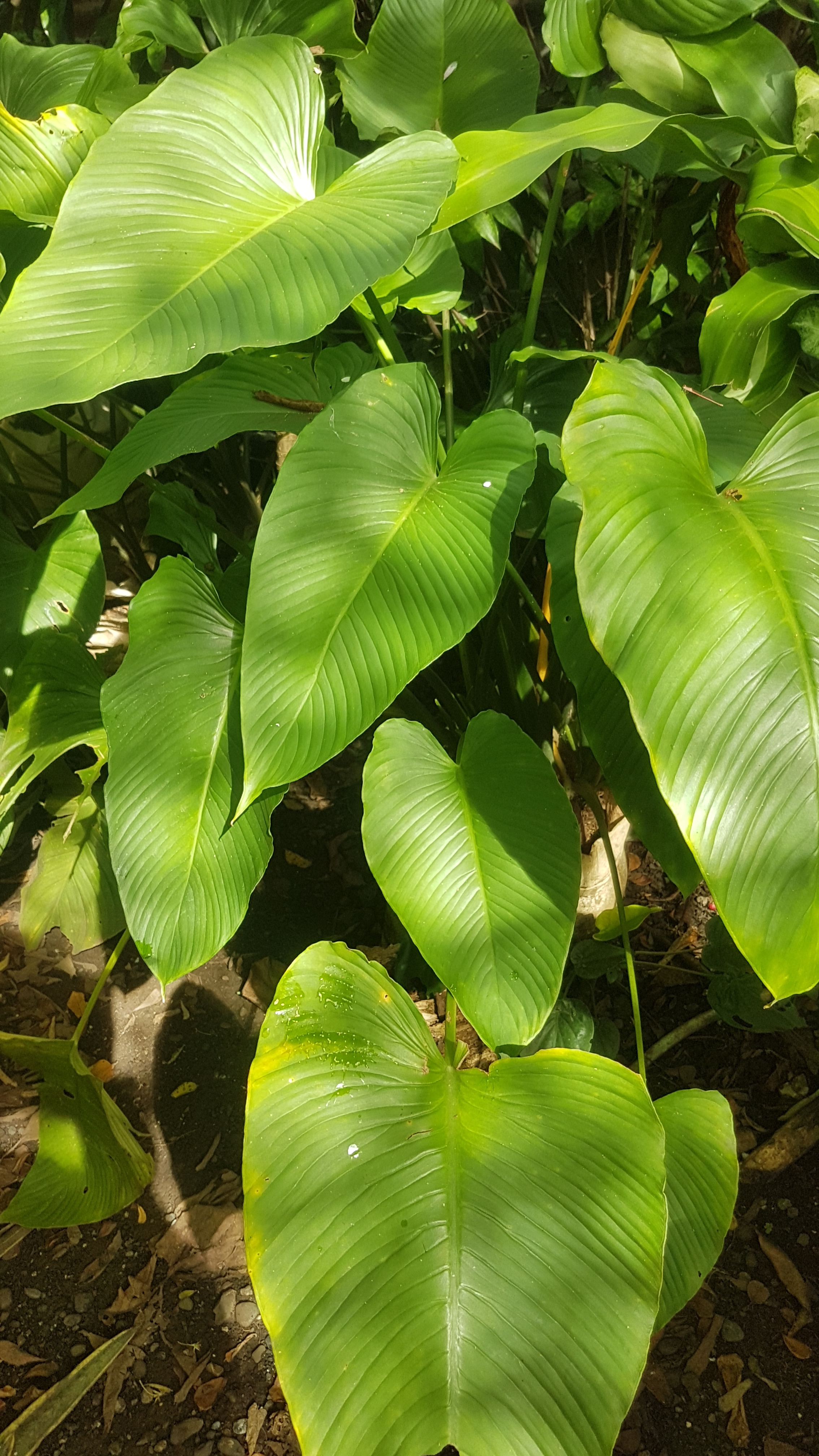
Schismatoglottis is a genus of tropical flowering plants in the family Araceae (order Alismatales), described by Zollinger and Moritzi in 1846. The genus comprises roughly 97 accepted species (Plants of the World Online, November 2025) and about 195 descendants recognised by the GBIF backbone, distributed primarily across Southeast Asia, New Guinea, and Melanesia, with the greatest concentration of species on the island of Borneo.
Plants in this genus bear a strong superficial resemblance to members of the related genus Homalomena in both appearance and growth habit, but the two genera are not closely related within Araceae. The most reliable field distinction is olfactory: unlike Homalomena, the leaves of Schismatoglottis are not aromatic when crushed.
One species, Schismatoglottis prietoi (described from the Philippines in 2015), is exceptional within the genus for being fully aquatic or amphibious. It forms large colonies in shallow, fast-flowing freshwater rivers in lowland forests — a habitat unlike anything recorded for other members of the genus.
The genus has undergone significant taxonomic revision: in 2024, botanists Sin Yeng Wong and Peter Charles Boyce re-circumscribed Schismatoglottis on the basis of a phylogenetic analysis. Several former members were segregated into seven newly-described genera — Aia, Ayuantha, Bau, Borneoa, Ibania, Sarawakia, and Tweeddalea — reflecting finer-grained lineage structure within what was previously a broader concept of the genus.
Distribution
Schismatoglottis is found primarily in tropical Southeast Asia, New Guinea, and Melanesia, with the greatest species diversity centred on the island of Borneo. At least one species, S. prietoi, occurs in the lowland rivers of the Philippines.
Ecology
Most species grow in humid tropical forest understoreys. Schismatoglottis prietoi is a notable exception — it is fully aquatic or amphibious, colonising shallow, fast-flowing freshwater rivers in lowland forest, a habitat unrecorded for any other member of the genus.
Taxonomy Notes
The genus was described by Zollinger and Moritzi in 1846 (Syst. Verz. Java: 83). In 2024, a phylogenetic revision by Sin Yeng Wong and Peter Charles Boyce re-circumscribed the genus, removing several lineages into seven newly-erected genera: Aia, Ayuantha, Bau, Borneoa, Ibania, Sarawakia, and Tweeddalea. As of November 2025, Plants of the World Online accepts 97 species in the revised genus.










