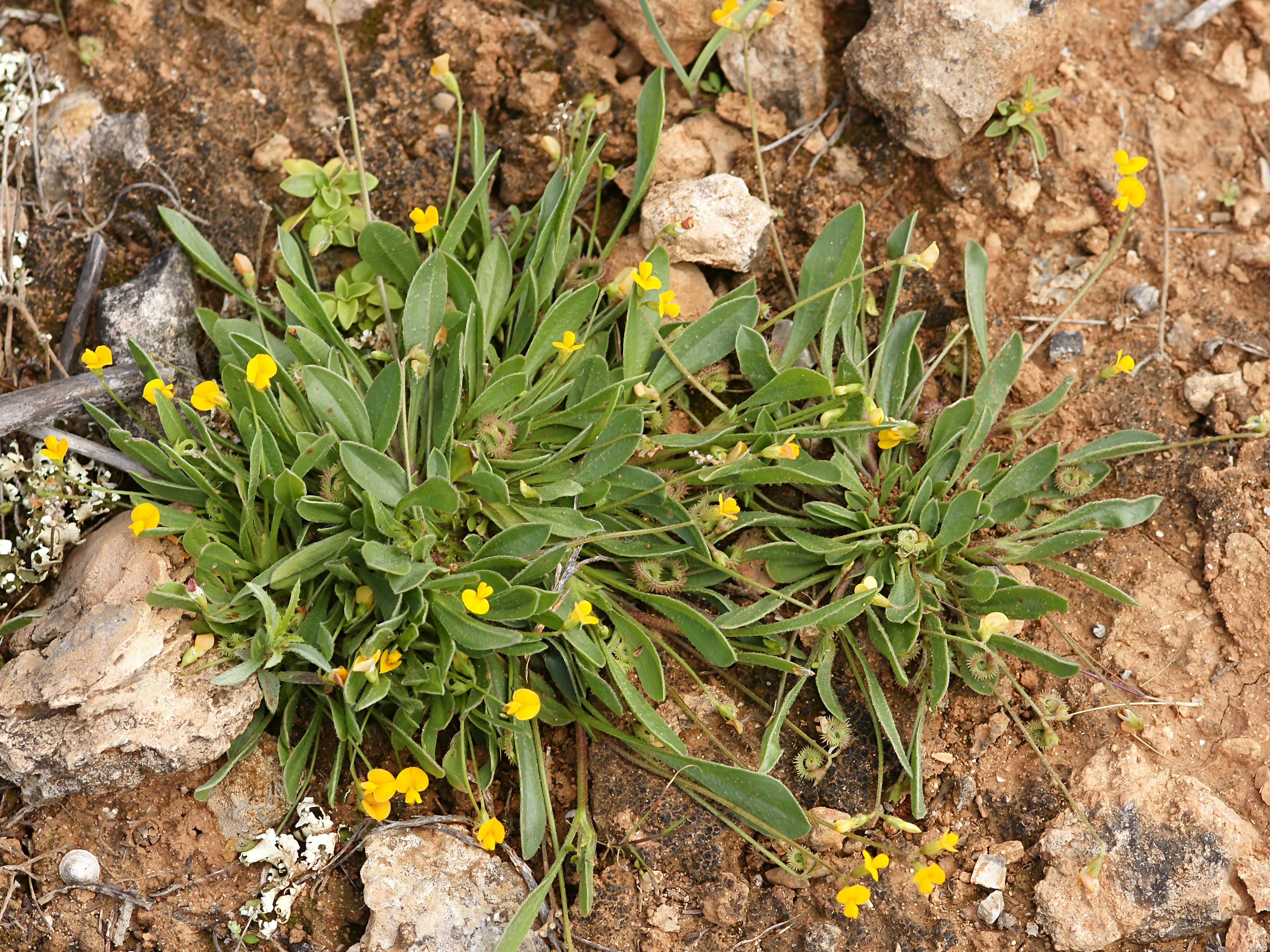
Scorpiurus, commonly known as scorpion's-tails, is a small genus of annual flowering plants in the legume family Fabaceae (subfamily Faboideae), order Fabales. The genus is notable for its highly distinctive seed pods, which are slender, coiled, and worm-like in appearance — a trait that gives the plants both their scientific name (from the Latin scorpio, scorpion) and their common name.
The genus contains only two accepted species: Scorpiurus muricatus and Scorpiurus vermiculatus. Both are native to the Mediterranean region and the Near East, where they grow as low-growing annual herbs typical of dry, disturbed, and ruderal habitats. Scorpiurus muricatus has found modest use in horticulture and as an edible garnish in salads, valued as much for its ornamental curved pods as for its culinary novelty.
Etymology
The genus name Scorpiurus derives from the Greek skorpios (scorpion) and oura (tail), referring to the plant's distinctive coiled, worm-like seed pods that resemble a scorpion's tail. The common name "scorpion's-tails" translates this meaning directly.
Distribution
Both species of Scorpiurus are native to the Mediterranean Basin and the Near East. They are characteristic of the annual-herb flora of that region, occurring in seasonally dry, open, and disturbed habitats around the Mediterranean Sea.










