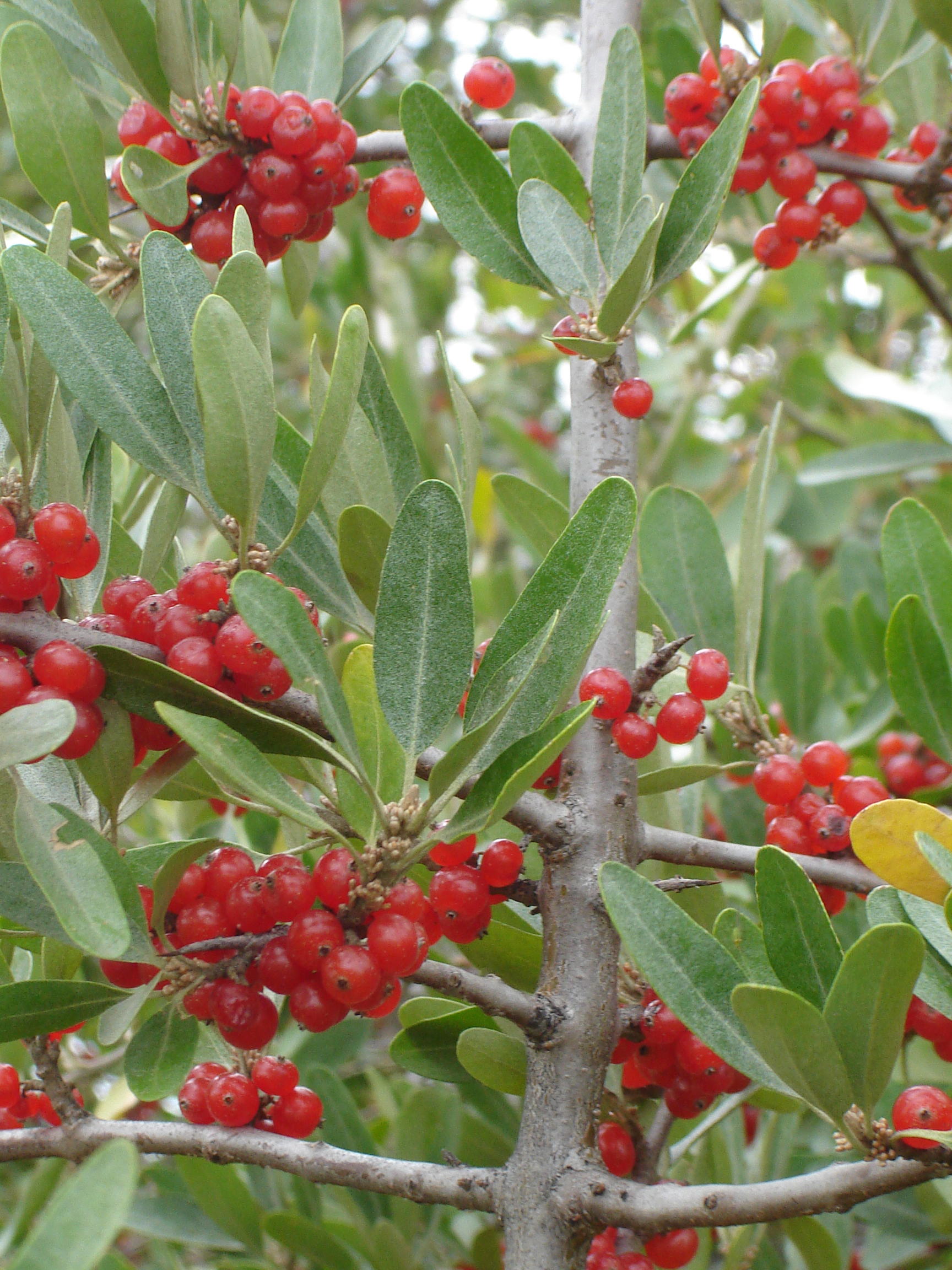
Shepherdia, commonly known as buffaloberry or bullberry, is a small genus of deciduous shrubs in the family Elaeagnaceae, placed in the order Rosales. Named in honor of the British botanist John Shepherd (1764–1836) by Thomas Nuttall, the genus contains three living species native to northern and western North America, ranging from the Canadian boreal forest south through the Rocky Mountains to the Colorado Plateau.
The plants are small to medium-sized shrubs with a notably tough, drought-tolerant constitution. Like other members of the Elaeagnaceae, Shepherdia species are non-legume nitrogen fixers — they host symbiotic actinobacteria (Frankia) in root nodules, allowing them to colonize poor, disturbed, or rocky soils. The genus is dioecious: male and female flowers are borne on separate individuals, so both sexes must be present for fruit production.
The berries are small, dark red with distinctive pale dots, and rough to the touch. They are notably sour or bitter raw but highly edible when processed — traditionally and commercially made into jams, jellies, pies, syrups, and sauces in the manner of cranberries. Bears are well-documented consumers of the fruit, which provides high-calorie stores ahead of hibernation. Several Lepidoptera larvae, including Ectropis crepuscularia and Coleophora elaeagnisella, use Shepherdia as a food plant.
The three living species are S. argentea (silver buffaloberry), S. canadensis (Canada buffaloberry), and S. rotundifolia (roundleaf buffaloberry, endemic to southern Utah and northern Arizona). An extinct fourth species, †S. weaveri, is known from Paleocene/Eocene deposits at Kachemak Bay, Alaska.
Etymology
The genus Shepherdia was named by botanist Thomas Nuttall in honor of John Shepherd (1764–1836), curator of the Liverpool Botanic Garden. The common names "buffaloberry" and "bullberry" reflect the plant's historic association with the American bison's range and its value as a food source in the Great Plains and Rocky Mountain West.
Distribution
Shepherdia species are native to northern and western North America, with the range spanning the Canadian boreal zone south through the Rocky Mountains and Great Plains. S. canadensis (Canada buffaloberry) has the broadest distribution across Canada and the northern United States. S. argentea (silver buffaloberry) is widespread on prairies and riverbanks of the interior West. S. rotundifolia is the most restricted, endemic to the Colorado Plateau of southern Utah and northern Arizona.
Ecology
Shepherdia species are non-legume nitrogen fixers, hosting Frankia actinobacteria in root nodules, which enables colonization of nutrient-poor, disturbed, and rocky soils. The genus is dioecious, requiring both male and female plants for fruit set. Berries are a significant wildlife food — bears consume them in large quantities before hibernation. The larvae of Ectropis crepuscularia and Coleophora elaeagnisella (Lepidoptera) have been recorded feeding on the foliage, with E. crepuscularia specifically noted on S. canadensis.
Cultural Uses
Buffaloberries have a long history of use by Indigenous peoples of North America and by European settlers. The berries, though sour, were eaten fresh and dried, and processed into jams, jellies, syrups, pies, and cranberry-style sauces with added sugar. Shepherdia argentea in particular was an important food plant for Plains peoples, sometimes used ceremonially. The berries were also noted to lather in water due to saponin content, which was exploited in traditional food preparation.

